Apollo Cancer Centres has launched India's first Shield™ Multi-Cancer Detection blood test, offering screening for multiple cancers through a single blood sample to support earlier diagnosis.
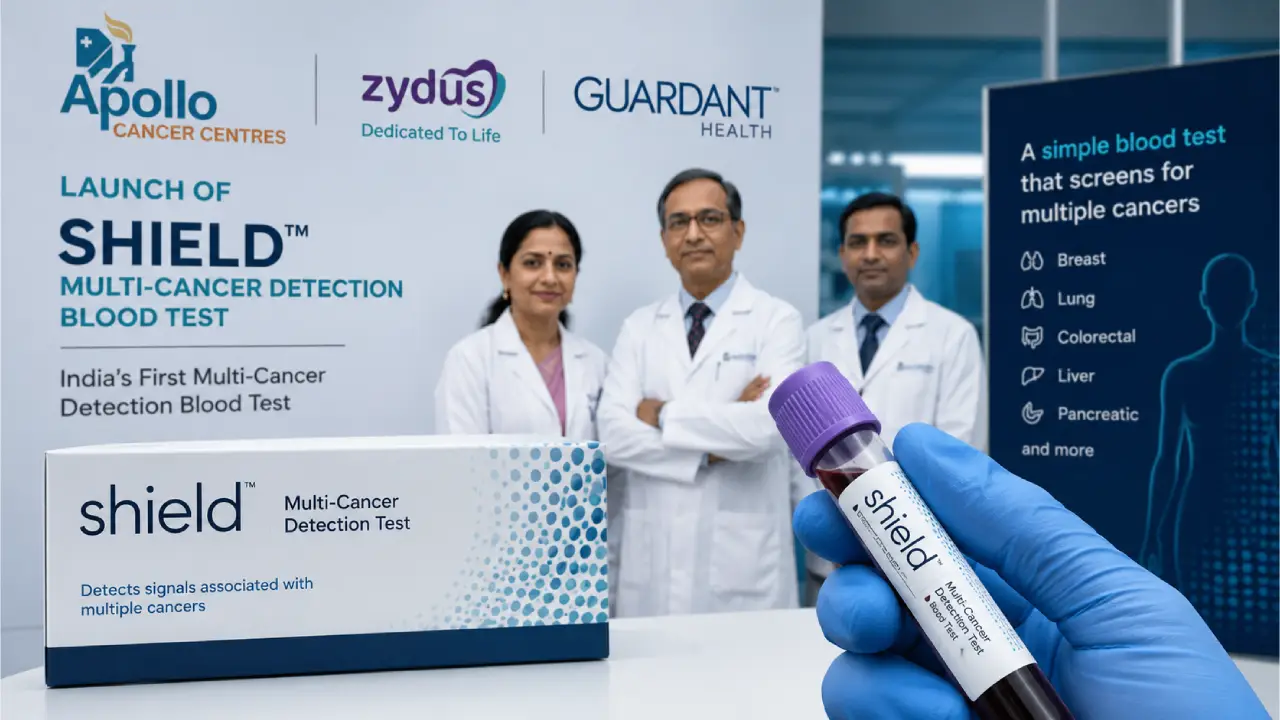
Chennai, July 3: Apollo Cancer Centres (ACCs) has introduced the Shield™ Multi-Cancer Detection (MCD) blood test, becoming the first healthcare institution in India to offer the technology aimed at detecting signals associated with multiple cancers through a single blood sample.
The launch follows a Memorandum of Understanding (MoU) between Apollo Cancer Centres and Zydus Lifesciences to make the test, developed by precision oncology company Guardant Health, available to patients in India. The initiative seeks to expand access to advanced cancer screening at a time when the country's cancer burden continues to grow.
The Shield™ Multi-Cancer Detection test is a methylation-based blood test intended for individuals aged 45 years and above who are considered to be at average risk for cancer.
According to Apollo Cancer Centres, the test is designed to identify cancer-associated signals linked to several malignancies, including bladder, colorectal, breast, prostate, oesophageal, gastric, liver, lung, ovarian and pancreatic cancers, using a single blood sample.
The healthcare group said the technology is intended to support earlier detection, enabling patients to undergo timely clinical evaluation when cancer-associated signals are identified.
Apollo Cancer Centres noted that India's cancer burden is expected to increase significantly in the coming years.
According to estimates cited by the organisation, the number of cancer cases in India is projected to reach 2.08 million by 2040, representing a 57.5 per cent increase compared to 2020 levels. More than 1.41 million new cancer cases were reported in the country in 2022.
Breast cancer remains the leading cause of cancer-related deaths among women, while oral cancer is the most common cancer among men. The hospital group said low screening rates continue to contribute to delayed diagnosis and treatment across the country.
Dr. Preetha Reddy, Executive Vice Chairperson of Apollo Hospitals, said prevention and early diagnosis are becoming central to the future of healthcare.
She said cancer continues to be one of the world's most significant health challenges and stressed that timely screening can improve treatment outcomes. According to her, introducing the Shield™ Multi-Cancer Detection test in India marks another step towards making advanced screening technologies more accessible while encouraging greater awareness about cancer prevention.
Dr. Harit K. Chaturvedi, CEO and Clinical Head, Oncology, Apollo Hospitals, described the test as a simple blood-based screening tool with strong sensitivity and specificity for detecting certain cancers.
However, he emphasised that the Shield™ MCD test is not intended to replace comprehensive cancer screening programmes and should be used under medical supervision as part of an overall cancer screening strategy.
Dr. Sharvil Patel, Managing Director of Zydus Lifesciences Ltd., said the collaboration reflects the company's focus on improving cancer diagnostics in India.
He said the Shield™ MCD test would complement existing screening methods while expanding access to precision diagnostics and encouraging people to adopt proactive healthcare practices.
Simranjit Singh, Chief Executive Officer of Guardant Health AMEA, said the partnership with Apollo Cancer Centres and Zydus Lifesciences would help bring innovative cancer screening technology to Indian patients.
He noted that detecting cancer-associated signals from a single blood sample has the potential to facilitate earlier clinical evaluation and improve long-term patient outcomes.
Apollo Cancer Centres stated that the Shield™ Multi-Cancer Detection test has received Breakthrough Device Designation from the U.S. Food and Drug Administration (FDA) based on its performance in the National Cancer Institute Vanguard Study.
The company clarified that the designation does not constitute FDA approval, clearance or endorsement of the test. It also stated that the Shield™ MCD is currently a Laboratory Developed Test (LDT) intended for export only and is not approved for sale or use in the United States.
Apollo Hospitals said the introduction of the Shield™ Multi-Cancer Detection test adds to its portfolio of advanced cancer care technologies.
The healthcare network has previously introduced robotic surgery, CyberKnife radiosurgery, Proton Therapy, precision oncology, genomics and artificial intelligence-enabled healthcare solutions in India.
According to Apollo Cancer Centres, the new blood-based screening test is expected to strengthen early cancer detection efforts, improve access to advanced diagnostics and support better patient outcomes through earlier diagnosis and timely intervention.