Civil society representatives from across India discussed the 2027 Census, delimitation and demographic concerns at a national consultation in Guwahati, with Manipur issues featuring prominently.
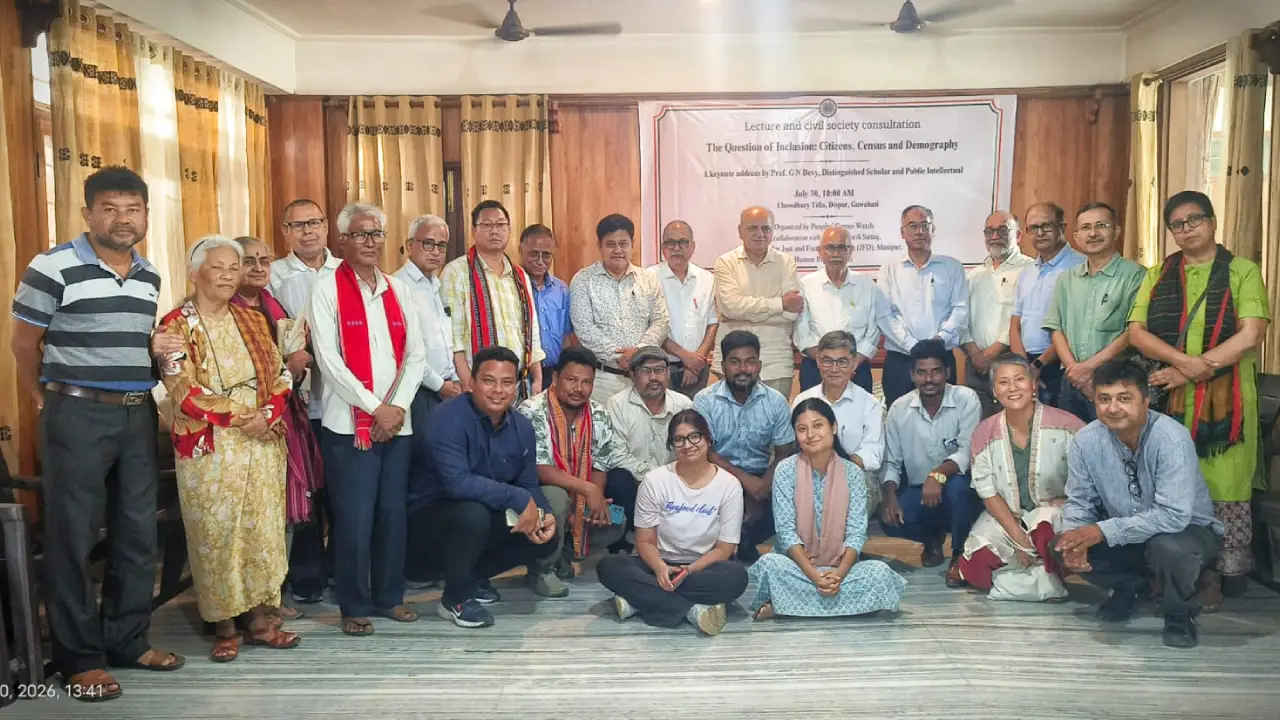
Imphal, July 31: Representatives of civil society organisations, academics and rights activists from across India, including the Northeast, have called for greater transparency and inclusiveness in the proposed 2027 Census while raising concerns over its possible implications for delimitation, citizenship and demographic representation.
The issues were discussed during a national consultation titled "The Question of Inclusion: Citizens, Census and Demography", held in Guwahati on July 30. The event was organised by People's Census Watch in collaboration with Axom Nagarik Samaj, the Campaign for Just and Fair Delimitation (JFD)-Manipur and Human Rights Alert (HRA), bringing together more than 50 participants.
Delivering the keynote address, noted scholar and public intellectual Prof. G.N. Devy argued that the present census exercise was being undertaken primarily with delimitation in view. According to the organisers' statement, he cautioned that the process could lead to significant political changes and potentially leave large numbers of people without citizenship status if not handled carefully. He called for an inclusive 2027 Census that, in his view, should remain free from majoritarian influence.
During the first session, Sanjoy Borbora of the Manab Adhikar Sangram Samiti (MASS), Assam, highlighted what he described as the impact of extensive militarisation on census operations in the Northeast. He stressed the need to ensure that the 2027 Census is conducted in a free, fair and transparent manner.
Manipur demographic concerns take centre stage
Several speakers from Manipur focused on the relationship between demographic changes, the proposed census and future delimitation.
Ashang Kasar, Convenor of the Native People's Committee, Manipur, presented historical population figures relating to the Kuki community, stating that the population had increased from 41,262 in 1901 to 4,48,214 in 2011. He attributed the increase to what he described as illegal immigration from Myanmar and other places, and urged the government to update the National Register of Citizens (NRC) in Manipur before conducting the 2027 Census or any future delimitation exercise.
Social activist Santa Nahakpam also expressed concern over what he described as demographic changes in Manipur resulting from illegal immigration linked to the prolonged crisis in Myanmar. He referred to the publication of the book Influx of Migrants into Manipur: A Threat to the Indigenous Ethnic People, published by the United Committee Manipur (UCM) in 2005, which examined census-related demographic issues in the state.
Jeetendra Ningomba, Convenor of the Campaign for Just and Fair Delimitation (JFD)-Manipur, said the large-scale displacement caused by the violence that began on May 3, 2023, could complicate the conduct of the 2027 Census. According to the organisers, he expressed concern that the exercise could include persons whom he described as non-indigenous inhabitants if the NRC is not updated beforehand. He also referred to an ongoing public campaign in Manipur seeking the updating of the NRC before the census.
Delimitation and political representation discussed
The post-lunch session, moderated by Babloo Loitongbam, Executive Director of Human Rights Alert, focused on the possible impact of delimitation.
Retired demographer Prof. R.K. Narendra stated that conducting delimitation in Manipur on the basis of the 2027 Census without first updating the NRC could have significant political implications for the state. He also referred to data indicating changes in Assembly constituencies from unreserved to reserved categories and cautioned against relying solely on population figures for delimitation. He proposed three alternative models for determining Assembly seat allocation.
MC Meetei, Convenor of the People's Progressive Alliance Manipur (PPAM), presented his views on demographic trends in the state, attributing them to what he described as long-term demographic engineering since 1949. He argued that these developments had contributed to a situation that, in his assessment, affected the rights of indigenous communities.
Representing Nagaland, Prof. Dolly Kikon of the University of California, Santa Cruz, discussed the different challenges of conducting a census in regions experiencing prolonged militarisation compared with other parts of India.
From Meghalaya, human rights defender Agnes Kharshiing voiced concern that marginalised communities in the state could face exclusion during the 2027 Census process if adequate safeguards are not put in place.
Consultation to continue in Manipur
At the conclusion of the meeting, participants unanimously resolved to hold the next civil society consultation in Manipur to continue discussions on issues relating to citizenship, census, demographic changes and delimitation, according to the organisers.
The consultation comes as preparations for India's next Census and the subsequent delimitation exercise continue to generate debate in several northeastern states, where questions relating to migration, demographic change, political representation and the protection of indigenous communities remain highly sensitive.