India approves its first dengue vaccine, Qdenga, for people aged 4 to 60 years. The CDSCO cleared the WHO-prequalified vaccine after reviewing global and Indian clinical trial data.
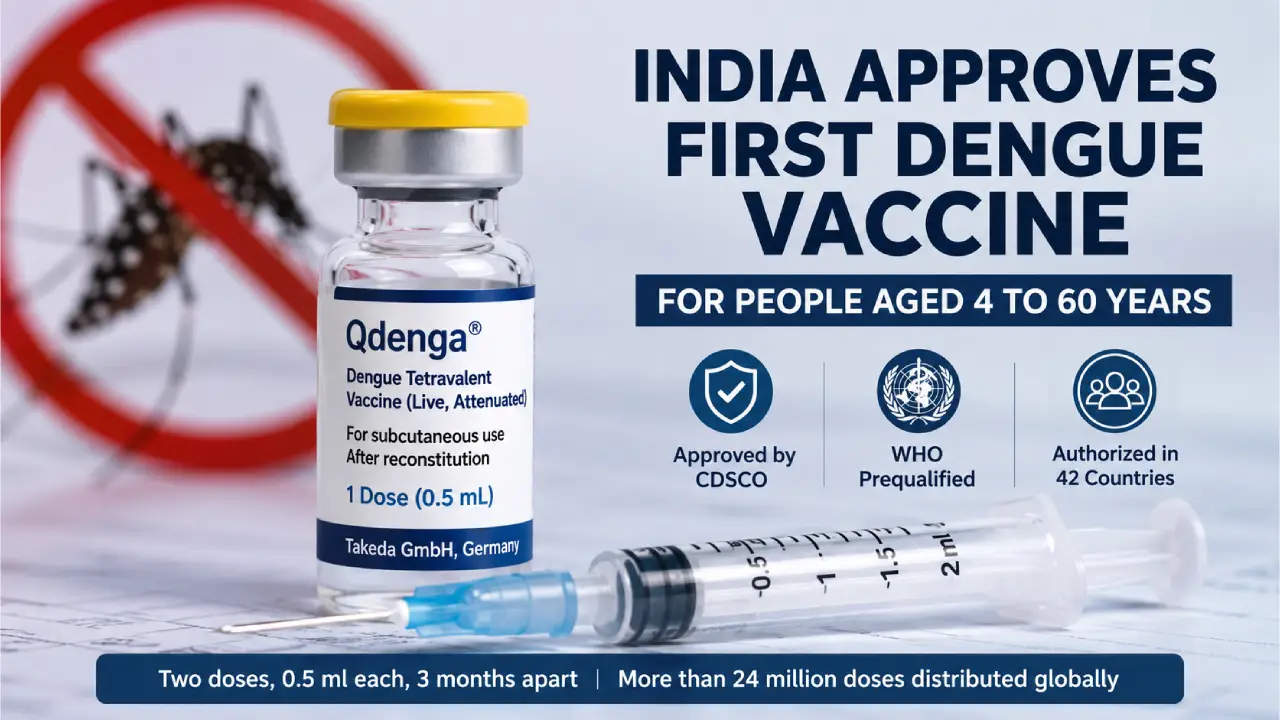
New Delhi, July 21: India has approved its first vaccine for the prevention of dengue, marking a significant addition to the country's efforts to combat one of its most widespread mosquito-borne diseases. The Central Drugs Standard Control Organisation (CDSCO), under the Ministry of Health and Family Welfare, has granted marketing authorisation for Qdenga, a live attenuated tetravalent dengue vaccine manufactured by Takeda GmbH, Germany.
The vaccine will be imported and marketed in India by Takeda Biopharmaceuticals India Pvt. Ltd. According to the ministry, the approval follows a comprehensive scientific review of the vaccine's quality, safety and efficacy in accordance with the Drugs and Cosmetics Act, 1940, and the Drugs Rules, 1945.
The ministry said the approval represents the first time a dengue vaccine has been authorised for use in India and is expected to strengthen the country's public health response against a disease that causes seasonal outbreaks across several states every year.
Qdenga is indicated for the prevention of dengue disease in individuals aged between 4 and 60 years. The recommended immunisation schedule consists of two doses of 0.5 ml each, administered subcutaneously at an interval of three months.
According to the ministry, Qdenga is a recombinant live attenuated tetravalent dengue vaccine developed using recombinant DNA technology. It is produced in Vero cells, with genes encoding serotype-specific surface proteins engineered into a dengue virus type-2 backbone. The vaccine contains genetically modified organisms (GMOs) and is supplied as a freeze-dried powder that must be reconstituted before administration.
The approval is supported by data generated through an extensive international clinical development programme that evaluated the vaccine's safety, immunogenicity and efficacy across both dengue-endemic and non-endemic regions. Clinical trials included participants from more than eight countries, among them Brazil, Thailand and Sri Lanka, where dengue remains a major public health concern.
In addition to the global studies, the vaccine underwent a pivotal Phase III safety and immunogenicity trial in India involving participants aged 4 to 60 years. The ministry said the Indian study formed an important part of the evidence considered during the regulatory review process.
The ministry said the vaccine's global clinical programme demonstrated that it generated immune responses against all four dengue virus serotypes while maintaining an acceptable safety profile. The scientific assessment by CDSCO considered evidence from both international and Indian studies before granting marketing authorisation.
Qdenga has already secured regulatory approval in 42 countries, including the European Union, the United Kingdom, Switzerland, Indonesia, Malaysia and Thailand. It has also received prequalification from the World Health Organization (WHO), a recognition that supports procurement by United Nations agencies and other international organisations.
According to the ministry, more than 24 million doses of the vaccine have already been distributed worldwide. Post-marketing surveillance from countries where the vaccine is currently in use has continued to show a favourable safety profile, with no significant safety concerns identified.
Dengue continues to pose a major public health challenge in tropical and subtropical regions, including India, particularly during and after the monsoon season. The disease is transmitted by Aedes mosquitoes and can range from a mild febrile illness to severe dengue, which may lead to life-threatening complications if not treated promptly.
The ministry said the availability of a licensed dengue vaccine is expected to complement existing dengue control measures rather than replace them. Current strategies under the National Vector Borne Disease Control Programme include mosquito control measures, disease surveillance, early diagnosis, timely clinical management and public awareness campaigns aimed at reducing transmission.
Officials said vaccination would become an additional tool to strengthen these ongoing interventions and support efforts to reduce the disease burden.
The Ministry of Health and Family Welfare said it remains committed to ensuring timely access to safe, effective and quality-assured vaccines and medicines through a robust, science-based regulatory system. It added that the approval of the country's first dengue vaccine marks an important milestone in India's efforts to improve prevention and control of dengue through evidence-based public health measures.