Lok Sabha passes Public Examinations Amendment Bill 2026 with stricter penalties, fast-track courts and measures to curb exam malpractices.
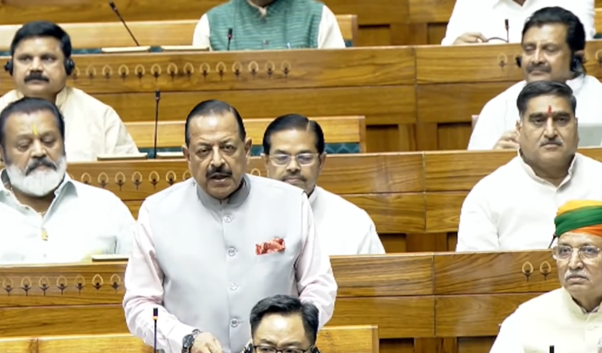
New Delhi, July 29: The Lok Sabha on Wednesday passed the Public Examinations (Prevention of Unfair Means) Amendment Bill, 2026 by voice vote, with the government stating that the legislation would strengthen the legal framework to tackle examination malpractices and ensure faster justice in cases related to organised exam-related crimes.
Replying to the debate in the House, Union Minister of State (Independent Charge) for Science & Technology, Earth Sciences, Personnel, Public Grievances and Pensions, Atomic Energy and Space, Dr. Jitendra Singh said the amendments aim to protect the credibility of public examinations and safeguard the interests of students and job aspirants.
The Minister said the changes were introduced after considering practical experiences and suggestions to make the existing law more effective in dealing with unfair practices in competitive examinations.
The Public Examinations (Prevention of Unfair Means) Act, 2024 was enacted to provide a legal framework against unfair means in examinations conducted by major agencies, including the Union Public Service Commission (UPSC), Staff Selection Commission (SSC), Railway Recruitment Boards (RRBs), Institute of Banking Personnel Selection (IBPS), and the National Testing Agency (NTA).
Under the amendments, punishment for individuals involved in unfair means has been increased from imprisonment of three to five years to five to ten years. The maximum fine has also been raised from Rs 10 lakh to Rs 50 lakh.
For service providers involved in examination-related offences, the maximum penalty has been increased from Rs 1 crore to Rs 5 crore. Their debarment period from conducting public examinations has also been extended from four years to eight years.
The Bill also increases penalties for directors and senior management of service providers involved in violations. The imprisonment provision has been revised from three to ten years to five to ten years, while the maximum fine has been enhanced from Rs 1 crore to Rs 5 crore.
For organised examination crimes, the punishment has been increased from five to ten years of imprisonment to seven to ten years, with the maximum fine raised from Rs 1 crore to Rs 10 crore.
Dr. Jitendra Singh said the amendment provides for the establishment of Special Fast Track Courts to deal with offences related to public examinations.
The Bill proposes completion of investigation within two months and completion of trial within three months from the filing of the charge sheet.
It also provides for the appointment of Special Public Prosecutors and allows the government to constitute a Special Task Force for investigation of offences under the Act.
The Minister said these measures are aimed at ensuring quicker action against organised groups involved in examination-related crimes.
Highlighting enforcement efforts, Dr. Jitendra Singh said 52 FIRs have already been registered under the provisions of the Public Examinations (Prevention of Unfair Means) Act, 2024.
He said the amendments reflect the government’s commitment to maintaining transparency and fairness in the examination system and ensuring that students who prepare honestly are not affected by unfair practices.
The Minister also referred to the Prime Minister’s announcement of a high-level task force involving experts to strengthen the examination ecosystem and prevent question paper leaks and other irregularities.
The passage of the Bill comes amid continued focus on improving the reliability and transparency of competitive examinations conducted for government recruitment and higher education admissions.