Manipur University observed World Youth Skills Day 2026 with discussions on artificial intelligence, employability, entrepreneurship and academic excellence through faculty enrichment.
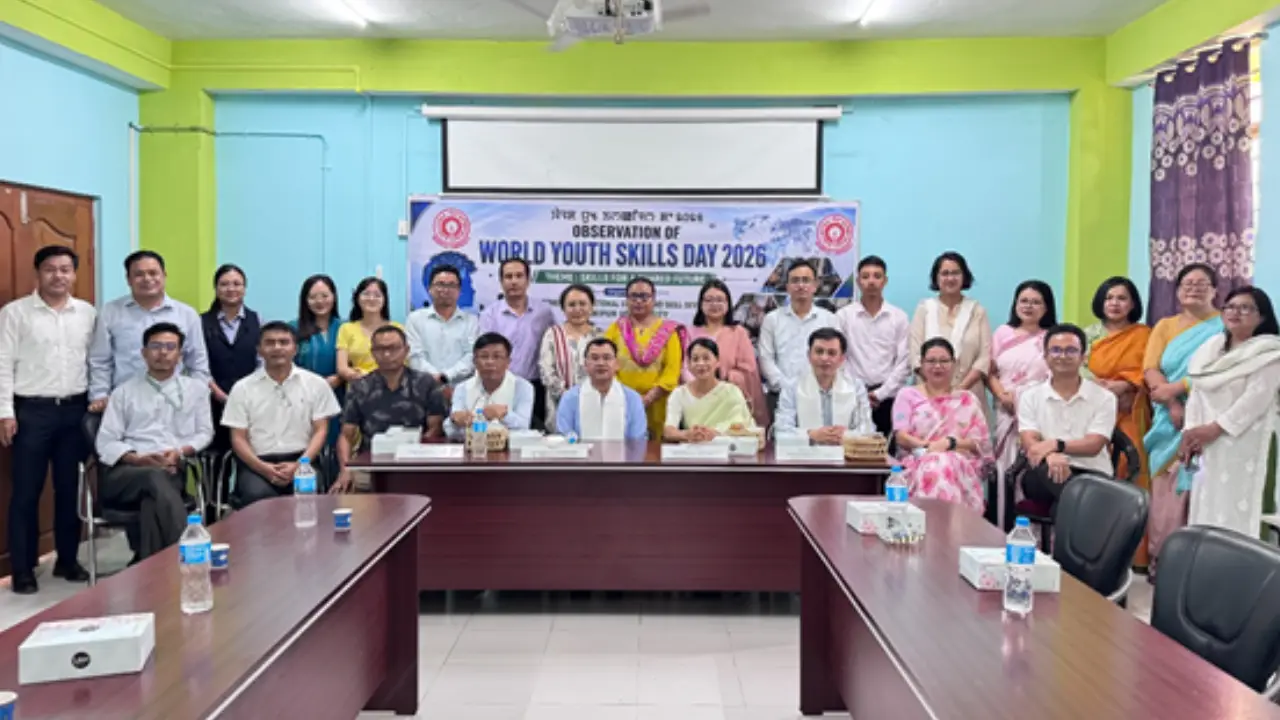
Imphal, July 15: Manipur University's Department of Vocational Studies and Skill Development (DVSSD) observed World Youth Skills Day 2026 on Tuesday with a series of discussions highlighting the importance of future-ready skills, artificial intelligence, entrepreneurship and quality teaching practices.
Held at the Department's Training Hall in the New Social Science Block under the global theme "Skills for a Shared Future," the programme brought together academicians, industry experts, faculty members and students to discuss the competencies required in an evolving technology-driven economy.
The annual observance reaffirmed the Department's commitment to preparing young people with practical knowledge and professional skills needed to navigate changing employment trends and emerging industries.
The programme commenced with the reception of dignitaries, followed by ceremonial proceedings. Delivering the welcome address, Dr. Kangjam Mukhara Devi, faculty member of DVSSD, outlined the significance of World Youth Skills Day and explained how this year's theme reflects the growing need for collaborative and inclusive skill development.
Delivering the keynote address, Director of CubeTen Technologies Pvt. Ltd., Haobam Joyremba, discussed the growing influence of Artificial Intelligence (AI) on workplaces across sectors.
He described the present era as an "intelligence revolution" and stressed that continuous learning, unlearning and relearning have become essential for professionals seeking to remain relevant in a rapidly changing technological environment.
Joyremba encouraged students to nurture curiosity, adaptability and openness towards emerging technologies, stating that these qualities would play a decisive role in shaping successful careers in the years ahead.
Speaking during the programme, Prof. A. Rajmani Singha, Director of the Internal Quality Assurance Cell (IQAC), Manipur University, underlined the importance of what he termed the "3 Cs"—Creativity, Communication and Collaboration.
He observed that technical knowledge alone would not be sufficient to meet the demands of the modern employment landscape. Alongside professional competencies, he emphasised the need for life skills education and self-awareness to help students deal effectively with both personal and workplace challenges.
Chief Guest Prof. Memcha Loitongbam, Dean of the School of Social Sciences, Manipur University, highlighted the need to strengthen linkages between academic institutions and industry.
She stressed that structured training programmes and meaningful industry exposure are essential for improving employability and promoting self-reliance among young people.
Prof. Loitongbam also appreciated the Department's efforts to provide vocational education aligned with contemporary market requirements, noting that such initiatives help students acquire practical skills demanded by employers.
Presiding over the event, Dr. Nambram Amulkumar, Head of the Department of Vocational Studies and Skill Development, outlined the Department's broader vision for skill development and entrepreneurship.
He emphasised that students should be encouraged to become job creators rather than merely job seekers through skill-based education and entrepreneurial initiatives.
Dr. Amulkumar also acknowledged the contributions of faculty members in facilitating placement opportunities for students in both India and overseas.
Following the World Youth Skills Day observance, the Department organised a Faculty Enrichment Programme on "Teaching, Learning and Assessment Process" for its faculty members.
Around 30 faculty members participated in the academic session, which focused on contemporary teaching methodologies, academic planning, question paper setting and measures to strengthen teaching and learning practices within the Department.
The programme served as a platform for faculty members to exchange ideas on improving classroom delivery, assessment methods and overall academic quality.
Throughout the day's events, participants discussed the importance of adaptability, creativity, communication, collaboration, self-awareness and entrepreneurial thinking as essential competencies for future generations.
The Faculty Enrichment Programme concluded with a renewed emphasis on continuous academic improvement, reflecting the Department's commitment to excellence in teaching, learning and assessment while preparing students for emerging opportunities in an increasingly technology-driven world.