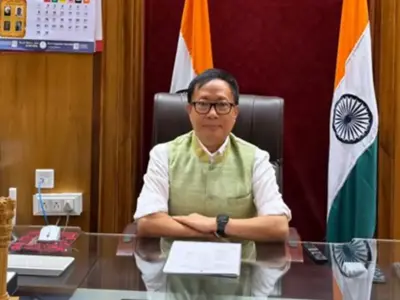
Meghalaya's move to oppose uranium mining highlights the growing debate over India's nuclear energy expansion, indigenous land rights, environmental concerns and federal governance.
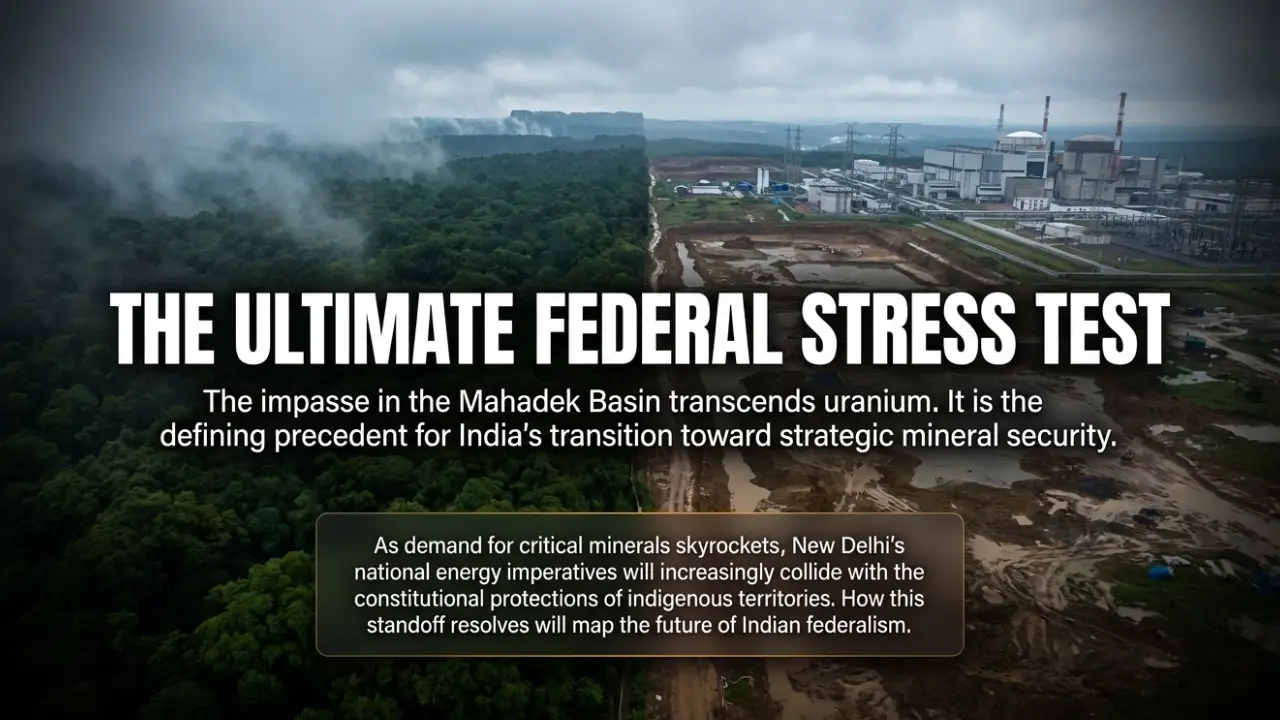
Imphal, July 17: Meghalaya's latest move to formally oppose uranium mining has once again placed the northeastern state at the centre of a long-running debate over energy security, environmental governance and indigenous rights. The state government's decision to introduce a unanimous resolution in the Legislative Assembly against uranium mining comes as the Union government advances reforms intended to accelerate India's nuclear energy programme and strengthen domestic access to strategic minerals.
Although uranium deposits in Meghalaya have attracted interest for decades, successive attempts to develop them have faced resistance from local communities, traditional institutions and civil society organisations. The latest political developments suggest that the disagreement has evolved beyond a dispute over mining into a broader discussion about constitutional protections, federal authority and the role of local consent in projects involving nationally important resources.
India has identified nuclear energy as one of the pillars of its long-term strategy to diversify electricity generation while reducing carbon emissions. To support that objective, Parliament enacted the Sustainable Harnessing and Advancement of Nuclear Energy for Transforming India (SHANTI) Act, 2025, introducing significant changes to the country's civilian nuclear framework.
The legislation replaced the Atomic Energy Act of 1962 and the Civil Liability for Nuclear Damage Act of 2010 with a consolidated legal framework aimed at encouraging investment, strengthening regulation and facilitating the expansion of nuclear power generation.
Among its key provisions, the law permits regulated private participation in civilian nuclear projects under government licensing, provides statutory recognition to the Atomic Energy Regulatory Board and revises provisions governing liability for nuclear installations.
These reforms are intended to help India significantly expand its nuclear generating capacity over the coming decades as part of its broader clean-energy transition.
Government agencies have also consistently maintained that reliable access to uranium remains important for supporting India's existing pressurised heavy water reactor programme and its long-term nuclear fuel cycle.
While imported uranium currently contributes to India's fuel requirements, policymakers have continued to emphasise the importance of developing domestic resources where feasible.
Environmental clearance policy draws attention
Alongside legislative reforms, another policy development has attracted considerable attention in Meghalaya.
In September 2025, the Ministry of Environment, Forest and Climate Change issued an Office Memorandum providing exemptions from mandatory public consultation requirements under the Environmental Impact Assessment framework for certain projects involving atomic and critical minerals.
According to the Union government, the measure was introduced to facilitate projects involving minerals considered strategically important for national security, energy security and technological development.
The Department of Atomic Energy has previously stated that expanding domestic uranium production would contribute to India's long-term nuclear energy objectives and reduce dependence on external supply chains.
However, the notification also prompted concerns among several organisations in Meghalaya, where public consultation has historically been viewed as an important part of decision-making on resource development.
Meghalaya reiterates opposition
Chief Minister Conrad K. Sangma recently announced that the Meghalaya Democratic Alliance government would move a unanimous resolution in the State Assembly opposing uranium mining in the state.
The announcement reinforces a political position that successive governments in Meghalaya have generally maintained over the years, reflecting concerns expressed by elected representatives, traditional institutions and community organisations.
Although Assembly resolutions do not alter central legislation, they carry political significance by formally recording the position of the state's elected legislature.
The proposed resolution also comes amid renewed public discussion about the future of uranium exploration in Meghalaya following changes in national policy relating to nuclear energy and strategic minerals.
Constitutional protections shape the debate
A distinctive feature of the Meghalaya debate is the constitutional framework governing tribal areas. Large parts of the state fall under the Sixth Schedule of the Constitution, which provides special administrative arrangements through Autonomous District Councils empowered to protect customary practices, traditional institutions and community land.
Unlike many other regions of the country, land ownership in much of Meghalaya rests with individuals, clans and community institutions rather than the state.
Because of this system, proposals involving large-scale land acquisition frequently involve complex consultations among landowners, traditional authorities and local institutions.
Following the Union government's notification on environmental consultation, the Khasi Hills Autonomous District Council (KHADC) expressed reservations about the exemption and urged that areas under the Sixth Schedule should continue to retain mechanisms for local consultation.
Council representatives argued that customary landholding systems require meaningful participation by affected communities in decisions involving natural resources.
Some members of the council also advocated broader reconsideration of the notification itself, reflecting concerns that changes to consultation procedures could affect public confidence in future projects.
Civil society organisations remain cautious
Several civil society organisations have likewise reiterated their opposition to uranium mining. Groups including the Khasi Students' Union (KSU) and the Hynñiewtrep Integrated Territorial Organisation (HITO) had maintained that any proposal involving uranium extraction should proceed only after extensive consultation with local communities and traditional institutions.
These organisations have also referred to historical agreements associated with the accession of the Khasi States to India, arguing that customary institutions and indigenous land rights should continue to receive constitutional protection.
Their position reflects a broader concern that decisions relating to strategic mineral development should balance national objectives with the rights and interests of local communities.
The Union government has not indicated that constitutional protections under the Sixth Schedule would be altered by the recent policy changes.
A strategically important uranium province
The policy debate has drawn attention because Meghalaya hosts one of India's most significant known uranium-bearing regions.
Geological surveys have identified sandstone-hosted uranium deposits across parts of the Mahadek Basin, particularly in present-day South West Khasi Hills and West Khasi Hills districts.
Among the principal deposits identified over several decades of exploration are Domiasiat, Wahkyn-Wahkut, Umthongkut, Gomaghat-Phlangdiloin, Lostoin and Tyrnai.
Various official geological assessments have estimated that Meghalaya accounts for a substantial share of India's identified conventional uranium resources, although estimates differ depending on classification methodologies and exploration status.
From a mining perspective, these deposits have often attracted attention because much of the mineralisation occurs at relatively shallow depths compared with some other uranium provinces in the country.
This geological characteristic has led experts to identify the region as potentially suitable for open-cast mining methods should commercial extraction ever be approved.
However, the same characteristic has also contributed to concerns among sections of the local population regarding possible environmental impacts associated with large-scale surface mining in ecologically sensitive areas.
Long history of public opposition
Resistance to uranium mining in Meghalaya predates recent national policy reforms. Exploration activities in parts of the state during the early 1990s generated public debate over land ownership, environmental protection and the future of local communities.
Over the years, several community leaders emerged as prominent voices opposing mining proposals, while successive governments adopted differing approaches as public opinion evolved.
In 2009, the then state government approved a land lease connected with pre-mining activities proposed by Uranium Corporation of India Limited (UCIL), a decision that triggered widespread protests across the state.
The lease was subsequently revoked in 2016 after the state government concluded that developments associated with the project had moved beyond the scope originally envisaged.
Further attempts to continue exploration encountered strong local opposition, and exploratory activities were eventually suspended.
Since then, commercial uranium mining has remained stalled despite continuing interest in the state's geological resources.
Environmental concerns continue to influence public opinion
Environmental considerations remain one of the principal reasons why uranium mining continues to face resistance in Meghalaya.
Community organisations, traditional institutions and several local groups have consistently expressed concerns over the possible impact of large-scale uranium extraction on forests, water sources, agriculture and public health. These concerns have been shaped not only by proposed mining projects but also by experiences surrounding earlier exploration activities carried out in parts of the South West Khasi Hills.
One issue that has remained part of public debate relates to storage facilities established during earlier exploratory work by the Atomic Minerals Directorate (AMD). In 2020, residents of Nongbah Jynrin reported damage to repository structures that had been constructed to store mineralised drill cores and exploration-related materials. The reports prompted visits by public representatives and drew renewed attention to the condition of the site.
Subsequently, members of the Khasi Hills Autonomous District Council (KHADC) inspected the area and recommended further examination of the facilities. Independent researchers also reported radiation measurements from locations around the storage site that they argued warranted closer scientific assessment.
The Department of Atomic Energy (DAE), however, rejected suggestions that the site posed a radiological hazard. The department maintained that there had been no radioactive leak and stated that the visible damage to portions of the concrete structures resulted from human interference rather than structural failure. It also said that radiation levels remained within permissible limits and that necessary repairs had been undertaken.
The differing assessments illustrate the continuing gap between official assurances and concerns expressed by sections of the local population.
Recognising the sensitivity of the issue, the Meghalaya government subsequently supported further studies involving academic and scientific institutions to examine environmental conditions around the former exploration sites. The outcome of these studies has remained an important reference point in public discussions on whether uranium extraction should be reconsidered in the future.
Legacy of mistrust
The uranium debate in Meghalaya has also been shaped by events outside the state. Opponents of mining have frequently referred to experiences associated with uranium operations in Jaduguda, Jharkhand, arguing that lessons from earlier mining regions should inform future policy decisions. Government agencies, on the other hand, have maintained that mining technologies, environmental safeguards and regulatory oversight have evolved considerably over time.
These contrasting narratives have contributed to a wider trust deficit that extends beyond scientific questions alone.
For many residents in uranium-bearing areas, the debate is as much about confidence in regulatory institutions as it is about the technical aspects of mining or radiation management.
State political leaders have therefore found themselves navigating competing expectations—balancing national policy objectives with local apprehensions that have developed over several decades.
Allegations of speculative land purchases
Another issue that has entered public discussion is the reported purchase of land in uranium-bearing regions. The Khasi Students' Union (KSU) has alleged that individuals with financial and political influence have acquired parcels of land in parts of Domiasiat, Wahkaji and Mawthabah in anticipation of possible future mining activity. According to the organisation, such transactions could enable investors to benefit if uranium extraction projects eventually receive approval.
The organisation has stated that it has sought information regarding land transactions through the Right to Information Act and has called for greater transparency.
The Meghalaya government has acknowledged these concerns and indicated that it would examine any credible evidence relating to alleged speculative purchases.
Deputy Chief Minister Sniawbhalang Dhar has previously stated that the government would verify the facts before reaching conclusions. He also rejected suggestions that development projects or public infrastructure were being linked to local support for uranium mining, maintaining that government schemes are implemented independently of the mining debate.
At present, the allegations regarding speculative land acquisition remain a matter of public discussion rather than judicial determination.
Why uranium remains strategically important
Despite the political opposition in Meghalaya, uranium continues to occupy an important place in India's long-term energy planning.
Nuclear power is expected to remain part of the country's strategy for expanding low-carbon electricity generation alongside renewable energy sources such as solar, wind and hydroelectric power.
Government agencies have repeatedly stated that strengthening domestic uranium production could improve fuel security for India's pressurised heavy water reactors while supporting the country's long-term three-stage nuclear programme.
At the same time, India's dependence on imported uranium has reduced immediate pressure to develop every identified domestic deposit. Imports from international partners continue to contribute to reactor fuel requirements, allowing policymakers some flexibility in balancing energy needs with regulatory and social considerations.
Even so, Meghalaya's uranium reserves remain strategically significant because of their scale and geological characteristics.
Should national priorities or local political conditions change in the future, these deposits could once again attract attention from policymakers.
A broader federal challenge
The developments in Meghalaya also reflect wider questions about governance in resource-rich regions. Across India, projects involving minerals, forests, hydropower and other strategic resources have increasingly required governments to balance economic development with environmental safeguards and community participation.
In Meghalaya, that balance is further shaped by constitutional provisions under the Sixth Schedule, which recognise the authority of Autonomous District Councils and protect customary systems of land ownership.
As a result, policy decisions that may be implemented through conventional administrative processes elsewhere often require broader political engagement in the state.
The proposed Assembly resolution opposing uranium mining therefore represents more than a response to a single project. It signals the state's intention to formally place its position on record at a time when national policies relating to strategic minerals are evolving.
While an Assembly resolution cannot override central legislation governing atomic minerals, it carries considerable political significance and may influence future dialogue between the Union and the state.
The road ahead
The future of uranium mining in Meghalaya remains uncertain. On one hand, the Union government continues to pursue policies aimed at strengthening domestic nuclear energy production and securing access to strategic minerals considered important for long-term national development.
On the other, successive Meghalaya governments, Autonomous District Councils and a broad cross-section of civil society organisations have consistently maintained that uranium mining cannot proceed without public confidence, environmental safeguards and respect for customary land rights.
Whether these differing positions can eventually be reconciled will depend on sustained dialogue, transparent scientific assessment and continued engagement with local communities.
For now, Meghalaya's proposed Assembly resolution serves as a reminder that strategic resource development in India's northeastern borderlands involves more than geology or economics. It also raises fundamental questions about federal cooperation, constitutional protections and how national development priorities can be pursued alongside the rights and aspirations of indigenous communities.
As India seeks to expand its nuclear energy programme over the coming decades, the debate in Meghalaya is likely to remain an important test of how strategic policy objectives are balanced with democratic participation and regional autonomy.