Mizoram University's Natural History Museum has been designated India's 21st repository under the Biological Diversity Act, strengthening biodiversity conservation and research.
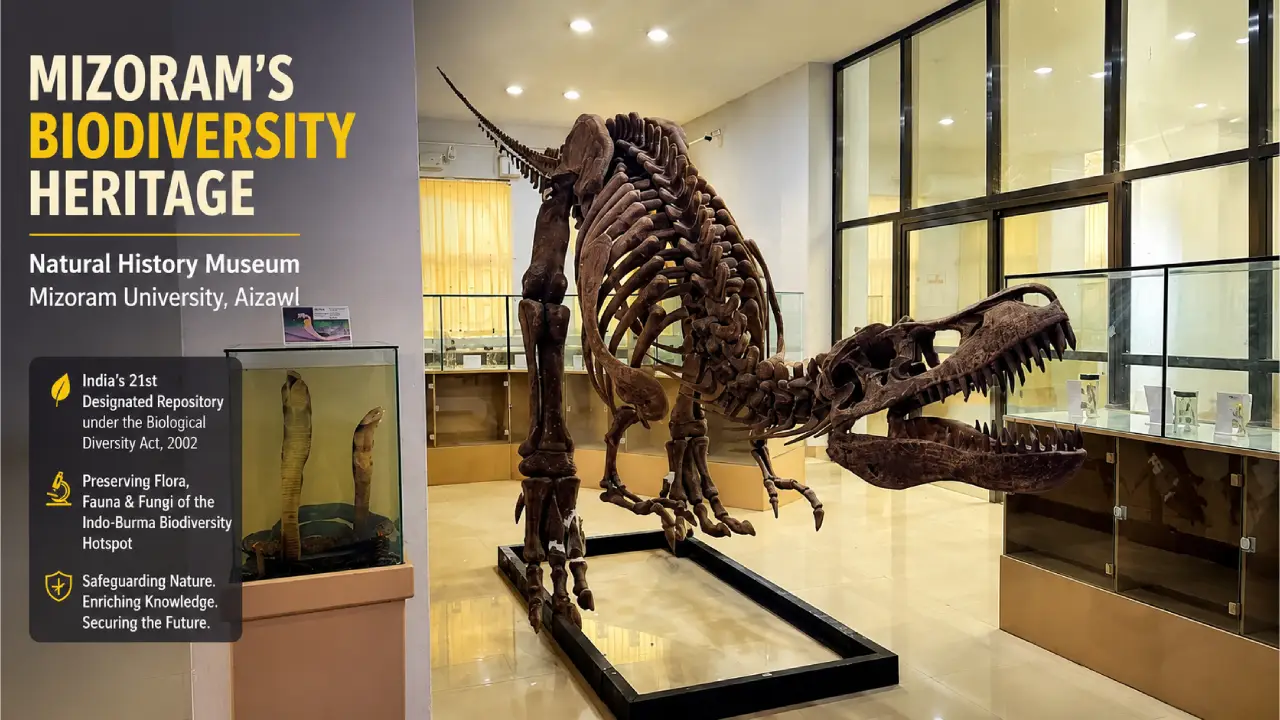
Aizawl/New Delhi, July 7: In a significant boost to biodiversity conservation and scientific research in Northeast India, the Natural History Museum (NHM) at Mizoram University has been officially designated as India's 21st Designated Repository under the Biological Diversity Act, 2002. The notification, issued by the Ministry of Environment, Forest and Climate Change (MoEFCC), marks an important addition to the country's network of institutions entrusted with preserving authenticated biological specimens.
The Central Government notified the designation on June 19, 2026, following recommendations from the National Biodiversity Authority (NBA). The repository status strengthens India's biodiversity governance framework by enabling the long-term preservation, documentation and scientific study of biological resources collected under the Biological Diversity Act.
Located in Aizawl, the museum occupies a strategically important position within the globally recognised Indo-Burma Biodiversity Hotspot, one of the world's richest yet most threatened regions for biological diversity. Officials said the designation would significantly enhance scientific documentation and conservation efforts across the Northeast.
The Natural History Museum will maintain authenticated voucher specimens of selected plant and animal groups found across the region. These include pteridophytes (ferns and their relatives), macrofungi, reptiles, amphibians, freshwater fishes, moths, beetles and butterflies.
The institution will also serve as the official repository for type specimens of newly discovered species from the region. Type specimens are the internationally recognised reference samples used by scientists to describe and identify new species.
According to the Ministry, preserving these authenticated collections will improve species identification, ensure traceability of biological resources and support long-term scientific research. The collections could also prove invaluable for ecological restoration in cases of habitat destruction, natural disasters or species decline.
Established in 2022 under Mizoram University, the Natural History Museum has rapidly emerged as a specialised centre for taxonomic research.
Mizoram and the wider Northeastern region together host more than 7,500 species of flowering plants and over 2,000 faunal species, making the region one of India's most biologically diverse landscapes.
The Ministry noted that the museum possesses specialised expertise in relatively understudied taxonomic groups such as macrofungi, pteridophytes, moths and beetles, filling important scientific gaps within India's existing repository network.
The designation is also expected to strengthen documentation of endemic species unique to the region.
Among the notable species associated with the museum's work is Leptobrachella tamdil, an amphibian recently discovered in Mizoram's forests.
Officials said the preservation of such type specimens would reinforce the Northeast's growing importance in global biodiversity research and species discovery.
Even before receiving repository status, the museum had developed substantial scientific infrastructure.
According to the Ministry, NHM has already collected and preserved more than 500 biological specimens, including herbarium sheets and wet-preserved collections.
Its multidisciplinary research team comprises experts from Mizoram University representing seven specialised taxonomic disciplines, covering groups ranging from fungi and ferns to fishes, insects and butterflies.
The designation is expected to improve scientific documentation by preserving specimens closer to their natural habitats, reducing logistical challenges involved in transporting valuable biological collections across the country.
It will also facilitate closer collaboration with the Mizoram State Biodiversity Board and regional research institutions engaged in biodiversity documentation and conservation.
The repository complements the existing national network that includes institutions such as the Botanical Survey of India, Zoological Survey of India and other notified repositories.
Officials said the move also advances National Biodiversity Target 4 under India's National Biodiversity Strategy and Action Plan (2024–2030) by strengthening ex situ conservation and the preservation of genetic diversity. It also aligns with Target 4 of the Kunming–Montreal Global Biodiversity Framework, which seeks to enhance biodiversity conservation worldwide.
For the biodiversity-rich Northeast, the designation represents another important institutional step toward documenting, conserving and safeguarding the region's unique biological heritage for future generations.