MSCW holds a consultation on the Draft Gender Equality and Women Empowerment Policy 2026, proposing mandatory budget allocations and stronger safeguards for women in Manipur.
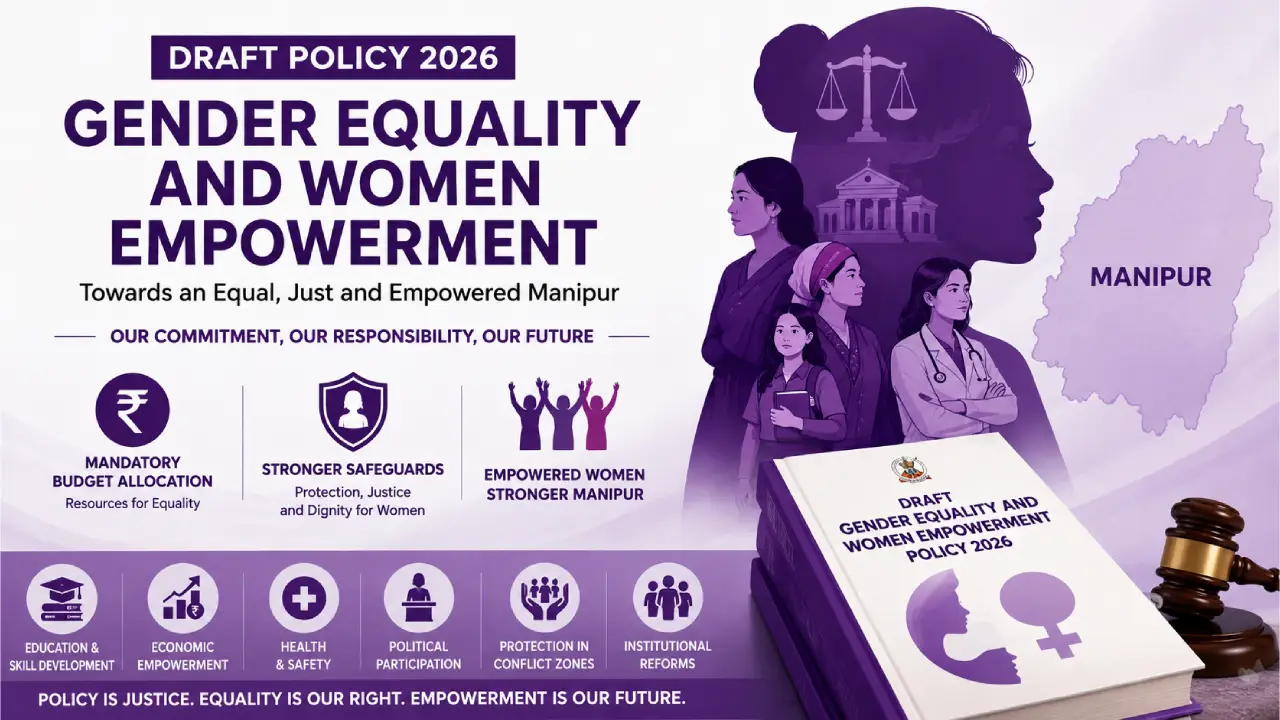
Imphal, July 10: The Manipur State Commission for Women (MSCW) on Friday organised a one-day consultation on the Draft Gender Equality and Women Empowerment Policy 2026, with Chairperson Th. Tiningpham Monsang stressing that gender equality is "not charity but justice" and calling for mandatory budgetary support to ensure the policy is effectively implemented.
The consultation, held at Hotel Imphal in North AOC under the guidance of the National Commission for Women (NCW), brought together government officials, legal experts, representatives of civil society organisations, non-governmental organisations and other stakeholders to deliberate on the draft policy before its finalisation.
Addressing the gathering, Monsang described the proposed policy as more than a vision document, calling it a commitment to safeguard the rights, dignity and security of women in Manipur.
"The policy is not charity; it is justice that women must receive," she remarked, adding that dedicated financial allocations are essential if the policy is to move beyond paper commitments and produce meaningful change.
She argued that every government department should bear responsibility for promoting gender equity through clearly defined programmes backed by adequate financial resources.
Conflict highlights need for stronger safeguards
Referring to the ethnic violence that erupted in Manipur in May 2023, Monsang observed that the conflict exposed the vulnerabilities faced by women during periods of unrest, including displacement, sexual violence and the breakdown of institutional protection mechanisms.
She noted that the proposed policy seeks to incorporate these experiences by strengthening legal safeguards for women in conflict situations, improving access to justice for survivors and establishing rehabilitation mechanisms.
According to the MSCW Chairperson, the policy also recognises the role played by women's organisations, including the Meira Paibis, in supporting affected communities and advocating for peace during the crisis.
She maintained that lasting gender equality cannot be achieved without ensuring security, dignity and justice for women, particularly during emergencies and conflict situations.
Focus on equality and empowerment
Monsang explained that the draft policy is designed to address persistent challenges such as gender-based violence, discrimination and unequal access to education, employment and decision-making opportunities.
She stated that the framework aligns with the constitutional principles of equality as well as the United Nations Sustainable Development Goals (SDGs). The policy also seeks to incorporate international standards on gender justice, including the Convention on the Elimination of All Forms of Discrimination Against Women (CEDAW) and United Nations Security Council Resolution 1325 on Women, Peace and Security.
Among its major proposals are expanding educational and skill development opportunities for girls and women, strengthening economic empowerment through better support for women entrepreneurs, workers and farmers, improving access to healthcare, and enhancing protection against gender-based violence.
The draft also advocates greater participation of women in governance and public decision-making while promoting women-led peacebuilding initiatives and community resilience.
Mandatory budget allocation proposed
A key recommendation in the draft policy is the introduction of mandatory budget allocations for gender-related programmes across government departments.
Monsang argued that policies without assured funding often fail to achieve their intended objectives.
She emphasised that gender equality should not depend on changing priorities or discretionary spending, but should instead be embedded within the government's planning and budgeting process.
According to her, dedicated financial commitments would ensure accountability while enabling departments to implement programmes aimed at reducing gender disparities and improving women's welfare.
Call for wider participation
Describing the consultation as the beginning of a collaborative process, Monsang invited stakeholders from government departments, civil society organisations, academic institutions and the public to offer suggestions that could strengthen the policy before its adoption.
She expressed hope that the final document would reflect the aspirations and concerns of women across Manipur while providing a comprehensive framework for promoting equality, dignity and opportunity.
The consultation concluded with discussions on various provisions of the draft policy and the need for coordinated action among government agencies and community organisations to ensure effective implementation.
Among those present were MSCW Member Secretary W. Phajatombi, TA and Hills Joint Secretary Ng. Uttam, senior advocate Chongtham Narendra, advocates Thiyam Rajkeshor and Thiyam Shanta, along with representatives from various government departments, NGOs, CSOs and members of different communities.