Nagaland University researchers have revealed how Assam's Sylhet Limestone formed during the Eocene, offering new insights into Northeast India's ancient marine environment.
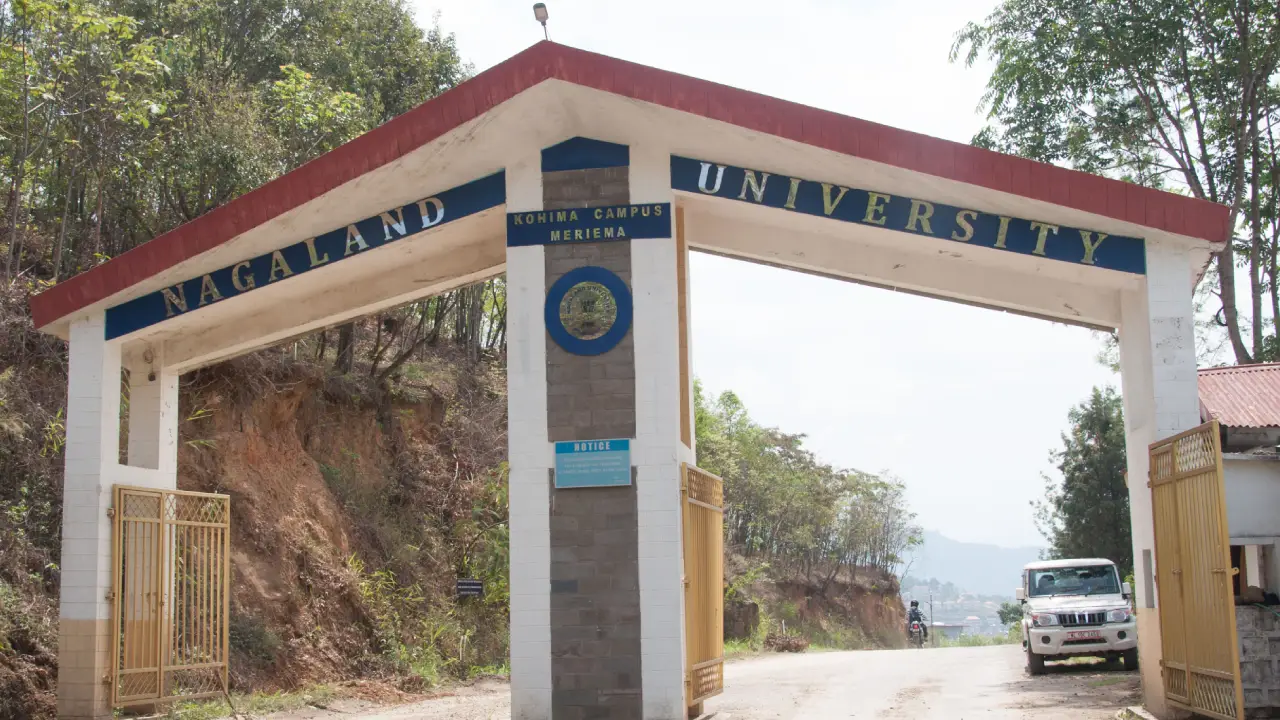
Imphal, July 20: Researchers from Nagaland University have uncovered fresh evidence about how the Sylhet Limestone deposits in Assam's Karbi Anglong district were formed during the Eocene epoch, offering new insights into the ancient marine environment that once existed in Northeast India.
The study, conducted in the Dillai Parbat area of Karbi Anglong, provides a more comprehensive understanding of carbonate sedimentation and palaeoenvironmental conditions in the region. According to the researchers, the findings could support future geological correlation and basin analysis in similar geological settings.
Unlike earlier studies that were largely based on field observations, the research combined field investigations with petrographic analysis and micropaleontological studies to reconstruct the depositional history of the limestone. The team examined limestone, shale and sandstone sequences, sedimentary structures, mineral composition, and microfossils preserved within the rocks.
Their analysis suggests that the present-day land was once covered by a shallow, warm sea with abundant oxygen and nutrients capable of supporting diverse marine microorganisms. The environment is believed to have resembled a tropical to subtropical lagoon or near-shore marine setting.
The researchers also found evidence that sea levels fluctuated repeatedly over time, resulting in varying depositional conditions. Sedimentary structures preserved in the rocks indicate that storm events periodically influenced the area, leaving distinctive geological signatures.
The findings have been published in the peer-reviewed Journal of Geosciences Research. The study was co-authored by Prof. S.K. Srivastava of the Department of Geology, Nagaland University, and research scholar Tsenchumo Lotha.
Nagaland University Vice-Chancellor Prof. Jagadish Kumar Patnaik congratulated the research team, describing the study as a valuable contribution to understanding the geological history of Northeast India.
He stated that the work reflects the university's commitment to advancing scientific knowledge through rigorous research and interdisciplinary collaboration. He expressed hope that the achievement would encourage more faculty members and students to undertake research addressing fundamental scientific questions while contributing to national and global scholarship.
Explaining the research, Prof. S.K. Srivastava said the team sought to understand the depositional conditions by integrating field observations with laboratory analyses.
"The evidence indicates that the limestone was deposited in a shallow marine, warm-water environment with favourable ecological conditions for microfaunal growth," he noted.
Research scholar Tsenchumo Lotha observed that the significance of many field observations became apparent only after laboratory analyses were completed.
"Things are not always clear when we are in the midst of fieldwork. But when we connected the same with lab results, the overall picture started becoming clearer. That process was really important for understanding the environment of deposition," he said.
The researchers said the study also improves scientific understanding of sedimentation processes, fossil assemblages and environmental evolution. It further indicates that changes in the depositional environment were linked to tectonic movements that affected the region over geological time.
According to the team, the findings will help scientists better understand how the Sylhet Limestone formed, reconstruct the ancient environment of Northeast India, and examine long-term changes in the Earth's geological history.