PHED has outlined its roadmap to expand drinking water supply, Jal Jeevan Mission coverage and sanitation infrastructure in Manipur during the relaunched DIPR Meet the Press programme.
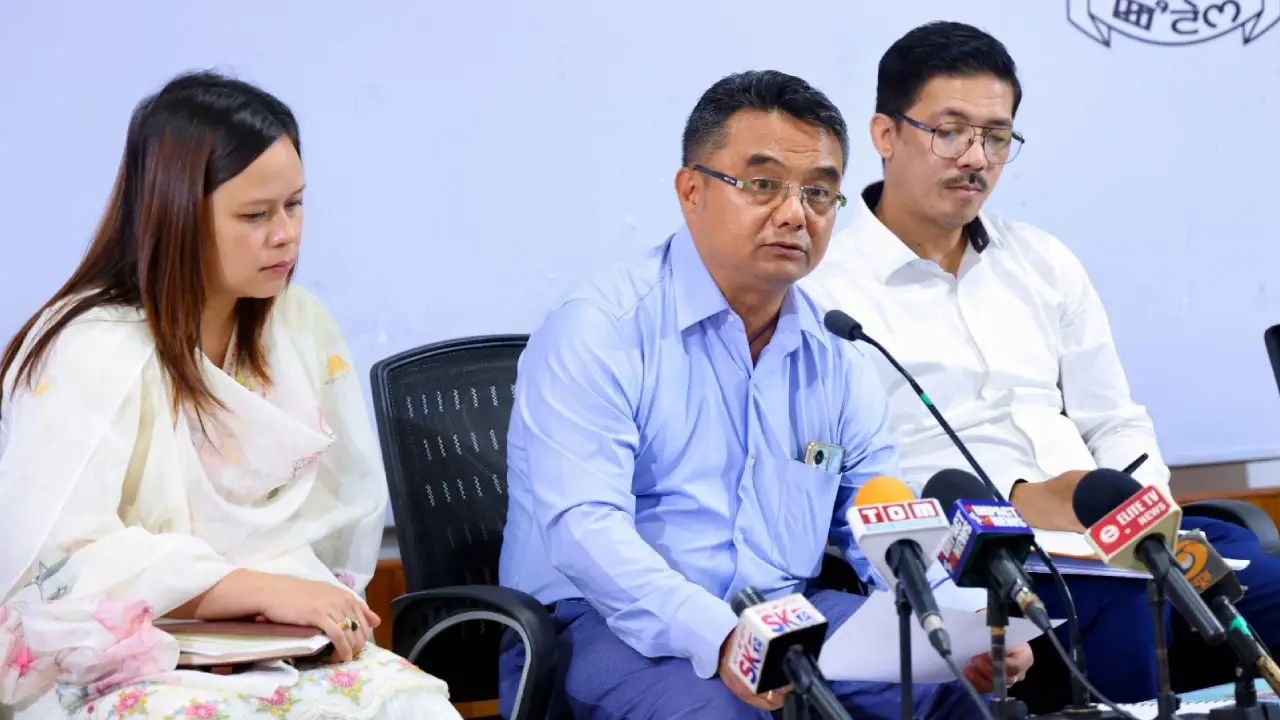
Imphal, July 7: The Public Health Engineering Department (PHED) on Tuesday outlined an ambitious roadmap to strengthen drinking water supply, expand rural tap water coverage and improve sanitation infrastructure across Manipur, while highlighting the adoption of smart technologies that have significantly enhanced service delivery and revenue collection.
The department presented its achievements and future plans during the relaunch of the 'Meet the Press' programme organised by the Directorate of Information and Public Relations (DIPR), making PHED the first department to participate in the revived public outreach initiative.
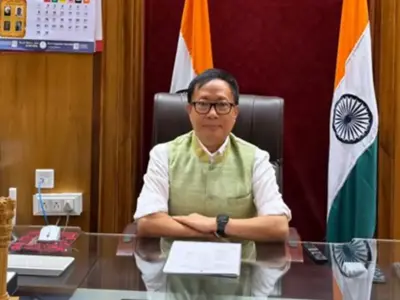
The briefing was attended by Additional Chief Engineer Dorendra Rajkumar, Superintending Engineers Th. Bebina Devi and L. Irish Singh, and Executive Engineer Th. Pika Singh, who provided updates on urban and rural water supply projects, sewerage development and sanitation initiatives being implemented across the state.
PHED officials said the department is responsible for planning, investigating and executing water supply schemes in both urban and rural areas, besides implementing sewerage projects and the Swachh Bharat Mission (Grameen).
They informed that 12 water treatment plants operating across 14 locations are currently supplying treated drinking water to Greater Imphal. The facilities source water from Kangchup, Singda, Chinga, Kangla, Khuman Lampak, Porompat, Koirengei, Canchipur, Ningthem Pukhri, Irilbung, Old Thumbuthong, Moirangkhom, Singjamei Ward No. 17 and Chingkheiching.
Among them, the 45 million litres per day (MLD) Chingkheiching Water Treatment Plant, which draws raw water from Thoubal Dam, supplies treated water up to Ghari in Imphal West district.
Officials said the department has also modernised urban water management through the introduction of smart water meters, an online billing portal and a Supervisory Control and Data Acquisition (SCADA)-based monitoring system. The digital systems enable real-time monitoring of water distribution, improve operational efficiency and enhance consumer services.
According to PHED, the online billing system has contributed to an estimated 40 to 50 per cent increase in revenue collection.
The department also stated that ageing cast iron water distribution pipelines are being replaced with durable ductile iron pipelines under various schemes. In addition, several overhead reservoirs and storage tanks have been constructed through externally aided projects to improve water storage and distribution.
Providing an update on rural water supply, PHED said Manipur is implementing multiple programmes, including the Jal Jeevan Mission (JJM), an Asian Development Bank-funded External Aided Project (EAP) and other centrally sponsored schemes.
Officials said the Jal Jeevan Mission currently provides household tap water connections to approximately 38 per cent of rural households.
The External Aided Project is expected to cover nearly 2.6 lakh rural households, accounting for around 58 per cent of the state's rural population. The remaining households are planned to be covered under other government-funded programmes.
The department informed that the reaffirmation of household tap connections under the Jal Jeevan Mission is currently underway. The state aims to complete JJM implementation by March 2028, while works under the External Aided Project are scheduled for completion by March 2027. PHED also reported progress in sewerage infrastructure development in the state capital.
According to officials, Phase-I of the Sewerage Project has been completed in Thangmeiband, Lamphel and Uripok, while Phase-II is currently under execution.
Under Swachh Bharat Mission (Grameen) Phase-II, the department continues efforts to sustain Open Defecation Free (ODF) status across rural areas while strengthening solid and liquid waste management systems.
Officials said these activities are being implemented through convergence with Finance Commission grants and the Mahatma Gandhi National Rural Employment Guarantee Scheme (MGNREGS) to improve sanitation infrastructure and ensure long-term sustainability.
The briefing also marked the relaunch of the Meet the Press programme by the Directorate of Information and Public Relations.
According to DIPR, the initiative has been revived to enhance transparency in governance, improve public awareness about government programmes and facilitate the timely dissemination of authentic information through regular interactions between government departments and the media.
The PHED briefing served as the inaugural departmental presentation under the renewed programme, with officials highlighting ongoing infrastructure development aimed at improving access to safe drinking water and sanitation services across Manipur.