Talks between the Manipur government and the United Naga Council ended without a breakthrough as the UNC refused to lift the NH-2 blockade, while black flag protests greeted Chief Minister Yumnam Khemchand Singh in Senapati.
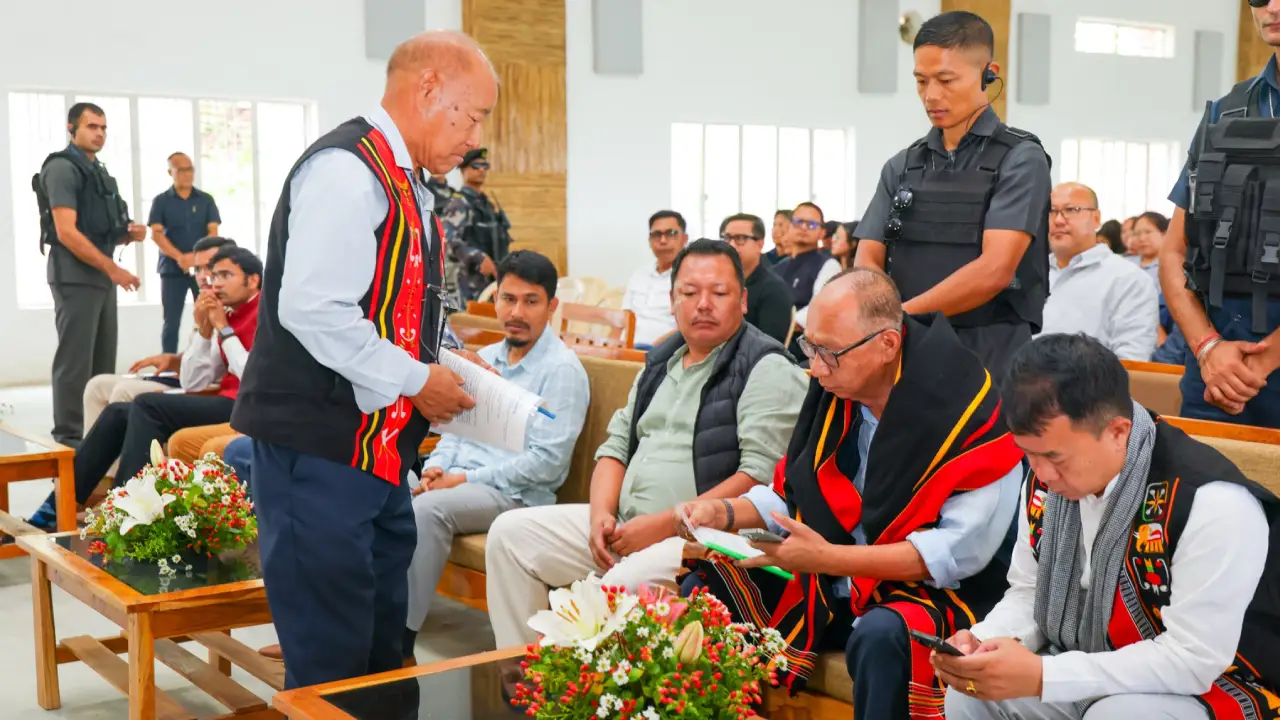
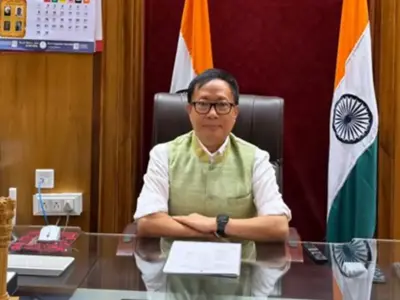
Senapati, July 8: A high-level meeting between Manipur Chief Minister Yumnam Khemchand Singh and the United Naga Council (UNC) ended without a breakthrough on Wednesday, with the Naga apex body refusing to withdraw the ongoing indefinite economic blockade on National Highway-2 (NH-2) and reiterating that justice for the six slain Liangmai Naga civilians remains its foremost demand.
The closed-door meeting was held at the Deputy Commissioner's Office in Senapati and attended by senior civil and police officials, along with members of the state cabinet and legislators. The talks came amid mounting public pressure over the killing of six Liangmai Naga men, who were allegedly abducted from Leilon Vaiphei village in Kangpokpi district on May 13 before their mutilated and dismembered bodies were recovered during search operations on June 10.
Despite the government's appeal to end the blockade in view of disruptions to the movement of essential commodities and public inconvenience, the UNC maintained that the agitation would continue until its demands are met.
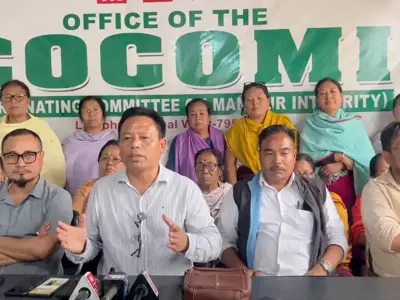
UNC President NG Lorho described the meeting as "fruitful and meaningful" but said it concluded without any final resolution.
The Chief Minister's visit to Senapati was marked by widespread protests along the route to the district headquarters. At Liangmai Taphou, residents dressed in black and carrying black flags assembled with placards demanding justice for the six victims.
The peaceful demonstration reflected growing frustration over what protesters described as the government's failure to deliver tangible results despite repeated assurances, several high-level meetings and the transfer of the investigation to the National Investigation Agency (NIA).
Protest banners carried messages including "Enough Assurances: Deliver Justice," "No More Talks. Show Us Results," "Leadership Is Measured by Action, Not Assurances," "Twenty-Nine Days; Still No Justice," and "Equal Justice. Equal Protection. Equal Accountability."
The demonstrators urged the government to conduct a transparent and time-bound investigation, arrest all those responsible for the killings and ensure justice for the bereaved families.
Protesters also asserted that the ongoing economic blockade was a consequence of the government's failure to ensure accountability, arguing that lasting normalcy could not be restored without addressing the root cause of the agitation.
During the meeting, Chief Minister Khemchand Singh urged the UNC leadership to reconsider its decision and withdraw the blockade, citing the humanitarian impact caused by disruptions in the transportation of essential commodities through NH-2, one of Manipur's principal supply routes.
The government also acknowledged the role played by Naga village guards in facilitating the safe release of 14 Kuki-Zo hostages, describing the development as a positive humanitarian gesture that helped prevent further escalation of tensions.
However, the UNC maintained that justice for the six victims must precede any relaxation of its protest.
During the discussions, the UNC submitted a formal four-point charter of demands to the Chief Minister and reiterated that both the economic blockade and its refusal to claim the bodies of the six victims would continue until concrete action is taken.
The council demanded the immediate withdrawal of the Suspension of Operations (SoO) agreement with Kuki militant groups, alleging that the arrangement has failed to prevent violence.
It also sought the immediate arrest of all those involved in the abduction and killing of the six Liangmai Naga civilians, the arrest of the village chief of Leilon Vaiphei, and the removal of Deputy Chief Minister Nemcha Kipgen from the state cabinet.
The bodies of the six victims continue to remain at the Jawaharlal Nehru Institute of Medical Sciences (JNIMS) mortuary in Imphal, with the UNC refusing to claim them until its demands are fulfilled.
Following the meeting, the Chief Minister travelled to Mao, where he inspected the Regional Potato Farm and reviewed ongoing activities of the Horticulture Department. He also interacted with officials and local residents regarding the progress of the Mao Water Supply Scheme.
Later, the Mao Council accorded him a civic reception at Asufii Auditorium, where memoranda were submitted by the Mao Council, Poumai Naga Union (PNU) and Mao Students' Union (MSU) on various developmental issues.
Addressing the gathering, Khemchand Singh expressed happiness at visiting Mao, describing it as the home area of Deputy Chief Minister Losii Dikho, and assured that the representations submitted by various organisations would be examined and appropriate action taken.
The Chief Minister was accompanied by Deputy Chief Minister Losii Dikho, MLAs Tongbram Robindro Singh, J. Kumo Sha, and Sheikh Noorul Hassan, Home Commissioner Ashok Kumar, Senapati Deputy Commissioner Dharun Kumar, IAS, and other senior officials.
With no agreement reached during Wednesday's talks, the UNC's indefinite economic blockade on NH-2 is set to continue, while the demand for justice in the killing of the six Liangmai Naga civilians remains at the centre of the ongoing agitation.