Fourteen Manipur CSOs and community leaders have urged the Centre and state government to defer Census 2027 and update the NRC before any delimitation exercise.
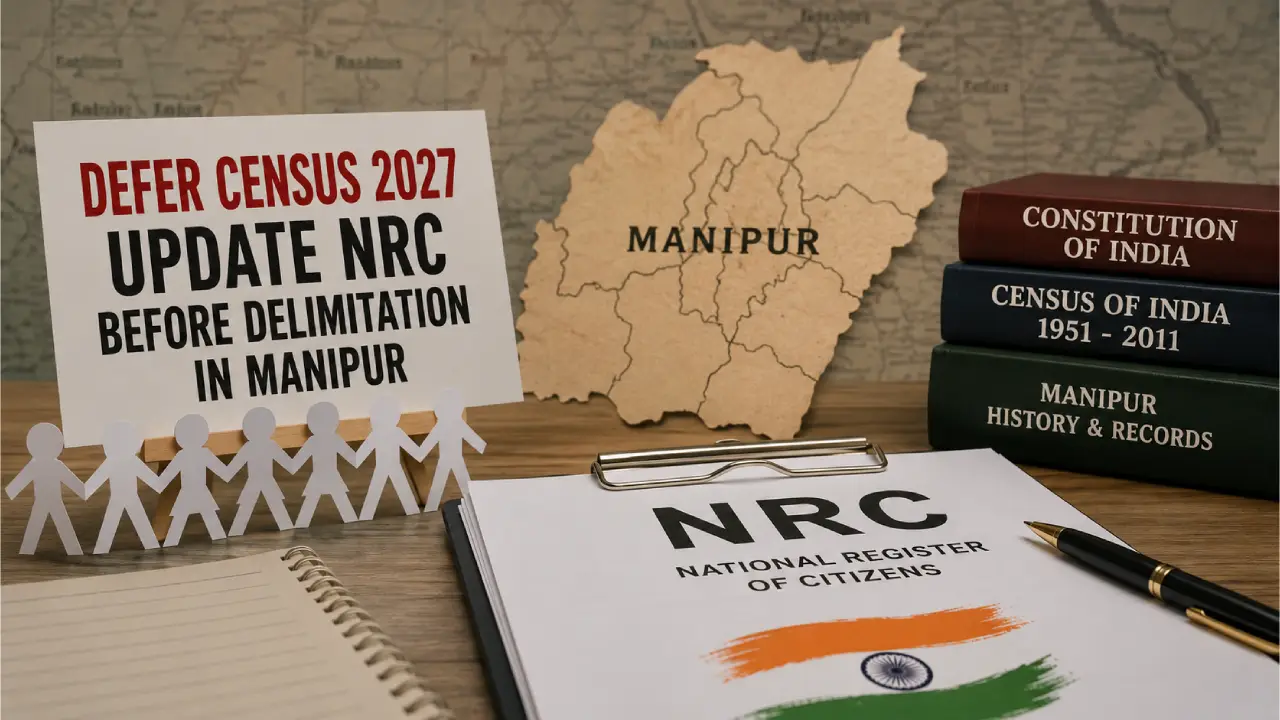
New Delhi, August 25: The 14 CSOs, Manipur and community leaders from Manipur has urged the Central and state governments to defer the ongoing Census exercise and undertake an update of the National Register of Citizens (NRC) in the state before any delimitation exercise.
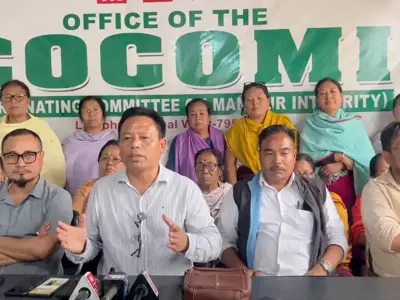
The group, comprising representatives of Kangleipak, Kabui Union Manipur, Kom Union Manipur, Rongmei Naga Manipur, Meitei Pangal Manipur and a representative of internally displaced persons (IDPs), said there was a gap between the demands of people in Manipur and the manner in which the state's issues have been presented to political leaders and senior officials in New Delhi.
In a press statement issued in New Delhi on August 25, the group said it had submitted representations to the Prime Minister's Office (PMO), the Ministry of Home Affairs (MHA), the Registrar General of India (RGI) and other authorities seeking identification of Indian citizens before any delimitation exercise in Manipur.
The organisations maintained that updating the NRC is a common demand and urged the Centre to work with stakeholders in Manipur to establish a process for identifying citizens based on a historical reference point.
The 14 CSOs and community leaders have proposed 1951 as the reference year for identifying citizens, citing what they described as historical and legal grounds.
According to the statement, the Manipur Constitution Act, enacted before the state's merger with the Indian Union, contained an officially gazetted list of villages. The group claimed that the same village and population data were subsequently used during the first democratic election in Manipur, in which 53 representatives were elected from across communities.
The organisations also referred to the former entry and exit permit system maintained by the erstwhile Manipur kingdom.
They stated that the system regulating the movement of foreigners was abolished on November 18, 1950, by then Chief Commissioner Himmat Singh following Manipur's merger with the Dominion of India.
The group argued that the abolition of the permit system made the subsequent 1951 Census and NRC particularly significant as a possible reference point for determining citizenship.
It claimed that the 1951 exercise used the 1948 village list and pointed to subsequent changes in Manipur's administrative structure as a reason for examining historical population and village records before undertaking delimitation.
Village numbers cited as reason for NRC demand
The statement highlighted changes in the number of villages recorded in different Census exercises.
The group said Manipur had remained a single district until 1969, when the state was reorganised into five districts and 25 subdivisions. It further claimed that only 1,947 villages were reflected in the relevant administrative records at that stage.
According to figures cited in the statement, the number of villages recorded in Manipur increased from 1,866 in the 1961 Census to 2,540 in the 2011 Census.
The group gave district-wise comparisons for several districts:
Chandel: 244 villages in 1961 to 430 in 2011
Churachandpur: 290 to 599
Tamenglong: 163 to 175
Ukhrul: 223 to 213
Bishnupur: 61 to 48
Thoubal: 113 to 87
Imphal West: 142 to 115
Imphal East: 262 to 203
The organisations also claimed that several hamlets and new villages were awaiting recognition as of 2027.
The statement argued that the increase in the number of villages, particularly in Churachandpur and Chandel, should be examined in the context of the recognition of villages through processes associated with the Hill Areas Committee and Article 371C of the Constitution, as well as the Scheduled Tribes Order of 1950.
Questions raised over village recognition
The group also referred to an earlier controversy involving recognition of villages in the hill districts.
It claimed that a Manipur-cadre IAS officer was suspended by the state government on June 27, 2011, along with another official, over allegations that unauthorised orders had been issued recognising 96 villages in the hill districts without the required competent authority.
The organisations cited the episode as an example of what they described as the need for greater scrutiny of historical village records and administrative recognition.
The statement did not provide further details of the disciplinary proceedings or the subsequent outcome of the case.
Scheduled Tribes list also cited
The 14 organisations also referred to the Constitution (Scheduled Tribes) Order, 1950, arguing that the Scheduled Tribes list applicable to Manipur and subsequent amendments should be examined in discussions surrounding citizenship identification and demographic changes.
The statement said the order recognised 34 tribal communities in Manipur and had subsequently undergone parliamentary amendments under Article 342 of the Constitution.
It specifically referred to an amendment notified in January 2012.
The organisations argued that historical records relating to citizenship, village recognition, demographic changes and constitutional lists should be examined together before any exercise that could affect political representation.
Porous Myanmar border cited
A major part of the statement focused on Manipur's international boundary with Myanmar.
The group described the border as porous and argued that, following the abolition of the former entry and exit permit system, there was a need for an effective mechanism to identify foreign nationals who may have entered the state.
The organisations alleged that people had entered Manipur over the years and subsequently settled in the state while acquiring political and constitutional rights.
The allegations were presented as one of the reasons for their demand for an NRC update.
The group said a citizenship identification exercise based on a defined historical reference year would help address concerns over the political and constitutional implications of demographic changes.
Call to defer Census before delimitation
The 14 CSOs and community leaders called on both the Government of India and the Government of Manipur to defer the present Census exercise and facilitate an NRC update before any delimitation process is undertaken in the state.
They argued that delimitation could have long-term consequences for political representation and therefore should follow a process of citizenship identification.
The group also acknowledged that the issue involves multiple communities and could raise concerns among different stakeholders because Manipur is inhabited by indigenous communities as well as people who have settled in the state at different points in history.
Against this backdrop, the organisations proposed a tripartite dialogue involving the government and different stakeholders.
Demand for tripartite talks
The statement urged the Centre and the Manipur government to facilitate tripartite talks to discuss the proposed NRC exercise and related questions before delimitation.
The organisations said such a process should provide an opportunity for different communities and stakeholders to present their concerns and examine historical records.
They maintained that a dialogue-based approach would be necessary because questions surrounding citizenship, migration, village recognition and political representation are sensitive and affect different sections of Manipur's population.
Group invokes citizenship and constitutional safeguards
The organisations also referred to recent legal and constitutional provisions concerning the detection and deportation of immigrants.
While welcoming what they described as legal provisions empowering the state to identify and deport immigrants, the group argued that identification should be based on a clearly established historical reference point.
The statement said this was necessary to ensure that political power and constitutional benefits were not, in the group's view, transferred to people whom it considers non-original inhabitants.
The group further argued that certain facilities and political rights should be protected for what it described as "original Indian citizens".
These positions remain the demands and assertions of the organisations and were not accompanied in the statement by an independent government assessment of the demographic or citizenship claims.
Appeal to Kuki-Zo Council and Saikot MLA
The group also directly appealed to the Kuki-Zo Council and Paolienlal Haokip, MLA from the Saikot Assembly constituency, to examine Census data from 1951 to 2011.
The organisations argued that a review of the historical figures would, in their view, clarify the reasons behind their demand to postpone Census 2027 and update the NRC before delimitation.
The appeal comes amid continuing political debate in Manipur over the proposed Census, citizenship identification and the implications of future delimitation.
The 14 CSOs and community leaders concluded by reiterating their demand that the Centre and the Manipur government first address the question of citizenship identification and the NRC before proceeding with delimitation in the state.