A new study finds that introducing the hexavalent six-in-one vaccine into India's Universal Immunization Programme could reduce injections, improve efficiency and lower healthcare system costs if made affordable.
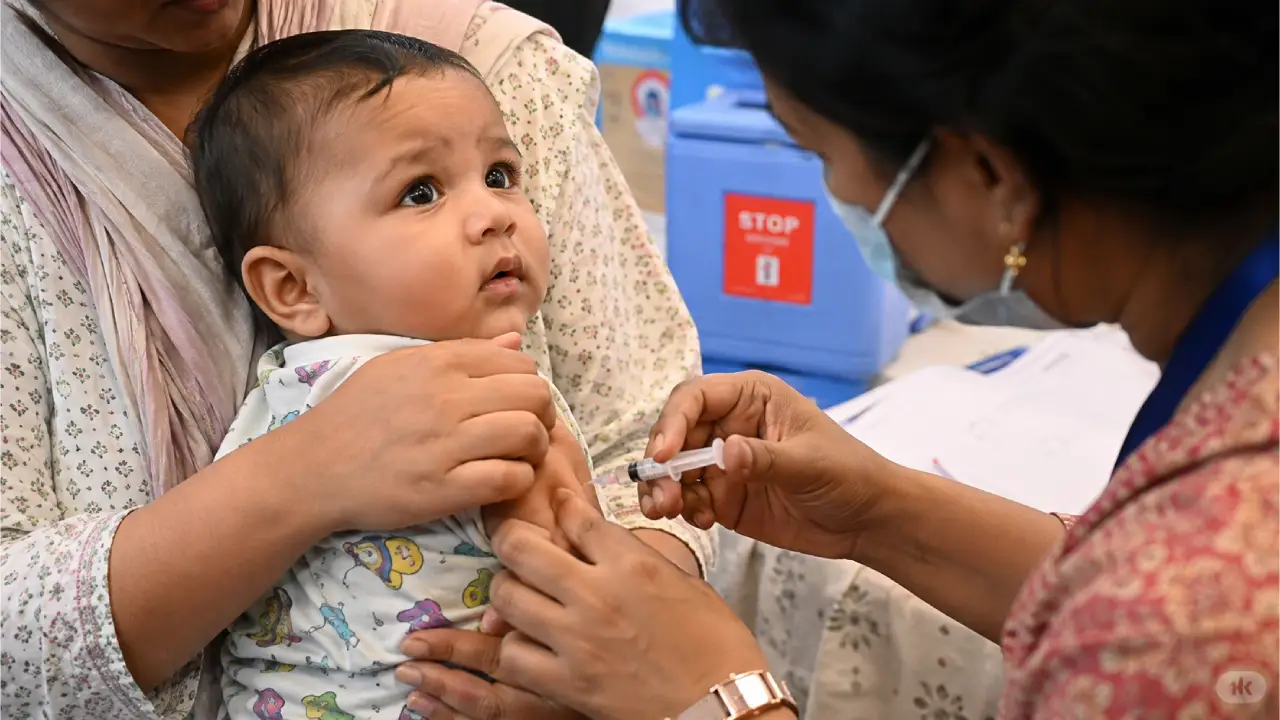
Imphal, August 4: Introducing a hexavalent (six-in-one) vaccine into India's Universal Immunization Programme (UIP) could make childhood immunisation more efficient, reduce the number of injections given to infants and generate operational savings if the vaccine becomes affordable, according to a new study published in the peer-reviewed journal Human Vaccines & Immunotherapeutics.
The study was led by Dr. Pawan Kumar and Dr. Kapil Singh of the Ministry of Health and Family Welfare, Government of India, in collaboration with researchers from The George Institute for Global Health India, The Gates Foundation, Gavi, The Vaccine Alliance, and John Snow India Private Limited.
The researchers found that the six-in-one vaccine could streamline immunisation services by protecting children against six diseases—diphtheria, tetanus, pertussis, hepatitis B, Haemophilus influenzae type b (Hib), and polio—with a single injection.
India vaccinates nearly 26 million infants every year under its Universal Immunization Programme. Currently, children receive multiple vaccines during routine visits, resulting in several injections, increased demands on caregivers' time and a higher workload for frontline healthcare workers.
According to the study, replacing multiple vaccines with the hexavalent vaccine could reduce the number of injections administered to infants while also lowering cold-chain storage requirements, reducing the use of syringes and other vaccination supplies, and easing the workload of Auxiliary Nurse Midwives (ANMs), vaccine managers and cold-chain handlers.
The researchers identified vaccine pricing as the key factor influencing programme costs. Based on historical procurement trends in India, the study estimated that if the price of the hexavalent vaccine were reduced by 50 per cent, the operational and system-level savings could outweigh the additional cost of procuring the vaccine under the primary immunisation schedule.
The study assessed two possible implementation models: one replacing the existing pentavalent and fractional inactivated polio vaccine (IPV) doses in the primary immunisation schedule, and another replacing both the primary schedule and the DTP booster dose with the hexavalent vaccine. The analysis considered costs borne by both the government and households, including vaccine procurement, cold-chain logistics, syringes, healthcare worker time and caregiver time.
Among the projected benefits highlighted in the study are:
Fewer injections for infants during routine immunisation visits.
Lower cold-chain storage requirements.
Reduced consumption of syringes and other vaccination supplies.
Less time required by ANMs for vaccine administration and record-keeping.
Lower workload for vaccine managers and cold-chain personnel.
Time savings for parents and caregivers.
The authors also noted that earlier stakeholder research showed caregivers generally prefer fewer injectable vaccines during immunisation visits.
Dr. Susmita Chatterjee, Program Head – Health Economics at The George Institute for Global Health India and one of the study's authors, said combination vaccines have long been recognised for simplifying immunisation programmes while improving convenience for both families and health systems.
She said that although the hexavalent vaccine involves higher upfront procurement costs, it also offers significant efficiencies by reducing injections, easing pressure on frontline health workers, lowering cold-chain requirements and saving caregivers' time. She added that the findings provide important economic evidence to support future policy discussions on strengthening India's immunisation programme.
The researchers concluded that strategic vaccine procurement and pricing would be crucial in making the hexavalent vaccine affordable while improving the efficiency and sustainability of India's childhood immunisation programme.