Bishnupur CJM Court rejects the CBI closure report in the 2000 Malom killings, takes cognizance against 11 Assam Rifles personnel and summons them on September 25.
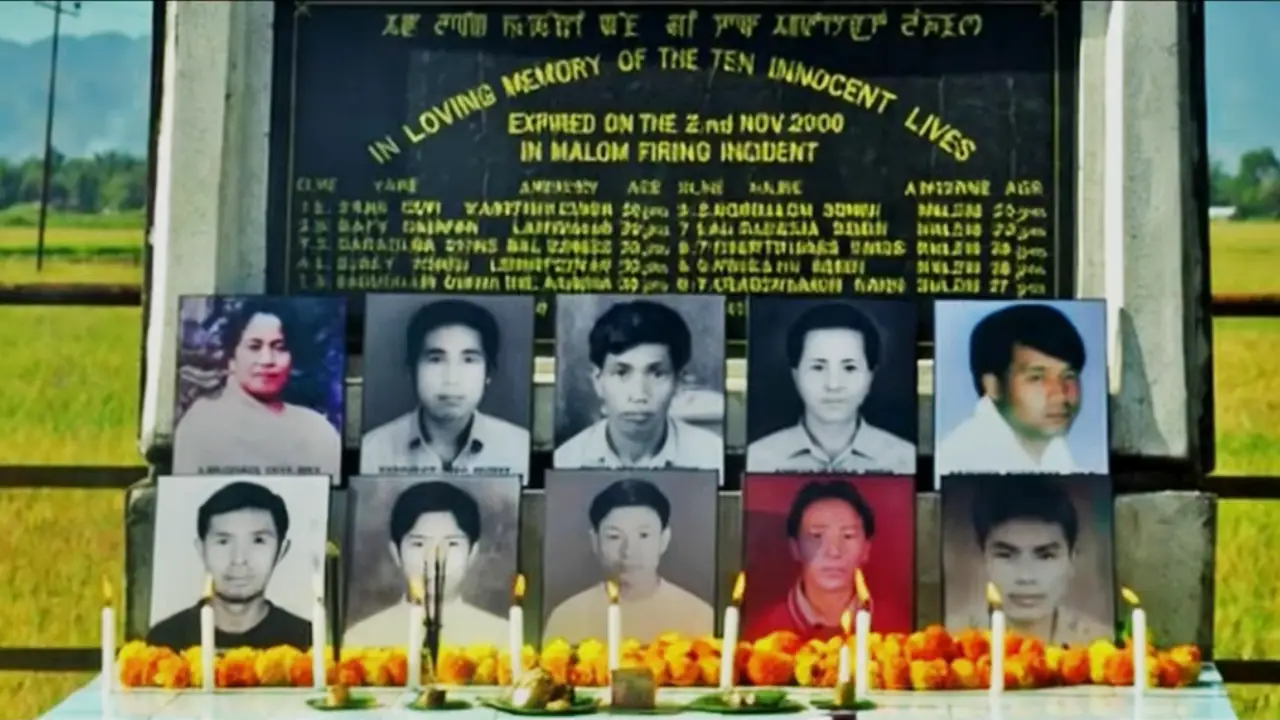
Imphal, August 27: The Chief Judicial Magistrate (CJM) Court in Bishnupur has rejected the CBI’s closure report in the 2000 Malom civilian killings and taken cognizance of criminal charges against 11 surviving Assam Rifles personnel accused in the case.
In an order dated August 14, 2026, CJM Bineshwori Maibam ruled that the Central Government’s refusal to grant prosecution sanction under Section 6 of the Armed Forces (Special Powers) Act (AFSPA) did not prevent the court from initiating criminal proceedings in the case. The court has summoned all 11 accused to appear on September 25, 2026.
The case relates to the killing of 10 civilians at Malom in Imphal West on November 2, 2000. The incident, widely known as the Malom massacre, became one of the defining episodes in Manipur’s long-running opposition to AFSPA.
Court rejects AFSPA sanction as a bar to prosecution
The court examined whether the absence of prosecution sanction under Section 6 of AFSPA prevented it from taking cognizance of the alleged offences.
The CBI’s investigation had concluded that there was no exchange of fire between Assam Rifles personnel and insurgents at the location and time of the killings. According to the investigation, the 10 civilians were killed by personnel of the 8th Assam Rifles without justification.
The CBI subsequently identified 11 surviving personnel for prosecution under Sections 34, 302, 323, 325 and 201 of the Indian Penal Code.
The case had reached the CBI after the Supreme Court, in July 2017, directed investigations into alleged extra-judicial killings in Manipur. The Supreme Court has previously held that members of the armed forces remain subject to the rule of law and can be proceeded against where alleged excesses have no reasonable connection with official duty.
The Bishnupur court relied on the Supreme Court’s 1997 judgment in Naga People’s Movement of Human Rights vs Union of India while examining the scope of Section 4(a) of AFSPA. The Supreme Court held that the power under Section 4(a) to use force, including lethal force, is conditional on the existence of a relevant prohibitory order and other safeguards.
According to the court’s assessment of the records in the Malom case, there was no evidence of a prohibitory order of the required nature being in force at the relevant location on November 2, 2000.
The court therefore held that the accused could not rely on Section 4(a) in the circumstances alleged in the case and that prosecution sanction under Section 6 of AFSPA did not constitute a bar to taking cognizance.
11 Assam Rifles personnel summoned
The accused named in the proceedings include Joseph M. George, then a Major with 8 Assam Rifles; Barun Kumar, then a Rifleman/Driver; Harjinder Singh; Jaipal Singh; Ram Bachan Singh; Manbir Singh Rawat; Ramesh Singh; Deepak Kumar Sarkar; Vijay Singh; Om Bahadur Chhetri; and Shipangba Sangtam.
Several of the accused have since retired from service, while others are stated to have continued serving in Assam Rifles units.
Two other personnel named during the investigation, Naib Subedar Dhan Bahadur Thapa and Havildar Kiran Kumar, died before the conclusion of the proceedings. No further action was recommended against them.
The charges taken cognizance of include murder, voluntarily causing hurt and destruction of evidence.
CBI closure report challenged
The proceedings followed the CBI’s submission of a final report after the Department of Military Affairs under the Ministry of Defence denied prosecution sanction on December 18, 2023.
The closure was challenged by the Extra Judicial Execution Victim Families Association Manipur (EEVFAM), whose Secretary filed Criminal Miscellaneous Case No. 105 of 2025 seeking rejection of the CBI final report and direct cognizance of the offences.
The Bishnupur court accepted the challenge and rejected the closure report.
The court also considered the protection available to public servants under Section 197 of the Code of Criminal Procedure. It found that the material before it did not establish circumstances that would bring the alleged acts within the protection of official duty.
The order observed that official duty could not be extended to acts such as illegal confinement and murder.
What happened at Malom in 2000?
On November 2, 2000, 10 civilians were killed near the Malom bus stop in Imphal West after an earlier bomb attack involving security personnel. The victims included Soibam Prakash Singh, Kshetrimayum Inaocha, Amakcham Raghumani Singh, Gurumayum Bapu Sharma, Kangujam Bijoy Singh, Laishangbam Sana Devi, Sinam Robin Singh, Sinam Chandramani Singh, Oinam Sanatomba Singh and Tokpam Shantikumar Singh.
Local accounts disputed the security forces’ initial claim that the deaths occurred during an encounter with insurgents.
The Manipur High Court in 2014 directed payment of Rs 5 lakh compensation to each of the 10 victims’ families. Contemporary reports of the judgment said the court found insufficient evidence to support the claim of a genuine armed encounter.
The killings also prompted civil rights activist Irom Chanu Sharmila to begin her prolonged hunger strike on November 5, 2000, demanding repeal of AFSPA. She ended the fast in August 2016 after nearly 16 years.
Case to come up on September 25
The Bishnupur CJM Court has now directed the 11 accused to appear before it on September 25, 2026.
The order marks a significant new stage in the two-and-a-half-decade-old case, moving the proceedings beyond the CBI’s closure report and into criminal proceedings before the trial court.
The court’s decision does not amount to a finding of guilt against any of the accused. The allegations will have to be tested through the judicial process, with the accused entitled to contest the charges in accordance with law.