Manipur’s peak power demand may reach 310 MW this winter, with MSPDCL planning power banking, a 100-MW allocation and grid upgrades.
Imphal, August 11: Manipur’s peak electricity demand is projected to reach 300–310 MW in December 2026 and January 2027, while power availability is expected to decline during the winter lean hydropower season, according to the Manipur State Power Distribution Company Limited (MSPDCL).
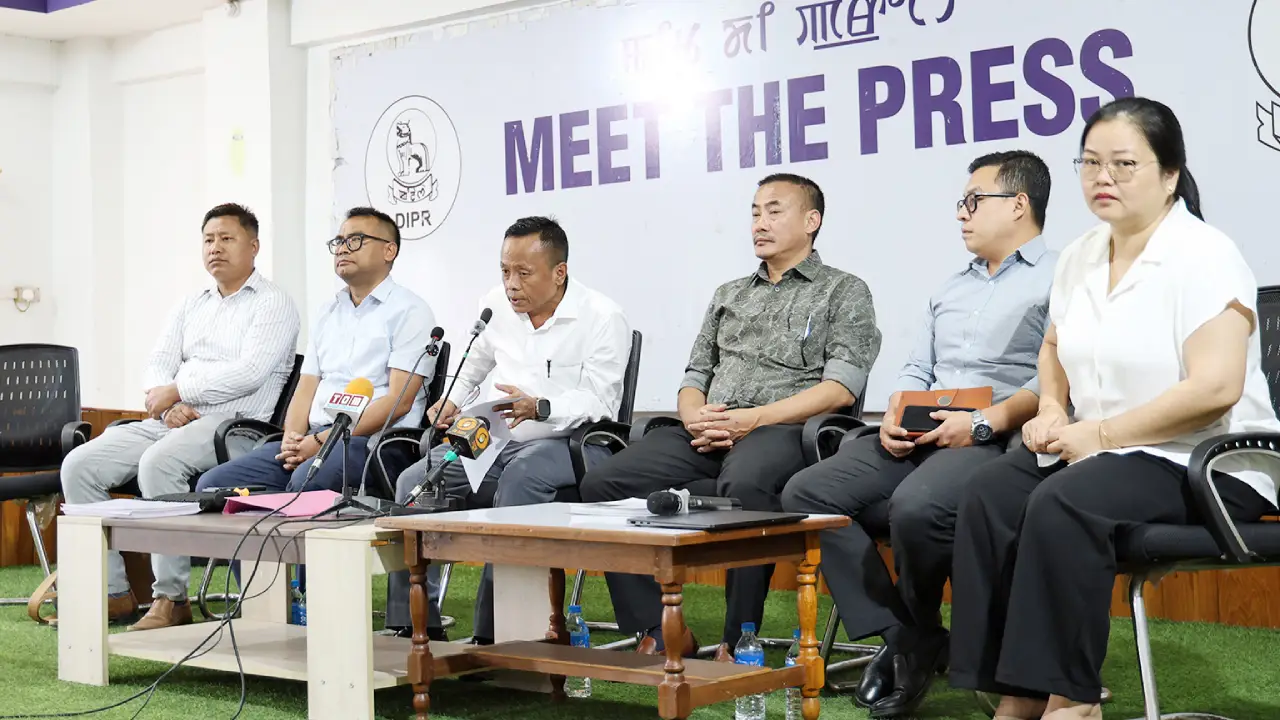
At the 11th edition of the “Meet the Press” programme organised by the Directorate of Information and Public Relations (DIPR) in Imphal on Tuesday, MSPDCL Managing Director M. Rabi Singh outlined measures to manage the anticipated power shortage.
The measures include return-energy banking, efforts to secure a firm 100-MW power allocation from the NTPC Farakka Super Thermal Power Project, strengthening of the distribution network, expansion of smart metering and promotion of rooftop solar.
Rabi Singh said Manipur has a long-term allocated power capacity of 291.69 MW. However, actual power availability fell to around 160–170 MW during June and July 2026, while peak demand reached about 260 MW during the same period.
The peak demand was nearly 20 MW higher than the previous year, he said.
Winter shortage expected
According to MSPDCL, the pressure on power availability has been driven mainly by the delayed monsoon, prolonged dry spells and reduced generation from run-of-the-river hydropower projects in the Northeast.
A significant portion of Manipur’s power supply is linked to hydropower generation. As a result, changes in rainfall and water availability have a direct impact on electricity generation in the State.
The situation could become more difficult during the winter months, when hydropower generation generally declines. With demand expected to reach 300–310 MW, MSPDCL estimates a potential deficit of around 140–150 MW during the lean season unless additional power is arranged.
To address the anticipated shortage, MSPDCL has secured return-energy banking arrangements of up to 50–66 MW during daily peak hours from December 2026 to March 2027.
Under the arrangement, Manipur can draw additional electricity during periods of peak demand and return equivalent energy when its power position improves.
MSPDCL seeks 100 MW from Farakka project
MSPDCL has also sought Cabinet approval to approach the concerned authorities for a firm allocation of 100 MW from the NTPC Farakka Super Thermal Power Project, covering Stages I and II.
The proposed allocation carries a tariff of Rs 4.14 per unit.
Rabi Singh said the additional allocation would help bridge the continuing power deficit and provide a more stable source of electricity, reducing the State’s dependence on seasonal hydropower generation.
Distribution network upgrade underway
Alongside efforts to secure additional power, MSPDCL is undertaking infrastructure works under the Revamped Distribution Sector Scheme (RDSS).
The works include reconductoring and bifurcation of 11-kV feeders and replacement of low-tension bare conductors with Aerial Bunched cables.
The measures are intended to improve the reliability and safety of the distribution network, reduce technical losses and curb unauthorised power usage.
MSPDCL said material supply for the loss-reduction works has reached 80 per cent, while erection work has progressed to 48 per cent. The project is targeted for completion by March 2028.
Under the RDSS programme, 36,972 beneficiaries have been sanctioned, while 32,232 beneficiaries have already been surveyed across 1,229 habitations.
The programme is expected to support network expansion and improve household electrification in areas requiring additional infrastructure.
Nearly 68,400 smart meters installed
Smart metering is another major component of MSPDCL’s power-sector reform programme.
Under RDSS and the Advanced Metering Infrastructure Service Provider (AMISP) programme, conventional electricity meters are being replaced with smart prepaid meters.
Rabi Singh said around 68,400 smart meters have been installed so far. These comprise 67,197 single-phase meters and 1,203 three-phase meters.
MSPDCL has also installed 2,057 distribution-transformer meters and 239 feeder meters.
The system-level meters are expected to allow the utility to track electricity flows more accurately and identify areas where distribution losses occur.
The overall smart-metering programme is targeted for completion by September 2027.
For consumers, smart meters will allow real-time monitoring of electricity consumption through the MSPDCL website and mobile application.
Addressing concerns over the new meters, Rabi Singh said MSPDCL has discontinued overload disconnections for smart-metered consumers. Consumers who have concerns about meter accuracy can also request check meters to verify readings.
Rooftop solar target set at 18,000 households
MSPDCL is implementing the PM Surya Ghar: Muft Bijli Yojana as the State Nodal Agency and has set a target of bringing 18,000 residential consumers under rooftop solar by March 2027.
Under the scheme, Central Financial Assistance is Rs 33,000 for a 1-kW system and Rs 66,000 for a 2-kW system. Systems of 3 kW or above are eligible for assistance of up to Rs 85,800, subject to applicable guidelines.
MSPDCL has received 3,395 applications representing a proposed capacity of 11.6 MWp.
Of these, 1,640 residential rooftop solar systems with a combined capacity of 6.193 MWp have already been installed.
The utility also reported releasing Rs 12 crore directly to 1,408 consumers.
There are currently 160 approved vendors for the scheme, including 30 State-level and 130 national vendors.
Officials said a 1-kWp rooftop solar system can generate approximately 96 units of electricity a month under suitable conditions and potentially save a household around Rs 500 per month, depending on consumption and the applicable tariff.
To simplify the installation process, MSPDCL has automated feasibility approval for rooftop solar systems up to 10 kW through the PM Surya Ghar portal.
Following installation, the utility aims to complete inspection, net-metering and commissioning within seven working days.
Electricity tariff revised
MSPDCL has also revised its electricity tariff for FY 2026–27.
For domestic consumers, the energy charge for the first 100 units per month has increased from Rs 5.10 to Rs 5.36 per unit.
The rate for the next 100 units has risen from Rs 5.95 to Rs 6.25 per unit, while consumption above 200 units will now attract Rs 7.10 per unit, compared with Rs 6.75 earlier.
For commercial consumers, the revised energy charges are Rs 7.07 per unit for the first 100 units, Rs 7.85 for the next 100 units and Rs 8.30 for consumption above 200 units.
MSPDCL adopts multi-pronged approach
Rabi Singh said MSPDCL’s approach to meeting rising electricity demand involves securing additional power, strengthening the distribution network, improving energy accounting through smart metering and expanding renewable generation through rooftop solar.
For the immediate winter period, the utility will focus on managing the anticipated shortage through energy banking and efforts to secure the proposed 100-MW firm allocation.
RDSS works will continue simultaneously to improve supply reliability and reduce distribution losses.
Rabi Singh also stressed the importance of efficient electricity use, reducing wastage and wider adoption of smart meters and rooftop solar in managing consumer demand.
The press meet was also attended by MSPDCL Manager Th. Satyajeet Singh, AMISP Manager A. Chingkheinganba, DGM (Projects/MSPDCL) Yumnam Dayanta, GM (Planning) Chandramani and MSPDCL Manager N. Purnima.