Nagaland University study identifies 47 NTFPs across Nagaland and Meghalaya, highlighting their role in tribal livelihoods, food security, income and conservation.
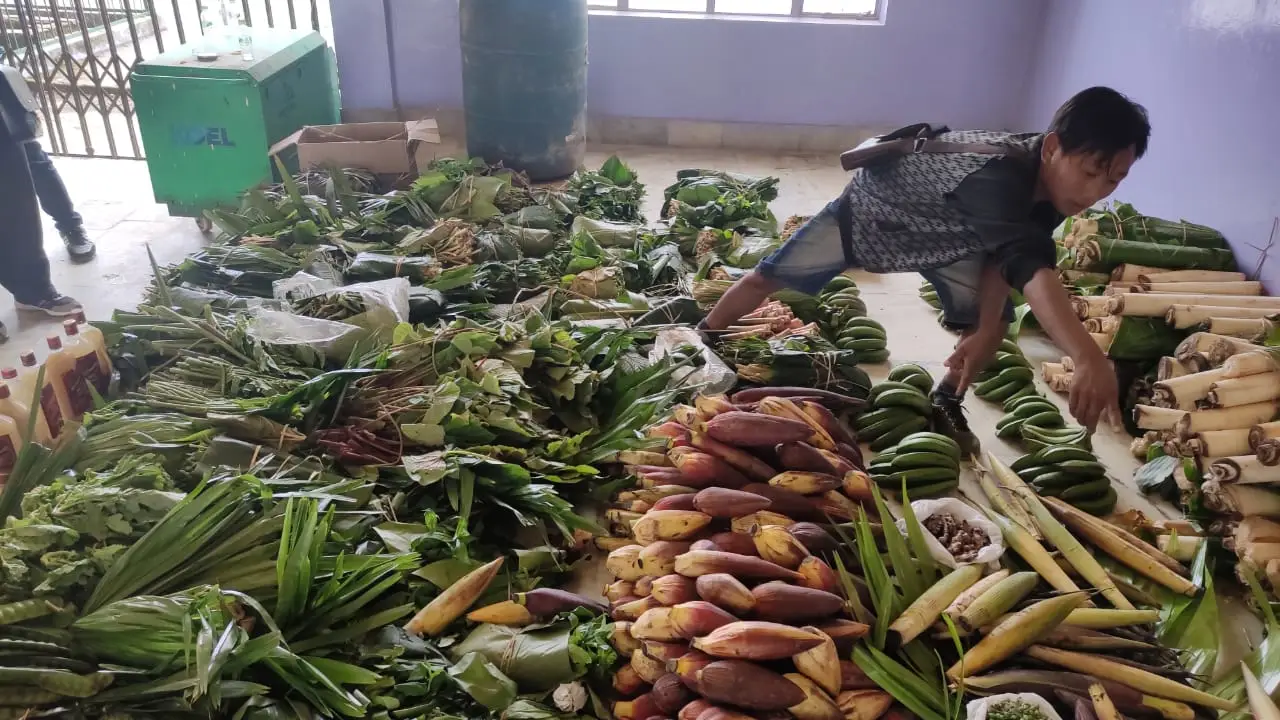
Medziphema, August 10: A study by Nagaland University has identified 47 plant- and animal-based Non-Timber Forest Products (NTFPs) used by tribal communities across selected villages in Nagaland and Meghalaya, documenting their role in food security, household income and rural livelihoods.
The study, conducted across 20 villages and involving 250 households, examined the collection, utilisation and economic value of NTFPs. Researchers found that forest-dependent communities use these products for food, beverages, medicines and other value-added products, while surplus produce is sold in local markets to generate additional income.
The findings also point to the need for scientific assessment and sustainable management of NTFPs, including structured harvesting guidelines, to prevent overexploitation and ensure continued availability of forest resources.
Researchers said NTFPs could also provide employment and entrepreneurship opportunities for marginalised communities living in remote forest areas, offering an additional income source beyond traditional agriculture.
The research was published in the Indian Journal of Ecology, a peer-reviewed journal covering ecology, environmental science, biodiversity conservation, natural resource management and ecosystem sustainability.
The paper was co-authored by Limasunep Ozukum, Prof. Sanjoy Das, Prof. Amod Sharma, Prof. R. Nakhro, Prof. N.K. Patra, Prof. Manoj Dutta and M. Jangyukala of the School of Agricultural Sciences, Nagaland University, Medziphema Campus.
47 NTFPs documented
One of the study's key findings was the scientific identification and classification of 47 NTFPs found in the selected areas of Nagaland and Meghalaya. Most of the products were used primarily for nourishment, followed by therapeutic purposes.
The researchers documented the plant parts commonly collected, their seasonal availability, frequency of collection, average time spent on collection trips and the distance travelled by villagers to gather them.
The study also assessed the economic returns generated by different NTFPs. Bamboo shoot emerged as the highest-return NTFP in Meghalaya, while wild black pepper was identified as the most common and highest-return NTFP in Nagaland.
The findings indicate that the economic contribution of forest products goes beyond their direct market value. NTFPs also meet subsistence requirements and have ecological and cultural importance for forest-dependent tribal communities.
Forest products support household livelihoods
According to the study, households depend on NTFPs for a range of everyday requirements. Products collected from forests are consumed directly or processed into other products, while surplus quantities are marketed locally.
This combination of subsistence use and commercial sale makes NTFPs an important supplementary livelihood resource, particularly for communities in remote areas where employment and income opportunities can be limited.
The researchers noted that despite India's extensive biodiversity, the economic value of many NTFPs remains inadequately recognised. Scientific identification and economic valuation could help improve understanding of their contribution to local economies and inform resource-management policies.
Prof. Sanjoy Das of the Department of Agricultural Economics at Nagaland University explained that the study sought to document commonly available NTFPs in selected areas of the two states and assess how communities collect and use them.
“Despite India’s rich biodiversity, the economic value of many Non-Timber Forest Products remains inadequately recognised,” Das said. He added that the research documented collection and utilisation patterns and assessed their economic value while emphasising the need for sustainable utilisation and management.
Call for sustainable management
The researchers have called for ecological assessments and structured harvesting guidelines to ensure that NTFP extraction remains within sustainable limits.
Such measures, according to the study, could help balance the economic needs of forest-dependent communities with the conservation of biodiversity and forest resources.
The study also identifies scope for developing employment and entrepreneurship opportunities around NTFPs. Value addition, local processing and improved market access could potentially increase the economic benefits received by communities while reducing dependence on traditional agricultural income alone.
Prof. Jagadish Kumar Patnaik, Vice-Chancellor of Nagaland University, described the research as relevant to the socio-economic and ecological priorities of the Northeast.
He said the identification of the economic value of 47 NTFPs across Nagaland and Meghalaya was an important step towards recognising the potential of forest resources to strengthen rural livelihoods and food security.
Patnaik also expressed hope that the findings would contribute to policy decisions and the sustainable utilisation of natural resources.
Wider significance for Northeast India
The study places its findings within the broader ecological and socio-economic importance of the Northeast, which is home to more than 33 per cent of India's total flora and more than 100 indigenous communities that depend on forest resources for sustenance and income.
India is estimated to have about 3,000 NTFP species, but only 126 have developed marketability, according to the study. Researchers argue that this gap demonstrates the need for systematic identification, documentation and economic valuation of forest products.
For tribal communities, the importance of NTFPs is therefore not limited to their sale in markets. They contribute to household food supplies, traditional medicine, cultural practices and ecological sustainability.
The Nagaland University research suggests that better documentation and sustainable management could help recognise these multiple benefits while creating additional livelihood opportunities for communities that depend directly on forests.
The study's findings underline the need for policies that consider both the economic and ecological dimensions of NTFPs, particularly in biodiversity-rich regions such as Nagaland and Meghalaya.