At least 31 people have died and 384 travellers are missing after a devastating flash flood hit Nepal’s Rasuwa district and Tibet border region on August 26.
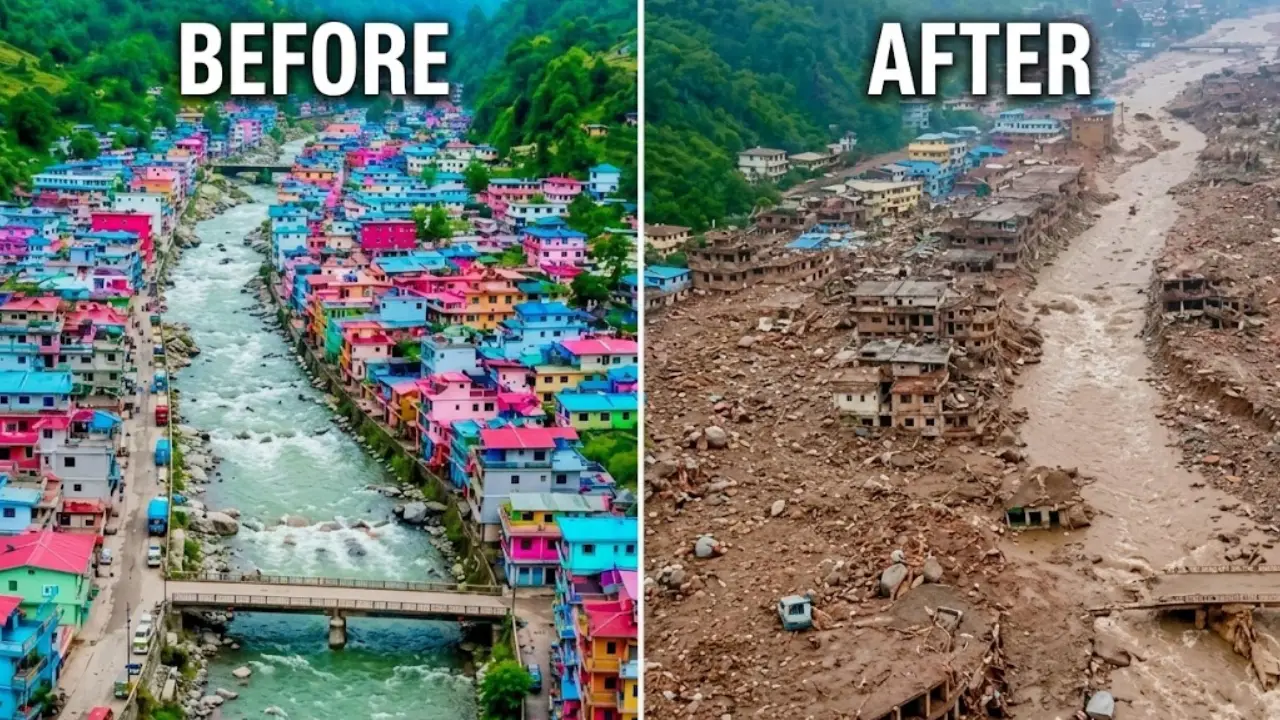
Rasuwa, Nepal, August 26: At least 31 people have been killed and 384 travellers remain unaccounted for after a powerful flash flood swept through Nepal’s northern Rasuwa district and the adjoining Tibet border region on Wednesday, destroying settlements, roads, bridges and hydropower infrastructure.
The disaster struck the Himalayan border area in the morning, with floodwaters surging through the Bhote Koshi River and nearby valleys. The Nepal Tourism Board reported that 384 travellers were missing, including 291 foreign nationals and 93 Nepali citizens. At least 105 Indians are among those reported missing.
The death toll has risen rapidly as rescue teams reach affected areas. Earlier reports had placed the number of confirmed deaths considerably lower, with the Kathmandu Post reporting 22 deaths by Wednesday evening. Later reports put the toll at 31, while rescue and search operations remain underway.
CCTV Footage Captures Sudden Wall of Water
CCTV footage from the Gyirong area on the Tibet side of the border shows a sudden surge of muddy water and debris sweeping through the area. The footage shows people attempting to flee as the torrent rapidly overwhelms buildings and infrastructure.
Chinese authorities reported that a mudslide affected the Gyirong border port, disrupting road, communication and power links in the area. More than 500 rescuers were deployed on the Chinese side as authorities began search and rescue operations.
The footage has provided a stark indication of the speed at which the disaster unfolded. In Nepal, videos from Rasuwa showed homes and vehicles being swept away, bridges collapsing and large volumes of mud and water moving through settlements.
Rockslide and Avalanche Being Investigated
The precise trigger for the flood remains under investigation. Reuters reported that a 4.4-magnitude earthquake may have triggered an ice-rock avalanche on the Lhende Khola River, leading to the sudden release of water and debris.
Other reporting has pointed to a large rockslide near the Nepal-Tibet border. Nepal’s Department of Hydrology and Meteorology said the flooding in Rasuwa was not caused by rainfall in the district, while preliminary analysis indicated that a rockslide caused the Lhende River to swell before the flood entered the Bhote Koshi system.
Authorities have therefore not established a single definitive cause. The possibility of an earthquake-triggered landslide or avalanche is being examined.
Rasuwa Among Worst-Hit Areas
Rasuwa, a mountainous district north of Kathmandu, suffered extensive damage along the Bhote Koshi River. Settlements including Timure and Syapru Besi were badly affected, while several bridges, roads and other infrastructure were washed away.
The Kathmandu Post reported that 32 Nepal Police and Armed Police Force personnel in Timure were still missing, while around 60 people associated with the 20-MW Langtang Khola Hydropower Project were also out of contact.
The flood also affected neighbouring districts including Nuwakot and Dhading as the swollen river system carried water and debris downstream. Several hydropower projects and other infrastructure were damaged, with Reuters reporting that the disaster affected more than 12% of Nepal’s hydropower capacity.
Rescue Operations Hampered by Mountainous Terrain
The Nepal Army, Armed Police Force and Nepal Police have been mobilised for search and rescue operations. However, the scale of the debris, high water levels and difficult Himalayan terrain have complicated the response.
Rescue helicopters initially faced difficulties landing in areas such as Syapru Besi and Timure because of the continuing danger and conditions on the ground. Authorities have urged people living along the Trishuli and Bhote Koshi river systems to move to safer and higher ground.
Authorities have also warned of the possibility of another flood if an upstream blockage gives way. Residents in vulnerable downstream areas have been advised to remain alert.
Foreign Travellers Among Those Missing
The Nepal Tourism Board said 384 travellers had been reported missing from the affected areas. The list includes 291 foreign nationals and 93 Nepali citizens. Indians account for at least 105 of the foreign nationals reported missing. Other foreign nationals reported among the missing include people from the United States, United Kingdom, South Korea, Malaysia, South Africa, Australia and the Netherlands.
Officials are continuing to verify the identities and locations of those reported missing, meaning the figures may change as communications are restored and rescue teams reach isolated areas.
Disaster Raises Concern Over Himalayan Early Warning Systems
The latest disaster has renewed concerns about the vulnerability of Himalayan communities and infrastructure to sudden floods, landslides and other high-altitude hazards.
The region has experienced several severe flood disasters in recent years. Rasuwa itself was hit by a major flash flood in July 2025 after the rapid discharge of a supraglacial lake in Tibet sent a surge through the Lende River and into Nepal. Nepal’s disaster management authority recorded deaths and extensive damage during that event.
The recurrence of such events has increased calls for stronger cross-border monitoring of rivers, glaciers, unstable slopes and potential flood blockages. Early-warning systems capable of transmitting alerts to downstream communities within minutes could be particularly important in Himalayan valleys where settlements and infrastructure are often concentrated along narrow river corridors.
The latest flood remains an unfolding disaster, with rescue teams continuing to search for missing people and authorities assessing the full extent of the destruction.