Around 100 ASHAs in Assam help design an AI training platform and multilingual voice chatbot to support cervical cancer screening and community counselling.
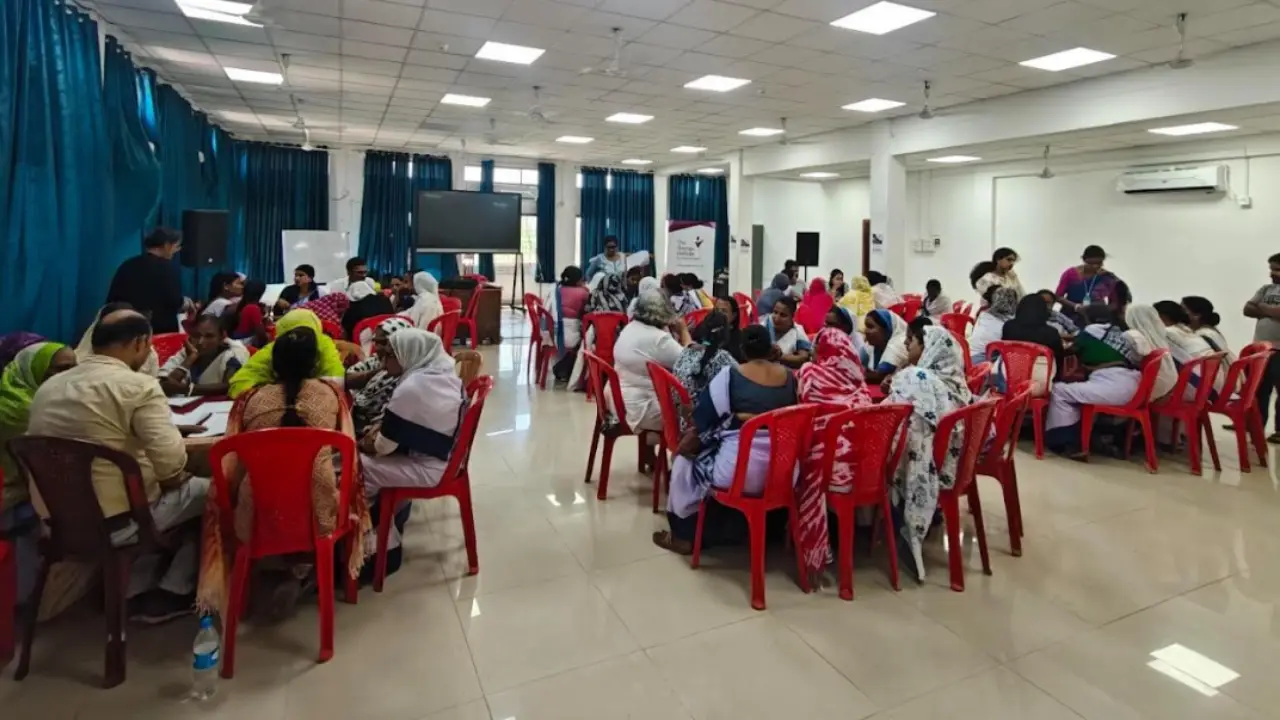
Silchar, Sept. 24: Around 100 Accredited Social Health Activists (ASHAs) from Assam have contributed to the design of an AI-enabled training platform and multilingual voice chatbot aimed at strengthening cervical cancer screening and community counselling in rural areas.
The co-design workshop was organised by The George Institute for Global Health India in collaboration with Cachar Cancer Hospital and Research Centre (CCHRC), Assam. It brought together ASHAs, doctors, trainers, programme coordinators, researchers and technologists to discuss how digital tools could support frontline health workers in their routine work.
The workshop formed part of a three-year pilot study titled “Leveraging Artificial Intelligence for Strengthening Cervical Cancer Screening Through Capacity Building”, funded by the Indian Council of Medical Research (ICMR). The project is being conducted from November 2025 to November 2028.
The study aims to develop and test an AI-based learning platform for ASHAs along with a voice chatbot capable of responding to questions in multiple languages.
A key exercise during the workshop involved reviewing 155 common questions related to cervical cancer and screening.
Using a bindi-based voting exercise, the ASHAs identified questions they encounter most frequently during their community work. The questions come not only from women but also from husbands, family members and others seeking information about cervical cancer and screening.
The exercise showed that the questions most frequently encountered by ASHAs in the field do not always correspond with issues considered clinically important.
The findings will be used to develop the chatbot's knowledge base, with the aim of addressing both priority health information requirements and the practical concerns that ASHAs encounter while counselling families.
The workshop also provided an opportunity to understand the ASHAs' existing levels of confidence in using digital technology.
Younger and middle-aged ASHAs reported regular use of mobile phones for reporting, communication and accessing information. Some older ASHAs said they faced greater difficulties with digital tools and language but expressed a willingness to learn and improve their confidence.
The participants also mapped their own professional journey, covering activities such as attending training programmes, retaining and updating knowledge, counselling women about pregnancy and childbirth-related concerns, explaining test results and making appropriate referrals.
The exercise helped several ASHAs identify areas where they felt they needed additional information or reinforcement. Participants discussed the usefulness of existing tools such as flipcharts for refreshing their knowledge when required.
The ASHAs suggested that the proposed digital platform should include voice-based interaction in Bangla, simple-language content and search functions that reflect the way frontline workers naturally frame questions.
They also proposed short audio-visual lessons, frequently asked questions, reminders, quizzes and progress-tracking features.
These inputs are intended to guide the design of the learning platform and chatbot so that they are aligned with the practical needs of ASHAs rather than functioning as an additional digital requirement.
The workshop also examined practical challenges that could affect the use of digital tools in community settings.
Limited internet connectivity, the time available to ASHAs during household visits and the need for reliable, clinically verified information were among the issues considered during the discussions.
Dr Anita Gadgil, Principal Investigator of the project and Senior Research Fellow at The George Institute for Global Health and Co-Director of the WHO Collaboration Center for Emergency Critical and Operative Care, said the technology should be designed around the experience of ASHAs.
“This workshop starts with a simple principle: technology for ASHAs should be designed with ASHAs,” Gadgil said.
She said the experience of ASHAs in explaining screening, responding to concerns and finding answers during community visits would guide the language, content and functions of the proposed AI platform.
The objective, she said, was to develop clinically validated support that fits into the work of ASHAs without creating an additional digital burden.
Cervical cancer remains a significant health concern in India, while gaps in awareness and screening can affect early detection.
ASHAs play an important role in reaching women in their communities, explaining the screening process and helping connect those who require further care with appropriate health services.
The inputs collected during the workshop will be used in the next stage of the project, which involves building the AI learning platform and chatbot.
According to the project plan, training content and questions will undergo clinical review and repeated testing with ASHAs before the tools are rolled out.
The study will subsequently compare AI-supported training and chatbot access with standard training methods through a two-arm cluster-randomised controlled trial.
The trial will cover 20 clusters and approximately 110 ASHAs.
Researchers will assess the practicality and acceptability of the tools, as well as patterns of use, consistency of use and their potential for wider implementation. The study will also examine changes in ASHAs' knowledge, attitudes and practices to help determine whether the approach warrants evaluation through a larger future trial.
The proposed chatbot is intended as a training and field-information support tool for ASHAs. It is not intended to replace clinical assessment, diagnosis or established referral pathways.
The co-design approach places frontline health workers at the centre of developing the technology they are expected to use.
Rather than relying solely on clinical priorities, the workshop sought to capture the questions, language, working conditions and information gaps that ASHAs encounter during actual community visits.
The findings from the workshop will therefore inform not only the information contained in the proposed chatbot but also how ASHAs interact with the platform, including the use of voice, local-language content and easily accessible learning materials.
The project will now move towards development and testing of the AI-enabled platform, with further clinical review and feedback from ASHAs planned before implementation.