Chawangkining village in Manipur's Kangpokpi faced a six-hour attack, leaving two houses burnt as CRPF returned fire and groups demanded security and action.
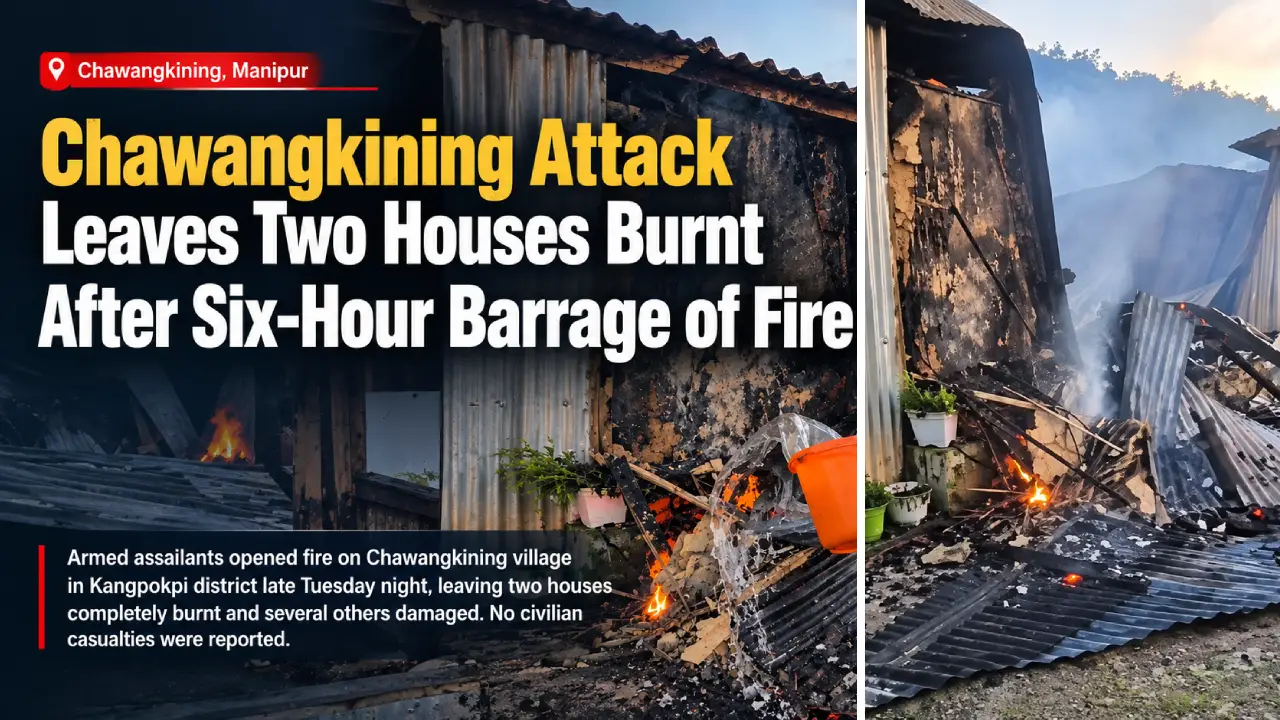
Imphal, Sept. 17: Chawangkining, a Liangmai Naga village along the Imphal-Tamenglong Road in Manipur’s Kangpokpi district, came under sustained firing late Tuesday night, September 15, in an attack that continued for nearly six hours and left two houses burnt and several others damaged.
No civilian casualties were reported. Central Reserve Police Force personnel stationed in the village returned fire after the attack began, preventing the armed assailants from entering the settlement, according to security officials and local accounts. Additional security reinforcement reached the area early Wednesday morning.
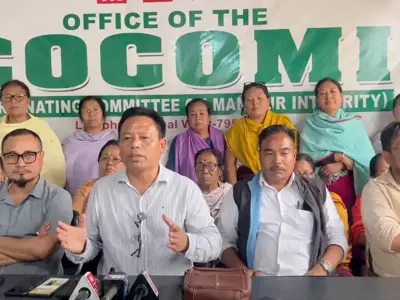
The attack has drawn condemnation from Naga organisations, political leaders and Manipur Deputy Chief Minister Losii Dikho, while the Chawangkining Village Authority has sought an impartial investigation, stronger security deployment and assistance for families whose houses were damaged.
Six-hour exchange of fire
According to the Chawangkining Village Authority, firing began at around 10.30 pm on September 15 and continued intermittently until about 4.50 am on September 16.
The village is located about 14 km from the Kangpokpi district headquarters along the Imphal-Tamenglong Road. The settlement is surrounded by Kuki villages, making the area particularly sensitive amid the continuing ethnic conflict in Manipur.
Officials cited in reports said a large number of suspected militants armed with sophisticated weapons attacked the village. CRPF personnel deployed in the area responded to the firing and engaged the attackers.
An official quoted by India Today NE said the exchange of fire lasted nearly six hours and that security personnel prevented the attackers from overrunning the village. Two wooden houses on the outskirts of the settlement were nevertheless set ablaze.
A villager, Daniel Charenamai, told reporters that the firing began around 10.30 pm and continued until about 4 am, adding that the CRPF personnel deployed in the village returned fire and prevented the settlement from being overrun.
The Sangai Express reported that the attack ceased after additional security forces arrived at around 5 am. It also reported that two houses were burnt and several others were vandalised.
Conflicting accounts over who carried out the attack
The Chawangkining Village Authority alleged that the attackers approached from the directions of Kholen, Sejang and West Haipi, all Kuki settlements in the surrounding area.
The Liangmai Naga Council, Manipur, separately alleged that armed Kuki groups operating from the Songtung Suspension of Operations, or SoO, camp were responsible and demanded action against those it accused of involvement. The council also alleged that distress calls from the village did not receive a timely response from Kangpokpi district police.
The Sangai Express reported allegations by the Liangmai Naga Chabonphom that cadres belonging to KNF-P, KNF-N and KRA were involved.
However, these allegations have not been independently established, and reports available by September 17 did not indicate that any of the named groups had claimed responsibility for the attack.
The distinction is important because the incident occurred amid a rapidly escalating cycle of violence involving Naga and Kuki-Zo communities in parts of Tamenglong, Noney and Kangpokpi. Assigning responsibility without an investigation could further inflame tensions.
Village authority questions security response
While residents acknowledged the intervention of CRPF personnel stationed in Chawangkining, the village authority raised questions about the time taken for additional security forces to reach the settlement.
According to the authority, villagers remained exposed to firing for several hours before reinforcement arrived at around 4.50 am.
The authority has therefore asked the government to review the reported delay in reinforcement and strengthen security arrangements around Chawangkining and other vulnerable settlements along the IT Road. It has also sought a formal assessment of the damage caused during the attack.
The village authority has further demanded relief, rehabilitation and financial assistance for families affected by the destruction of their homes.
Police case registered
Hindustan Times reported that police had registered a case in connection with the Chawangkining violence, although no armed organisation had claimed responsibility at the time of its report.
The police investigation will be significant in determining the circumstances of the attack and establishing the identity of those involved.
The available reports do not yet provide details of the FIR number, sections invoked or any arrests specifically linked to the September 15-16 Chawangkining attack.
Deputy Chief Minister condemns attack
Manipur Deputy Chief Minister Losii Dikho condemned the Chawangkining attack in a statement issued on September 16, while also referring to the killing of two Kuki-Zo women at Leisangphai in neighbouring Tamenglong district.
Dikho called for communities to reject retaliation and work towards peace and reconciliation. He described the continuing violence and attacks on civilians as unacceptable and appealed for an end to the cycle of revenge.
In his statement, Dikho also alleged that cadres of KNF(P) were behind the Chawangkining attack. Those allegations have not been independently established, and available reports have not identified an official investigation publicly confirming the allegation.
Dikho urged communities to work towards a situation in which citizens could live with security and equal protection under the Constitution.
Naga organisations demand action
The All Naga Students' Association, Manipur, strongly condemned the attack and said civilians must not be targeted.
ANSAM alleged that armed Kuki groups operating under the SoO framework were responsible and also accused members of the Kuki community of obstructing security reinforcement from reaching Chawangkining. Those claims are allegations by the organisation and have not been independently verified.
The organisation said the incident demonstrated the vulnerability of Naga villages along the IT Road despite the presence of security forces. It called on the Centre and the Manipur government to increase security deployment in vulnerable Naga settlements and demanded action against perpetrators of attacks.
The Liangmai Naga Chabonphom similarly condemned the attack, demanded the arrest and prosecution of those responsible, and sought compensation for the families whose houses were destroyed.
The organisation also expressed appreciation for the CRPF personnel stationed in Chawangkining, saying their intervention helped protect villagers during the attack.
Zeliangrong Baudi calls for impartial action
The Zeliangrong Baudi condemned attacks on civilians irrespective of ethnic identity and called for an end to attacks on villages.
The organisation said political grievances or objectives could not justify violence against civilians and urged both the Centre and the Manipur government to take impartial measures to protect vulnerable settlements.
It also demanded prompt and credible investigations into killings, arson and destruction of property and called for those found responsible to face legal action.
The Baudi's statement came amid several recent incidents in Zeliangrong-inhabited areas, including reported killings and attacks in Tamenglong and Noney, as well as violence around Kangpokpi. It appealed to community leaders, civil society organisations and youth and women's groups to exercise restraint and prevent rumours and inflammatory rhetoric from triggering further violence.
Political leaders condemn violence
Naga People's Front legislator and senior Naga leader Awangbou Newmai also condemned the burning of houses at Chawangkining.
Newmai said violence of this nature would not benefit any community. His condemnation came in the aftermath of the Chawangkining attack and the killing of two Kuki-Zo women at Leisangphai.
The sequence of events has become particularly sensitive because the Chawangkining attack occurred only hours after the two women were killed at Leisangphai in Tamenglong district.
That temporal proximity has raised concerns that the two incidents could become part of a retaliatory cycle. Reports so far, however, do not establish a direct operational connection between the two attacks.
The wider context
The Chawangkining incident came after several attacks on civilians in the adjoining districts.
On September 13, four Kuki-Zo civilians were killed in separate incidents in Tollen in Tamenglong and Longpi in neighbouring Noney district, according to reports. Two days later, on September 15, two Kuki-Zo women were killed at Leisangphai in Tamenglong. The Chawangkining attack followed later that night.
The succession of incidents has increased apprehension among communities living along the Imphal-Tamenglong Road and in adjoining hill areas.
The IT Road has previously emerged as a flashpoint over movement, security and access. In August, a medical team travelling under CRPF escort to provide services at PHC T. Waichong was allegedly attacked at Chawangkining. Three medical personnel were reported injured and ambulances carrying medicines and supplies were allegedly vandalised.
That earlier incident had already raised concerns over the safety of essential services travelling through the area.
Government response so far
The immediate security response to the September 15 attack involved the CRPF personnel already stationed at Chawangkining, who exchanged fire with the attackers and prevented them from entering the village. Additional security reinforcement subsequently reached the area in the early hours of September 16. Police have also registered a case.
At the political level, Deputy Chief Minister Losii Dikho publicly condemned the attack and appealed against retaliatory violence.
However, as of September 17, the publicly available reports reviewed for this report do not show a detailed government announcement on compensation, rehabilitation or a specific additional permanent security deployment for Chawangkining. Such measures have been demanded by the village authority and Naga organisations.
The government response therefore remains focused, at least in the publicly reported information available so far, on security intervention, investigation and appeals for peace.
A fragile situation along the IT Road
The Chawangkining attack illustrates the particular vulnerability of settlements situated along the IT Road, where villages associated with different communities are located in close proximity.
The absence of civilian casualties in the latest incident stands in contrast to the destruction of homes and the prolonged exchange of fire that forced villagers to remain under threat for several hours.
For residents, the immediate concerns now are security, restoration of damaged homes and confidence that armed groups will not be allowed to target civilian settlements.
The demands from village authorities and civil society organisations converge on three issues: effective security presence before violence occurs, an impartial investigation into the attack and assistance to affected families.
Whether the latest incident becomes an isolated attack or contributes to another cycle of retaliatory violence will depend significantly on the security response, the credibility of the investigation and the ability of authorities and community leaders to prevent further attacks on civilians.