Churachandpur IDP Committee seeks clarity on 10,214 non-camp IDPs, the status of 4,389 displaced families and relief records maintained by the district administration.
Imphal, Sept. 17: The Joint Internally Displaced Persons Committee (JIDPC), Churachandpur, has sought clarification from the district administration over the classification and relief status of displaced persons living outside operational relief camps.
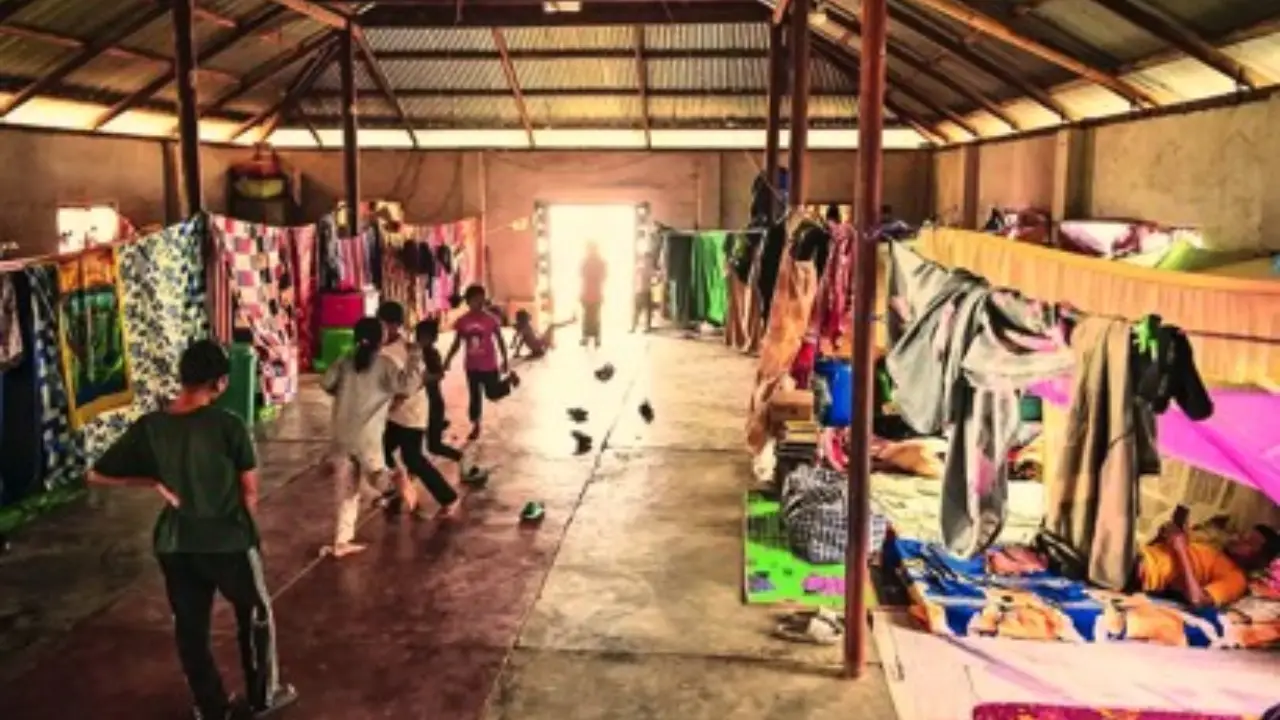
The demand follows a September 13 media report stating that 19 relief camps in Churachandpur were accommodating 5,195 internally displaced persons (IDPs), while another 10,214 “non-campers” were receiving assistance through Direct Benefit Transfer (DBT).
In a press release issued on September 17, the JIDPC questioned the basis, methodology and records used by the district administration to classify the 10,214 displaced persons as “non-campers”.
The committee specifically asked whether any of those individuals had previously been registered as IDPs in relief camps that have since been closed. It argued that closure of a relief camp should not, by itself, remove the historical record of a person’s displacement.
The JIDPC also sought clarification on the status of 4,389 displaced families whose details were submitted to the Deputy Commissioner, Churachandpur, on August 5, 2026, under Office Receipt No. 2754.
According to the committee, these families had been staying with host families, in rented accommodation or at other locations outside relief camps since the ethnic crisis began on May 3, 2023.
The JIDPC also referred to Order No. 1/6/2023-DC/CCP (RC-LM), issued by the Deputy Commissioner in response to a memorandum submitted by the Joint Non-Camp IDPs.
The order stated that individuals who chose to stay outside notified relief camps without informing the district administration were considered outside the scope of direct camp operations and management under the applicable government guidelines.
The committee questioned the relevance of this reasoning to the circumstances under which people were initially displaced.
It said relief camps were initially established and managed by local communities and community-based organisations before subsequently being adopted by the district administration. The committee further pointed out that the guidelines referred to in the order were issued later through Office Memorandum No. H-1701/114/2023-HD-HD dated June 9, 2023.
The JIDPC maintained that displacement itself was not a voluntary choice and that living outside a relief camp did not necessarily mean a displaced person had declined government assistance.
According to the committee, overcrowding in relief camps became a concern as the number of displaced people increased. It said the then Deputy Commissioner had urged Joint Philanthropic Organizations to assist IDPs in finding alternative accommodation and had assured them of home-based care assistance.
The committee alleged that such assistance was not provided to many people who subsequently made alternative arrangements.
The JIDPC said displaced families had remained outside relief camps for various reasons, including camp conditions, children's education, specialised medical treatment, privacy and the need for more suitable arrangements for families with elderly or terminally ill members.
It therefore argued that residence outside a relief camp should not automatically be interpreted as a voluntary abandonment of displaced status or government assistance.
The committee also questioned whether it was the responsibility of the district administration to identify cases in which eligible IDPs may have been left out of registration or relief assistance because of administrative or procedural gaps.
It pointed to what it described as a difference in classification practices between Churachandpur and other districts, stating that IDPs staying in Kangpokpi and other valley districts were not similarly segregated into “camped” and “non-camped” categories.
The committee urged the district administration to verify the particulars of displaced persons and families living outside relief camps and update official records wherever necessary.
It said residence outside an operational relief camp should not, by itself, be treated as conclusive evidence that an individual is no longer displaced or is ineligible for applicable relief assistance.
The JIDPC called on the administration to:
Clarify the basis and methodology used to arrive at the figure of 10,214 “non-campers”.
State how many of those individuals were previously registered in relief camps that have since closed.
Verify and clarify the status of the 4,389 displaced families submitted to the Deputy Commissioner’s office on August 5, 2026, under Office Receipt No. 2754.
Reconcile and correct errors, discrepancies or omissions in IDP records.
Ensure that all eligible displaced persons receive relief assistance and other applicable benefits under the relevant relief framework.
The committee said its statement was issued in the interest of accuracy, transparency, accountability and proper record-keeping. It urged the district administration to conduct a comprehensive verification and reconciliation of IDP records irrespective of whether displaced persons are currently staying in operational relief camps, with host families, in rented accommodation or elsewhere.