Four Kuki civilians were killed in attacks at Tollen and Longpi as Rongmei Naga houses were burnt in Jiribam, raising fears of further ethnic violence.
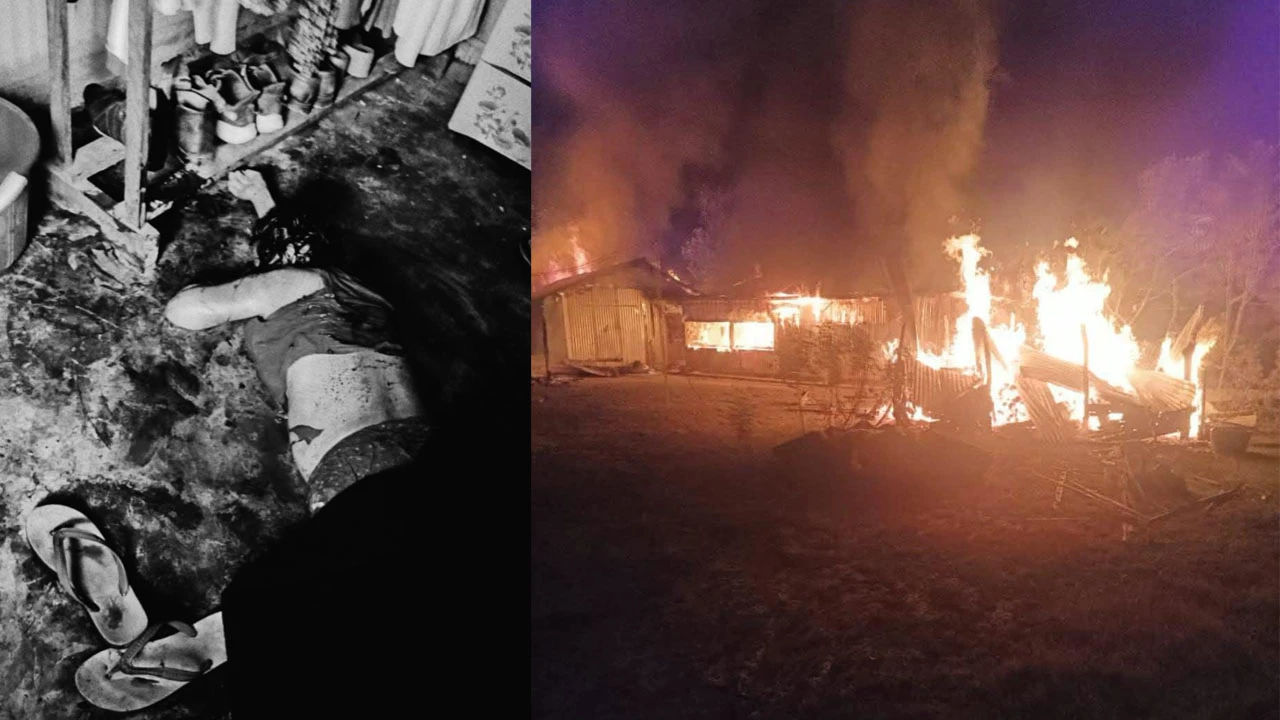
Imphal, Sept. 13: Four Kuki-Zo civilians were killed in two separate attacks on settlements in Tamenglong and Noney districts on Sunday, while three to four houses belonging to members of the Rongmei Naga community were reportedly burnt at Khedaghar in Jiribam later in the evening, marking a fresh escalation in violence along the Jiribam-Tamenglong-Noney belt.
The killings at Tollen and Longpi triggered strong condemnation from Kuki civil society organisations, which alleged the involvement of Naga insurgent groups and demanded immediate security measures and investigations. A Naga village authority, however, condemned the attacks on the Kuki settlements and called for an impartial investigation, while cautioning communities against allowing the incidents to deepen suspicion and division.
The circumstances behind the burning of the Rongmei Naga houses in Khedaghar were not immediately clear. A report from the area said three to four houses were set ablaze at around 6.30 pm. No perpetrator had been identified in the reports available late Sunday.
The developments came on September 13, observed by the Kuki community as Sahnit Ni, or Kuki Black Day, in remembrance of people killed during the Kuki-Naga conflict of the early 1990s. The coincidence of the latest attacks with the observance has added to concerns that the violence could further strain already fragile relations between Kuki-Zo and Naga communities in the region.
Family attacked at Tollen
The first attack was reported at around 4 am at Tollen, a Kuki settlement in the Tousem subdivision of Tamenglong district near NH-37.
Police said armed assailants opened fire on a family at its residence. Lhingjangai Singsit was killed in the attack, while her husband, Seineh Singsit, and their six-year-old son were injured.
Seineh later succumbed to his injuries at a hospital, taking the death toll from the Tollen attack to two. Their son was seriously injured. Assam Rifles personnel from the nearby Kaimai base assisted in evacuating the injured for medical treatment.
The L. Tollen Village Authority alleged that members of the NSCN-IM and ZUF(K) were responsible for the attack. It described the incident as a premeditated assault on an unarmed family and alleged that the objective was to terrorise and displace Kuki-Zo villagers from the area.
The village authority also linked the attack to the history of Kuki-Naga violence in the 1990s and alleged that the violence was connected to a broader “Greater Nagalim agenda”. Those allegations have not been independently established, and police have not publicly attributed the attack to a particular organisation.
Kuki Inpi Jiri, Tamenglong and Noney (JTN) also questioned how the attack could have taken place close to a deployment of Central security forces. The organisation demanded an investigation by the National Investigation Agency and permanent security deployment at Tollen.
Two killed in Longpi
A second attack took place later in the day at Longpi village in the Nungba subdivision.
According to reports and Kuki-Zo organisations, three villagers who had been transporting rice or essential commodities were returning towards their settlement when they were allegedly ambushed.
Two of them, identified as Julie Gangte and Thangvel, also referred to as Roel Gangte, were killed. A third woman was reported missing.
The Western Village Volunteers alleged that the attackers subsequently moved towards the village centre but were confronted and driven back following an exchange of fire.
The organisation alleged that the Longpi attack involved the NSCN-IM and Zeliangrong United Front (Kamson), and demanded that those responsible be identified and arrested within 24 hours. The allegation has not been independently verified by security forces.
Kuki organisations also claimed that Julie was pregnant. The Indian Express reported the claim by the Western Village Volunteers but did not independently establish it.
Kuki groups demand action
The two attacks prompted strong reactions from Kuki civil society organisations.
Kuki Inpi JTN condemned the killings and raised questions over the security arrangements in the area. It said the Tollen attack occurred only a few hundred metres from a Central security deployment and sought accountability over how armed assailants could carry out an attack in such proximity.
The organisation issued a 24-hour ultimatum to the government and announced a 24-hour economic blockade. It warned of an indefinite total shutdown if its demands were not met.
Kuki Inpi JTN also said it would not accept the mortal remains of the deceased for funeral rites until justice was delivered.
The Committee on Tribal Unity (CoTU), Sadar Hills, described the incidents as coordinated attacks on Kuki villages and alleged the involvement of NSCN-IM and ZUF(K).
CoTU also raised concerns over the alleged involvement of organisations operating under ceasefire arrangements with the Government of India. It argued that attacks on civilians could have implications for ceasefire ground rules and the wider peace process.
The organisation demanded Central security deployment in Tollen, Longpi and other vulnerable Kuki settlements, besides an impartial, time-bound investigation and assistance for affected civilians.
Naga village authority condemns attacks, urges restraint
The Kaimai Naga Village Authority, from the predominantly Naga area near the affected settlements, also condemned the attacks.
Unlike the Kuki organisations, the village authority did not attribute the killings to any particular Naga organisation. It described the perpetrators as an unidentified group and warned that the incident could create suspicion and deepen divisions between communities in the area.
The authority called for a thorough and impartial investigation to identify those responsible and bring them to justice.
It also appealed to Kuki and Naga communities to exercise restraint and urged community leaders and civil society organisations to work towards maintaining peace and understanding.
This response provides an important counter-position to the allegations made by Kuki organisations. While Kuki groups have specifically alleged the involvement of Naga insurgent organisations, the Kaimai Naga Village Authority has called for the perpetrators to first be established through an investigation rather than allowing the attack to be attributed collectively to the Naga community.
Rongmei Naga houses burnt in Jiribam
The situation took another turn in the evening when houses belonging to members of the Rongmei Naga community were reportedly set ablaze at Khedaghar in Jiribam district.
According to a report published on Sunday, three to four Rongmei Naga houses were allegedly burnt at around 6.30 pm at Khedaghar village, under Jiribam Police Station and about 12 km south of Jiribam town.
The circumstances surrounding the incident, including who started the fires and whether the arson was directly linked to the earlier killings at Tollen and Longpi, remained unclear late Sunday.
No reliable source available at the time of publication had established responsibility for the Jiribam house-burning incident. It should therefore not be presented as a confirmed retaliatory attack without further investigation.
The incident nevertheless adds to the concern over a possible cycle of violence involving civilian settlements belonging to different communities.
A rapidly widening cycle of allegations
The sequence of incidents on Sunday is significant because it involves violence against civilians from both Kuki-Zo and Naga communities within the same broad geographical corridor.
The first two incidents involved the killing of four Kuki civilians. Kuki organisations subsequently alleged that Naga insurgent groups were responsible. Later, houses belonging to Rongmei Naga families were reportedly burnt in Jiribam.
At present, there is no confirmed evidence establishing that the Jiribam arson was carried out in retaliation for the Tollen and Longpi attacks. Nor has responsibility for the two attacks on Kuki settlements been officially assigned to the organisations named by Kuki bodies.
That distinction is particularly important in an area where community narratives and allegations can quickly influence mobilisation and retaliatory action.
The Indian Express reported that the Kaimai Naga Village Authority had specifically warned that the attacks could create suspicion and division among communities living in the region. It urged restraint and renewed efforts towards peace and understanding.
Political condemnation
Saikul MLA Kimneo Haokip Hangshing condemned the killings at Tollen and Longpi, describing the targeting of civilians, including women and children, as unacceptable.
She said violence against unarmed civilians could not be justified by any political cause, ideology or grievance.
Henglep MLA Letzamang Haokip also condemned the attacks, saying the loss of civilian lives was a grave tragedy and reflected the continuing insecurity faced by people in the affected areas.
Chief Minister Yumnam Khemchand Singh also expressed anguish over the killings and described violence against innocent civilians as unacceptable, according to reports published on Sunday.
NH-37 corridor under renewed security concern
The incidents have also renewed concerns about security along the Imphal-Jiribam corridor.
Tollen is located close to NH-37, the principal highway connecting Imphal with Jiribam. Longpi is also in the wider Noney-Tamenglong region.
The corridor has already witnessed heightened tensions in recent days. On September 10, a petroleum and essential-commodities convoy travelling along NH-37 came under stone-pelting at Noney, injuring several tanker drivers and prompting a strike by petroleum product drivers.
The drivers called off their strike on September 13 after receiving assurances and monetary compensation from Chief Minister Yumnam Khemchand Singh for a grievously injured driver. They resumed fuel loading and transportation but said their broader security concerns would be discussed with the government.
The fresh civilian attacks and the reported burning of Naga houses now add another layer of security concerns along the same broad corridor.
By late Sunday, security forces had been deployed in the affected areas and investigations were under way. Police had not publicly confirmed the allegations against NSCN-IM or ZUF(K), while the circumstances behind the Jiribam house burnings remained unclear.
The immediate challenge for the administration is to establish responsibility for each incident separately and prevent allegations surrounding one attack from triggering another.
The deaths at Tollen and Longpi have already prompted demands for Central security deployment, an NIA investigation and punitive action. The reported burning of Rongmei Naga houses in Jiribam has raised a parallel concern over the safety of Naga civilians and property.
With tensions already high between Kuki-Zo and Naga communities in parts of Tamenglong, Noney and Jiribam, community leaders and security authorities face the task of containing further violence while ensuring that those responsible for the attacks are identified through credible investigation and due process.