MAHUD outlines housing, sanitation, waste management and livelihood programmes across Manipur’s 27 ULBs, while IMC tackles staff shortages and civic reforms.
Imphal, Sept. 15: The Department of Municipal Administration, Housing and Urban Development (MAHUD) is expanding housing, sanitation, solid waste management, livelihood and civic infrastructure programmes across Manipur’s 27 Urban Local Bodies (ULBs), while manpower shortages and implementation delays continue to affect the department and the Imphal Municipal Corporation (IMC).
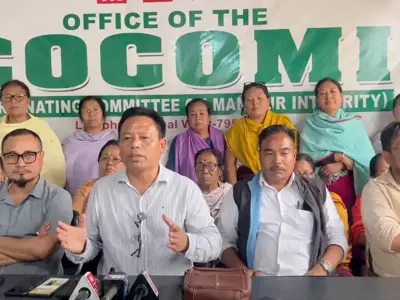
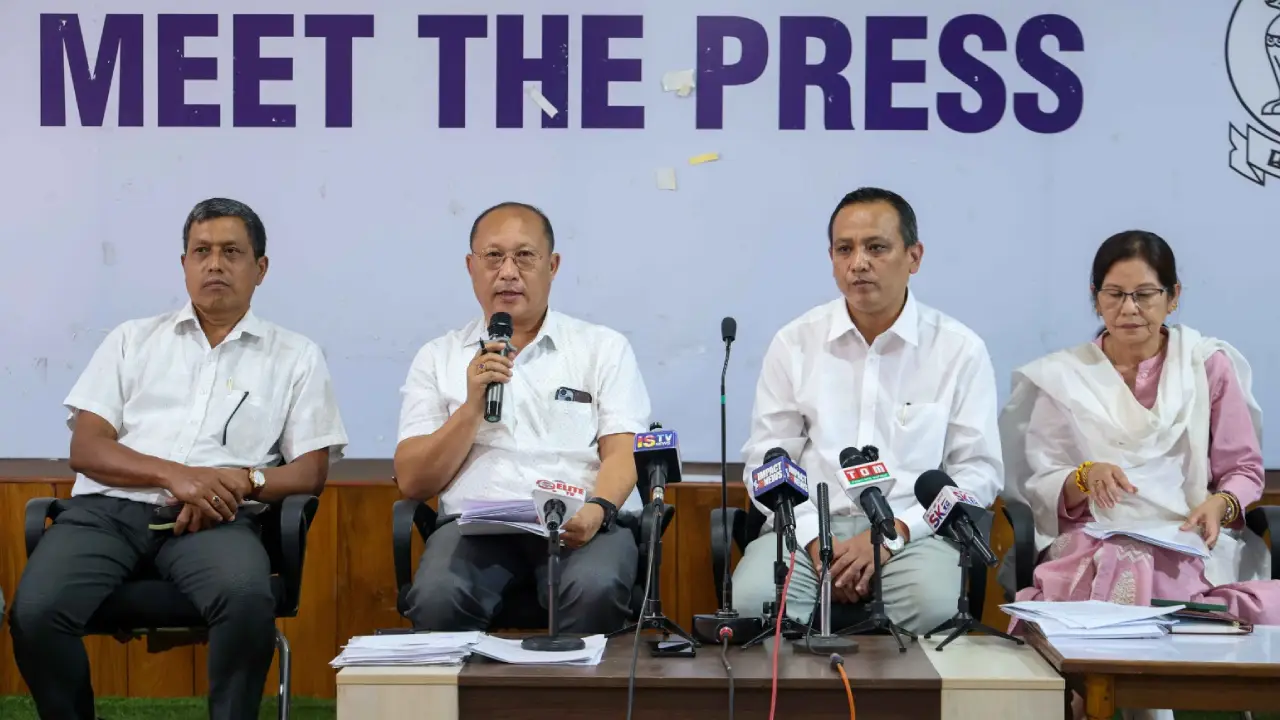
The details were shared during the 13th edition of “Meet the Press”, organised by the Directorate of Information and Public Relations (DIPR) at the DIPR Auditorium in Imphal on Tuesday.
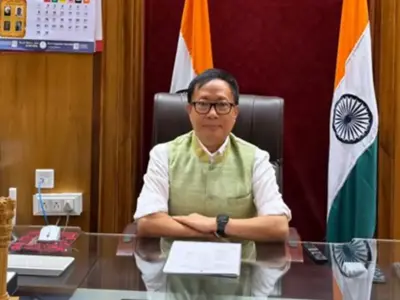
Joint Director, MAHUD, M. Kapajit Singh said the department, established in 1975, guides and supervises the functioning of the State’s 27 ULBs and coordinates with agencies including municipal councils, IMC, PDA, MUDA, Imphal Smart City Limited, the Town Planning Department, PWD, PHED and IFCD.
The department has a sanctioned strength of 122 personnel, but only 76 are currently in position.
Kapajit said greater attention has been given to the safety and welfare of sanitation workers under the National Action for Mechanised Sanitation Ecosystem (NAMASTE), which has been implemented in Manipur since 2023-24 by the Ministries of Social Justice and Empowerment and Housing and Urban Affairs.
Under the Sewer and Septic Tank Workers component, 185 workers have been identified and provided personal protective equipment, while 102 have received Ayushman Bharat PM-JAY cards.
Eight Emergency Response Sanitation Units and six sets of confined-space safety equipment have also been established. A toll-free helpline, 14420, is being operated through IMC.
The Waste Picker component, introduced in 2024-25, has surveyed 508 waste pickers as of August 21, 2026, according to the department.
Housing remains one of MAHUD’s major welfare programmes.
Under PMAY-U 1.0, launched in 2015, 48,364 beneficiaries have been approved under the Beneficiary Led Construction component. Of these, 21,814 houses have been completed and 26,550 remain under construction.
The department has sanctioned Rs 579.67 crore under the scheme and released Rs 545.34 crore. The scheme is scheduled to end on September 30, 2026, with officials attributing much of the delay to beneficiaries.
Under PMAY-U 2.0, which runs from 2024 to 2029 with a 90:10 Centre-State funding ratio, beneficiaries are eligible for Rs 2.5 lakh in three instalments. So far, 9,427 beneficiaries have been approved, 1,787 houses are under construction and 1,268 beneficiaries have received their first instalment.
Financial assistance to ULBs is also being strengthened through Finance Commission grants.
Manipur received Rs 117 crore under the 15th Finance Commission for 2020-22. Under the 16th Finance Commission, the State has been allocated Rs 609 crore for the period 2026-27 to 2030-31.
The allocation comprises Rs 487 crore in basic grants and Rs 122 crore in performance grants. Release of the funds is linked to conditions including the existence of duly elected local bodies and audited accounts.
Solid waste management continues to be a major focus across the State.
The Lamdeng Solid Waste Management Plant is being upgraded through five NESIDS-OTRI-funded projects worth Rs 33.24 crore. A further Rs 8.01 crore has been allocated from State funds for drainage and leachate-related works.
Under Swachh Bharat Mission-Urban 2.0, 27 waste-to-compost projects with a combined capacity of 97 tonnes per day have been approved, of which 24 are complete.
Another 24 Material Recovery Facility/Refuse Derived Fuel projects, with a combined capacity of 111.5 tonnes per day, have been approved, with machines distributed to 23 ULBs.
Two scientific sanitary landfills with a combined capacity of 65.13 tonnes per day have also been approved. The Bishnupur facility is around 60 per cent complete.
Legacy waste remediation covering approximately 3.75 lakh metric tonnes is under way in five ULBs.
Nine Faecal Sludge Treatment Plants and nine Sewage Treatment Plants are at various stages of implementation. Ten cesspool emptier vehicles have also been distributed across the State.
Public sanitation infrastructure is being expanded, with 14 of 30 approved public toilet blocks and 17 of 33 approved urinal blocks completed so far.
The Clean Himalayan Hill Cities Initiative is being extended to key tourist and heritage locations, including Ima Keithel, Kangla, Cheirao Ching Thangmeiband, Marjing Polo Statue, Loktak Lake, Sendra and Andro Santhei Natural Park.
For areas under IMC, the first four sites have been identified for the initiative. Mobile sanitation units have also been introduced at several locations.
The 100-day campaign is scheduled to be launched on September 17, 2026.
Under the Deendayal Antyodaya Yojana–National Urban Livelihoods Mission (DAY-NULM), 10,734 people have been trained and 9,669 placed.
The programme has also resulted in the formation of 3,932 self-help groups with 40,566 members under 81 Area Level Federations.
Under PM-SVANidhi, MAHUD has received 18,564 applications across three lending tranches. Of these, 15,033 have been sanctioned and 14,900 disbursed.
The DJAY-Shehari programme has formed 16 new self-help groups, including a transgender group. A total of 129 DAY-NULM SHGs have received second-tranche support, while work orders have been issued for 17 AMRUT Mitra projects.
A night shelter for the urban homeless has also been approved at Porompat.
Kapajit said Jiribam Municipal Council was recognised as the “Promising Swachh Shehar of Manipur” under Swachh Survekshan 2024-25.
Jiribam achieved ODF++ status and a three-star Garbage Free City rating. Ten ULBs have achieved ODF status and 16 have reached ODF+ status. IMC has a one-star rating.
Speaking about the functioning of the capital’s civic body, IMC Municipal Commissioner M. Nando said the corporation administers 27 wards with a population of around 2.6 lakh, based on the 2011 Census.
IMC manages waste through generation, source segregation, door-to-door collection, transportation and processing at Lamdeng. Because of limited infrastructure and manpower, the corporation relies on NGOs and outsourced agencies for several activities.
The corporation directly manages three markets. Road sweeping in major population and market areas of Greater Imphal is carried out twice a day by eight engaged NGOs.
Nando said source segregation remains a priority. The system uses colour-coded bins, with green for wet waste, blue for dry and plastic waste, black for hazardous waste and red for sanitary waste.
The corporation is also encouraging registration of waste generators under the “polluter pays” principle.
Manpower shortage, however, remains a major constraint. Against a sanctioned strength of 236, only 66 personnel are currently in position, leaving 180 vacancies.
On building regulation, Nando said IMC’s online permission system has issued 628 permits so far. Officials are monitoring violations, particularly cases in which buildings approved for fewer floors have allegedly been extended illegally.
A safety survey of commercial and high-rise structures is also being carried out under Supreme Court directions.
On revenue mobilisation, Nando said a survey had identified 62,707 properties within the IMC area. Each property has now been assigned a Property ID under a new online tax portal developed with support from Imphal Smart City Limited.
The portal allows property owners to pay annual taxes through self-assessment based on the value of land and buildings. The system is expected to strengthen the Corporation’s revenue base.
Both officials stressed the importance of timely payment of taxes, compliance with building regulations, proper waste segregation and responsible use of public facilities alongside improvements in civic management.
The officials said the broader objective is to make Manipur’s urban centres cleaner, safer and more liveable while improving access to housing, sanitation and livelihood services.
Officials of MAHUD and IMC were present at the press meet.