Manipur Assembly’s first day saw two Kuki-Zo MLAs return in person after 2023, a renewed NRC-before-Census resolution, security debate and new Bills.
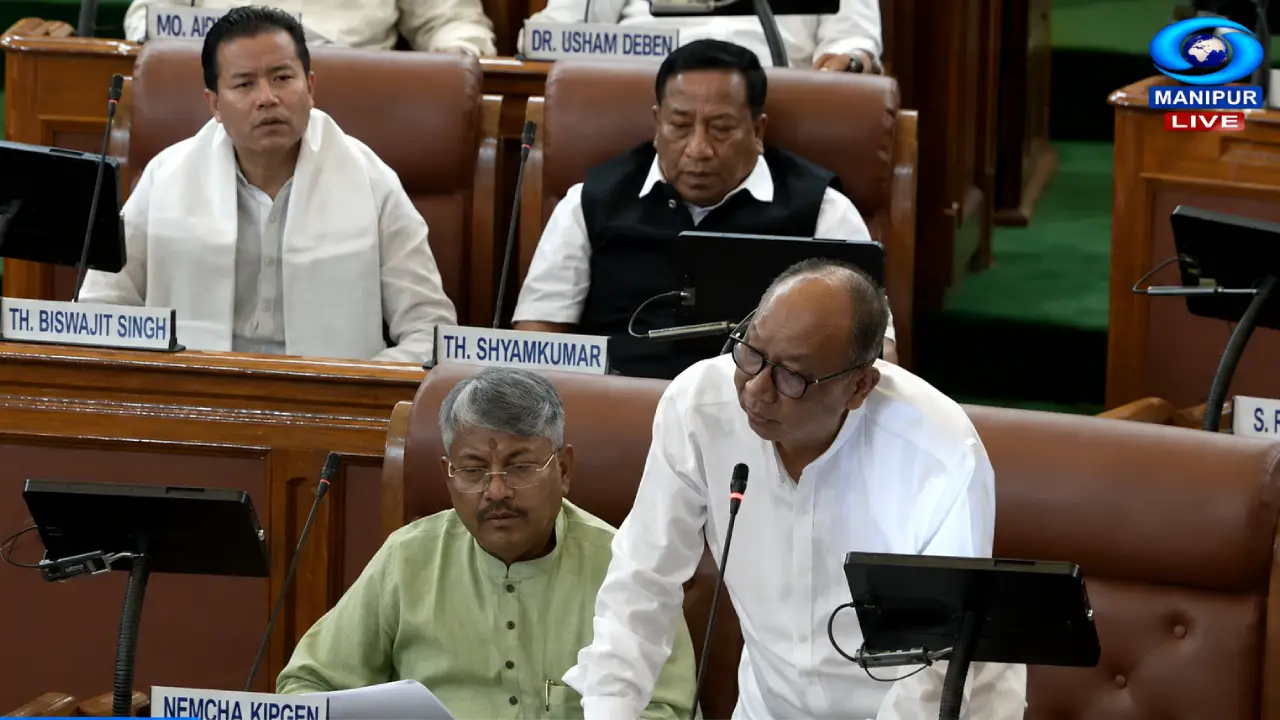
Imphal, Sept 2: The eighth session of the 12th Manipur Legislative Assembly opened on Wednesday with two developments carrying particular political weight: the first in-person attendance of two Kuki-Zo legislators in the House since the ethnic violence began in May 2023, and the Assembly’s renewed demand that the National Register of Citizens (NRC) in Manipur be updated before the Census is conducted.
Saitu MLA Haokholet Kipgen and Saikul MLA Kimneo Haokip Hangshing attended the sitting physically, ending more than three years in which Kuki-Zo legislators had largely stayed away from the Assembly in person and participated virtually where possible. Their return came despite a call from the Kuki Inpi Manipur (KIM), the apex Kuki civil body, asking Kuki-Zo MLAs to stay away from the session until the community’s demand for a separate political administration is addressed.
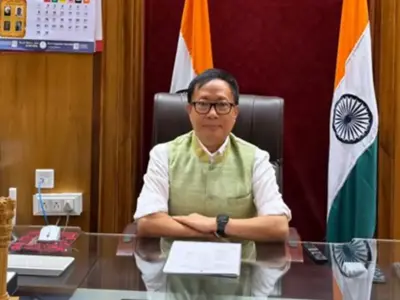
Chief Minister Yumnam Khemchand Singh welcomed the two legislators’ presence, describing it as a positive step towards unity and peace. Kipgen, on entering the Assembly, said he was happy to return to the House after a long time. The physical participation did not, however, mean that the wider political differences surrounding the conflict had been resolved.
NRC demand returns to centre of Assembly proceedings
The session began with an obituary reference for four former members of the Assembly — L Ningthemjao of Heingang, K Envey of Phungyar, Dr Md Maniruddin Sheikh of Lilong and AS Arthur of Ukhrul.
Members, including Chief Minister Khemchand Singh and former chief ministers Nongthombam Biren Singh and Okram Ibobi Singh, expressed their condolences.
The morning sitting was subsequently disrupted by an uproar after senior Congress leader and former chief minister Okram Ibobi Singh raised a point of order in connection with an adjournment motion seeking discussion on implementation of the NRC before the Census. The House was adjourned for an hour and resumed at 2 pm.
During the later sitting, Khemchand moved a resolution reaffirming the Assembly’s earlier resolutions of August 5, 2022, and March 1, 2024, and urging the Government of India to update the NRC in Manipur before conducting the Census. The House unanimously passed the resolution.
The resolution comes at a politically sensitive time, with the question of the sequencing of the NRC and Census exercises becoming a major issue in Manipur. Civil society groups have been demanding that the NRC be updated first.
The Centre had also deferred Census-related operations in Manipur amid protests over the issue, while the Manipur High Court had put the census-related exercise, including house-listing, on hold until further notification from the Registrar General of India, according to reports published on September 2.
Two Kuki-Zo MLAs attend physically after more than three years
The return of Haokholet Kipgen and Kimneo Haokip Hangshing to the Assembly chamber was one of the most notable developments of the opening day.
Kuki-Zo legislators have largely been absent physically from the Manipur Assembly since the outbreak of violence in May 2023, citing security concerns. Their participation had largely taken place virtually.
Kipgen represents Saitu, while Hangshing represents Saikul. Their physical attendance marked the first time since the beginning of the conflict that Kuki-Zo legislators attended the House in person.
Other Kuki-Zo legislators did not attend physically. Deputy Chief Minister Nemcha Kipgen and Henglep MLA Letzamang Haokip participated virtually, while several others remained absent. Reports said four legislators had taken leave for the entire session.
The development came despite the KIM’s appeal that Kuki-Zo MLAs boycott the session until the demand for a separate political administration is addressed.
The organisation had argued that resumption of normal legislative participation should not be interpreted as a return to normal political conditions while the community’s political demand remained unresolved.
Khemchand, however, viewed the physical participation differently, welcoming it as a step towards unity and peace and saying collective efforts could help Manipur move towards peace.
Government rejects report of India-Myanmar land swap
Security and territorial concerns also figured prominently during the first day. Congress MLA K Ranjit Singh raised a Calling Attention Motion concerning reports of a proposed land-swap arrangement between India and Myanmar.
Replying to the motion, Home Minister Govindas Konthoujam said there was no official report regarding any land-swap deal between India and Myanmar.
He also said that a majority of the fencing along the international border had been completed. The minister reiterated that the people of Manipur and the state government remained firmly committed to protecting the territorial integrity of the state.
The issue comes amid continuing political attention on the India-Myanmar border, particularly its fencing and security implications for Manipur.
Appeal for responsibility and reconciliation
Another Calling Attention Motion, raised by Congress MLA K Meghachandra, focused on the violence and the continuing need to restore peace.
Responding to the motion, Home Minister Konthoujam called on all sections to shoulder responsibility and exercise a sense of humanity in efforts to restore peace.
He also appealed to religious and community leaders to come forward and help address the trust deficit between communities.
The remarks came as the Assembly attempted to deal simultaneously with the political, security and social consequences of the conflict that has divided communities and disrupted normal governance in the state.
Rs 3,861 crore supplementary demands presented
The government also placed its financial business before the House. Chief Minister Khemchand presented the First Batch of Demands for Supplementary Grants for 2026-27, involving a total of Rs 3,861 crore across 31 demands and one appropriation.
Of the total, Rs 12 crore is charged to the Consolidated Fund of the State, while Rs 3,849 crore is proposed as voted expenditure.
Khemchand said around 90 per cent of the provisions in the supplementary demands were linked to Centrally Sponsored Schemes, NABARD projects and Externally Aided Programmes.
According to the Chief Minister, the allocations reflect the state government’s efforts to mobilise central and external resources for development programmes and ongoing projects.
Nine Bills introduced
The opening day also saw the introduction of several pieces of legislation. The Chief Minister introduced seven government Bills:
Manipur Town and Country Planning (Sixth Amendment) Bill, 2026
Manipur Conservation of Paddyland and Wetland (Third Amendment) Bill, 2026
Manipur Goods and Services Tax (Tenth Amendment) Bill, 2026
Manipur AYUSH Council Bill, 2026
Manipur Right to Business and Investment Facilitation Bill, 2026
Manipur Shops and Establishments (Regulation of Employment and Conditions of Service) (Amendment) Bill, 2026
Manipur Unified (Trade, Shop and Establishment Licensing) Bill, 2026
Deputy Chief Minister Nemcha Kipgen introduced the Manipur Panchayati Raj (Ninth Amendment) Bill, 2026, while Home Minister Govindas Konthoujam introduced the Manipur Fire and Emergency Service Bill, 2026.
The Bills cover a wide range of areas, including town planning, conservation of paddyland and wetlands, taxation, AYUSH regulation, investment facilitation, employment conditions, local governance, licensing and fire and emergency services.
CAG reports and other papers tabled
The Chief Minister also laid several documents before the House. These included the Comptroller and Auditor General of India’s report on the finances of the Government of Manipur for 2024-25 (Report No. 1 of 2026) and the CAG report on the General, Social, Economic and Revenue Sectors for the year ended March 31, 2024 (Report No. 2 of 2026).
The Manipur Private School (Registration and Regulation) Rules, 2024, published in the Manipur Gazette in November 2024, and the Manipur Town and Country Planning (Sixth Amendment) Ordinance, 2026, published in July 2026, were also laid before the House.
Khemchand additionally presented the Business Advisory Committee Report, 2026, and sought the House’s agreement to the government’s proposed allocation of time for legislative business.
A politically significant opening day
The first day of the session brought together issues that have remained at the centre of Manipur’s political debate: territorial integrity, citizenship and demographic documentation, the continuing impact of the conflict, reconciliation between communities and the functioning of representative institutions.
The return of two Kuki-Zo MLAs to the Assembly chamber was particularly notable because it brought representatives from a community that has largely remained physically absent from the House since the violence began.
At the same time, the Assembly’s unanimous reaffirmation of the NRC-before-Census position showed that the political disagreement over citizenship documentation and the Census remains unresolved.
The two developments therefore point in different but connected directions: the House has seen a limited return of physical political participation across the conflict divide, while major disagreements over Manipur’s political future and the conditions for restoring normalcy remain firmly on the table.
The eighth session of the 12th Manipur Legislative Assembly is scheduled to have three sittings and continue until September 7. The House was adjourned after the first day and is scheduled to reconvene at 11 am on September 3.