MSPDCL orders a statewide crackdown on unauthorised crypto mining and high-density computing operations, citing transformer overloads, grid stress and power disruptions.
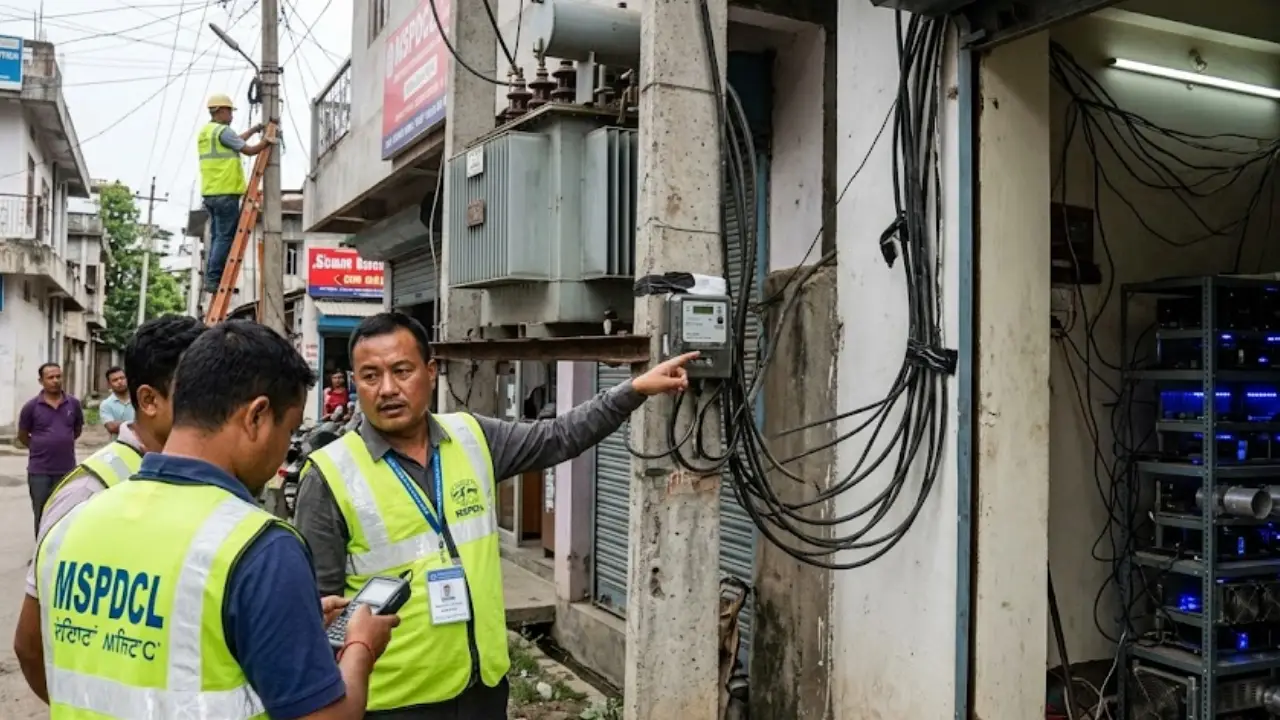
Imphal, Sept. 28: The Manipur State Power Distribution Company Limited (MSPDCL) has ordered a statewide drive against unauthorised cryptocurrency mining and other energy-intensive computing operations, citing concerns over transformer overloads, grid stability and frequent power disruptions at a time when the state is facing a significant electricity supply deficit.
In a notice issued on September 28, MSPDCL Managing Director M. Rabi Singh said a significant number of unregistered and illegal consumers were drawing utility power to operate energy-intensive mining rigs across the state. The utility said such activities were placing additional stress on public electrical infrastructure.
Unmetered, unauthorised or miscategorised mining operators have been directed to apply for regularisation at their respective Divisional Sub-offices within seven days from the date of issue of the notice.
Operators must also declare the peak demand of their installations in kW/kVA and submit certified hardware ratings for mining rigs, servers, power supply units and cooling equipment to the nearest MSPDCL sub-divisional office.
MSPDCL has ordered the immediate suspension of electricity supply to unauthorised high-density computing and mining operations. Connections will only be considered after a technical assessment establishes the viability of supplying the additional load.
The directive comes against the backdrop of growing pressure on Manipur's electricity distribution system. The state has reintroduced rotational power interruptions in September amid a reported peak-demand gap, with demand reaching about 270 MW against around 180 MW of available power for drawal. This leaves a peak shortfall of roughly 90 MW.
The supply constraints have been attributed primarily to upstream generation limitations, including reduced hydropower availability and curtailment at thermal generation stations. The resulting shortage has increased pressure on the distribution network during peak hours.
Against this backdrop, high-density computing operations such as cryptocurrency mining can place concentrated loads on local distribution infrastructure. MSPDCL's latest directive specifically seeks to identify such operations, assess their actual electricity requirements and ensure that any authorised supply is supported by the available network capacity.
The company's separate office order issued on September 28 directs all Deputy General Managers to conduct targeted field drives to identify, regularise and recover statutory dues from energy-intensive operations, including cryptocurrency mining, data-processing clusters and other high-density computing facilities.
Officials have been instructed to analyse unusual spikes in electricity consumption using data from the Meter Data Management System (MDMS), wherever smart meters are installed. The analysis is to be carried out at both Distribution Transformer (DTR) and feeder levels.
Inspection squads led by sub-divisional managers will also inspect areas reporting frequent incidents of burnt DTRs.
MSPDCL's wider enforcement drive comes amid long-standing challenges in revenue collection and energy accounting. According to the background data, accumulated consumer arrears had reached Rs 691.09 crore, with outstanding liabilities concentrated significantly among high-tension consumers, commercial establishments and government or institutional accounts.
The utility's financial position also affects its ability to procure additional electricity when supply falls short of demand. Previous audit findings cited in the background material showed that MSPDCL had faced substantial late-payment liabilities in its bulk power purchases, reducing the funds available for network maintenance and power procurement.
The state's metering gaps add another challenge. The background data puts the number of unmetered consumers at 65,587, while only a portion of distribution transformers and 11 kV feeders had operational boundary meters. Such gaps make it more difficult to accurately account for electricity consumption and identify abnormal or unauthorised usage, particularly in rural and outer areas.
MSPDCL has directed officials to immediately disconnect connections involving direct tapping, meter tampering or bypassing of meters. In such cases, provisional assessments are to be issued and recovery of civil liability initiated at twice the applicable commercial tariff.
Outstanding arrears and penal charges must be recovered before disconnected supplies are restored, according to the office order.
The utility has separately directed identified operators to apply for immediate connection regularisation at the concerned Divisional Sub-office within 14 calendar days. Regularisation and sanctioning of additional load will be permitted only after a technical network-capacity and viability assessment.
All such connections will also have to be mandatorily metered.
MSPDCL has warned that operators failing to comply could face disconnection, back-billing and maximum-demand surcharges. The notices also cite statutory provisions concerning power theft and unauthorised load extension, including penalties that may involve fines and imprisonment of up to six months, or both.
The utility has asked its Deputy General Managers to submit compliance and revenue-recovery reports to the Managing Director by October 15, 2026.
The action comes as MSPDCL attempts to manage a strained distribution system while dealing with a combination of supply shortages, financial constraints, incomplete metering and growing electricity demand. The latest directives seek to ensure that energy-intensive private operations do not add unmanaged loads to already stressed local distribution networks.