Nagaland filmmaker Theja Rio’s debut feature Angh has won the TIFF 2026 Platform Award, making the Konyak-language film eligible for consideration at the 2027 Oscars.
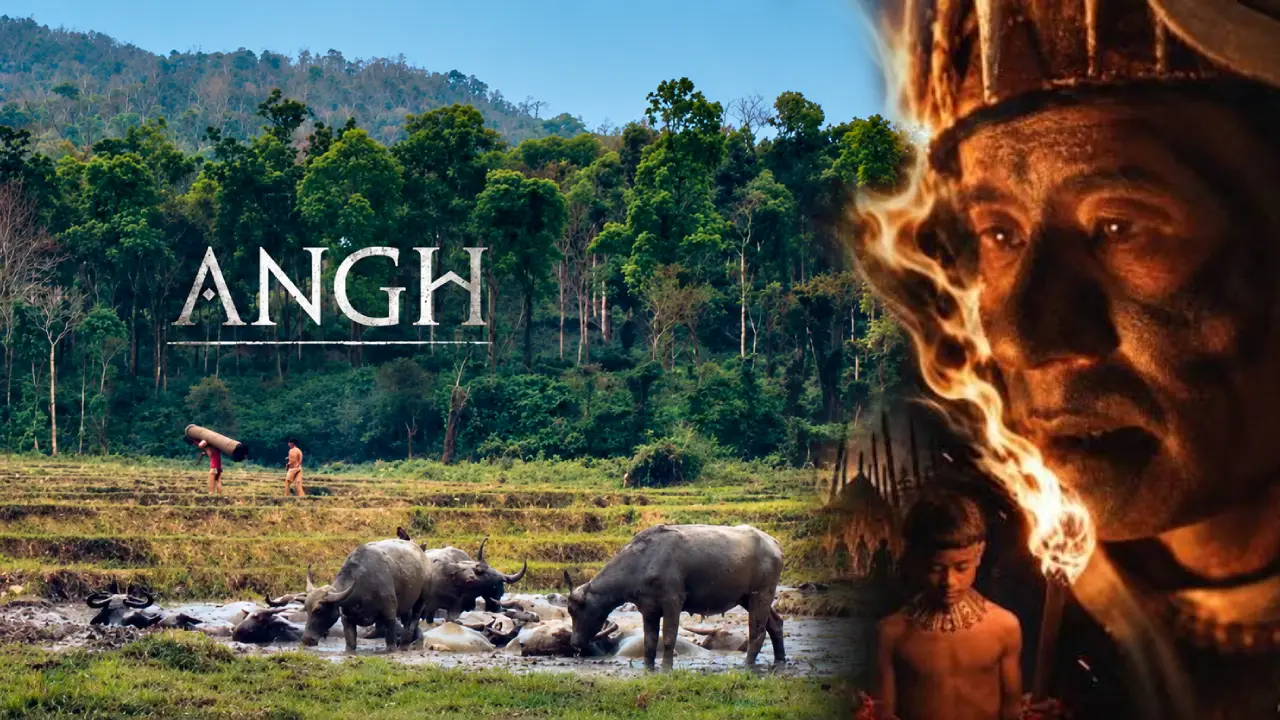
Kohima, Sept. 23: Naga filmmaker Theja Rio’s debut feature Angh, rooted in the Konyak community of Nagaland, has won the Platform Award at the 51st Toronto International Film Festival (TIFF), giving the film an independent route to consideration in the International Feature Film category at the 99th Academy Awards in 2027.
The award, announced on September 20, marks a significant international recognition for a film centred on a remote Konyak community and its encounter with profound cultural and religious change. Angh was the only Indian film selected for this year’s 12-film Platform competition at TIFF.
The Platform Award also carries a CAD 20,000 cash prize. More importantly for Angh, the Toronto award falls under a new Academy rule for the 2027 Oscars that allows a non-English-language feature to qualify for consideration through a designated award at one of six international film festivals, without having to be selected as its country’s official submission.
The distinction is particularly significant because Angh was not selected as India’s official submission for the 2027 Oscars. The Film Federation of India chose Santosh Davakhar’s Marathi film Gondhal from 33 submissions on September 18. Angh, however, has now obtained eligibility through its TIFF victory under the Academy’s new rules.
A story rooted in Konyak culture
Set in Nagaland in 1963, Angh follows an ageing former village chief and his son, who are among the last members of their community to continue following their ancestral faith.
The two live in isolation as their traditional world undergoes rapid change. The arrival of an American missionary brings new religious and social influences into the village, placing further pressure on an already disappearing way of life.
The film examines the relationship between tradition, faith, family, memory and cultural transformation through the lives of its central characters.
The story is closely connected to the Konyak cultural setting in which Rio grew up. The film was shot on 16mm and features Indigenous Naga performers alongside British actor Douglas Henshall, who plays the missionary. The cast also includes Anghlong Konyak, Sobino Rengma, Genpai Konyak, Amah Konyak and Wangton Konyak.
According to the film's official website, the story is set in a village that was once associated with headhunting traditions and follows a former chief and his son as they attempt to preserve their ancestral identity in a changing environment.
From short film to feature debut
Angh is not a completely new story for Rio. The feature expands on a short film of the same name that he made earlier in his career.
The 22-minute short, released in 2021, was set in rural northeastern India and also explored the conflict between an older Konyak way of life and the pressure to convert to Christianity. It screened at the Palm Springs International Film Festival's ShortFest and received a Special Mention at the Clermont-Ferrand International Short Film Festival.
The feature represents Rio's first feature-length directorial work. Rio, who is from Nagaland, studied filmmaking at the UK's National Film and Television School, according to reports on the film.
The film is produced by Nancy Nisa Beso and Theja Rio. Winter Hymns Films, the production company associated with the project, is making its feature-film debut with Angh. Jungle Book Studio is handling the film's international and domestic sales and distribution.
TIFF jury praises film's filmmaking
The Platform competition is one of TIFF's principal juried sections and is focused on films distinguished by a strong directorial voice and distinctive filmmaking.
The 2026 jury was headed by Argentine filmmaker Pablo Trapero, with Amma Asante, Sylvia Chang, Luc Déry and Albert Lee also serving on the jury. The jury praised Angh for its perspective, filmmaking and portrayal of its world, while also commending Rio's approach as a filmmaker.
The award placed Angh among the principal winners of the 51st edition of TIFF, which concluded with its awards ceremony on September 20.
The film had its world premiere at TIFF on September 15. Its selection as the sole Indian film in the Platform competition had already drawn attention to the Nagaland-based production before the award was announced.
What the TIFF win means for the Oscars
The Oscar significance of the award comes from a change introduced by the Academy of Motion Picture Arts and Sciences for the 99th Academy Awards.
Under the revised rules, a non-English-language feature can enter the International Feature Film consideration process in two ways. The conventional route remains selection by an Academy-approved national or regional selection committee. The new route allows a film to qualify by winning a specified award at one of six designated international festivals.
The six qualifying festival awards are:
The Academy's official International Feature Film FAQs state that a non-English-language film winning one of these qualifying awards can be submitted for consideration without going through the normal country-selection route.
The change explains how Angh can enter the Academy's consideration process even though India has already selected Gondhal as its official submission.
The distinction is between eligibility and nomination. Winning the Platform Award makes Angh eligible for consideration, but it does not mean the film has been nominated for an Oscar. The Academy will still conduct its eligibility and voting processes before the final nominees are announced.
Two Indian films now eligible through different routes
The development has created an unusual situation for Indian cinema at the 2027 Oscars.
Gondhal, directed by Santosh Davakhar, remains India's official submission for the International Feature Film category after being selected from 33 films by the Film Federation of India.
Angh, meanwhile, has acquired eligibility through the separate festival-award route created by the Academy's 2026 rule change.
The two films therefore reached the Academy's consideration process through different mechanisms. The development does not mean that India has made two official submissions. Rather, Gondhal is the country's official selection, while Angh qualifies independently through the TIFF Platform Award.
Reports said Angh had also been among the films considered by the Indian selection committee before Gondhal was chosen.
A wider platform for Naga cinema
For Nagaland's film community, the TIFF recognition places a story from the state's Konyak community in a major international competition without separating it from its cultural setting.
Rather than using Nagaland simply as a location, Angh builds its narrative around the community's history, religious transformation and changing relationship with its ancestral traditions.
Rio has described the film as a story about a father and son, but also about letting go, one's relationship with home and the transient nature of life. In comments following the TIFF win, he said the film was made with affection for his homeland, its people and culture.
The film's journey from a short exploring cultural resistance to a feature selected for TIFF's Platform competition also gives the project a longer trajectory within international festival cinema.
With its Platform Award, Angh now moves into the Academy's consideration process. The next stage will determine whether the film progresses beyond eligibility and reaches the shortlist and, ultimately, the final nominations for the 99th Academy Awards.
For a film made around a Konyak story in Nagaland, its Toronto victory has already brought the region's cinema into one of the year's most closely watched international film conversations.