The Capacity Building Commission will hold a Guwahati workshop on October 9 with officials and training institutes from all eight northeastern states.
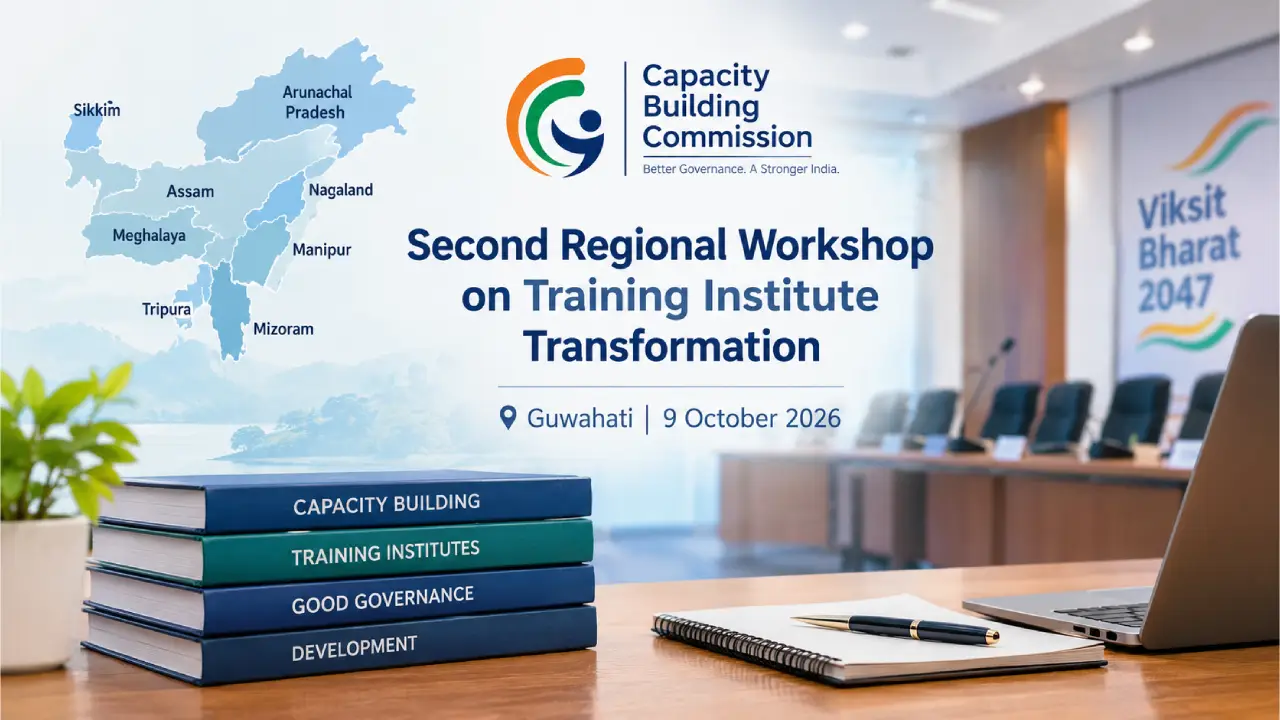
Guwahati, Oct. 3: The Capacity Building Commission (CBC) will hold the second regional workshop of its Sadhana Shrinkhla 2026 series in Guwahati on October 9, bringing together senior officials, training institutions and other stakeholders from all eight northeastern states.
The workshop will be inaugurated by Assam Chief Minister Dr Himanta Biswa Sarma and will focus on the proposed transformation of civil service training institutions into broader capacity-building institutions under the National Programme for Civil Services Capacity Building.
The eight participating states are Assam, Arunachal Pradesh, Manipur, Meghalaya, Mizoram, Nagaland, Sikkim and Tripura. Heads and faculty members of government training institutes, subject matter experts, industry representatives and other stakeholders are also expected to take part in the discussions.
The regional workshop is part of a nationwide series of four consultations being organised by the CBC to develop a Training Institute Transformation Framework. The first workshop was held in Vijayawada, Andhra Pradesh, on September 29 and 30.
The commission said the regional consultations are intended to build on discussions held over the past year, including Regional Task Force meetings, Sadhana Saptah from April 2 to 8 and a National Departmental Summit on institutionalising capacity building in May.
According to the CBC, the consultations identified the need for a common framework to help training institutes move beyond their traditional role as standalone training providers and become competency-driven institutions that respond to the changing requirements of the civil service.
The Guwahati workshop will examine issues including institutional governance and leadership, operational effectiveness, collaboration, faculty development and institutional competencies. Digital transformation and the adoption of emerging technologies, including artificial intelligence, will also form part of the discussions.
A key focus will be on moving from largely supply-driven training to demand-responsive, role- and competency-based capacity building. The commission said the proposed framework would provide a common direction while allowing states and individual institutions to account for their own priorities and institutional contexts.
Participating states and training institutes will also be expected to identify specific priorities and develop action plans for implementing the proposed reforms. These could include measures to strengthen institutional governance, improve faculty capabilities and make training institutions more digitally enabled.
The transformation initiative is also linked to the Unified New-Age National Training Initiative (UNNATI) portal, which was launched during Sadhana Saptah 2026. The platform connects more than 700 training institutes and is intended to link capacity-building requirements identified through Capacity Building Plans with the institutional capacity of training providers.
The CBC said UNNATI is expected to improve institutional visibility and collaboration while supporting resource sharing and continuous, data-informed improvement among training institutions.
The recommendations and experiences emerging from the regional consultations will contribute to the finalisation of the Training Institute Transformation Framework. The commission said the framework is intended to reflect the different institutional requirements and contexts of states across the country.
Through Sadhana Shrinkhla 2026, the CBC aims to build a more connected and responsive training ecosystem capable of strengthening the competencies required by civil servants and supporting citizen-focused public service delivery.