JNUTA and JNU student representatives allege procedural violations and confidentiality breaches in the dismissal of Congress MP and professor Angomcha Bimol Akoijam, saying student representatives were not given the Internal Committee report.
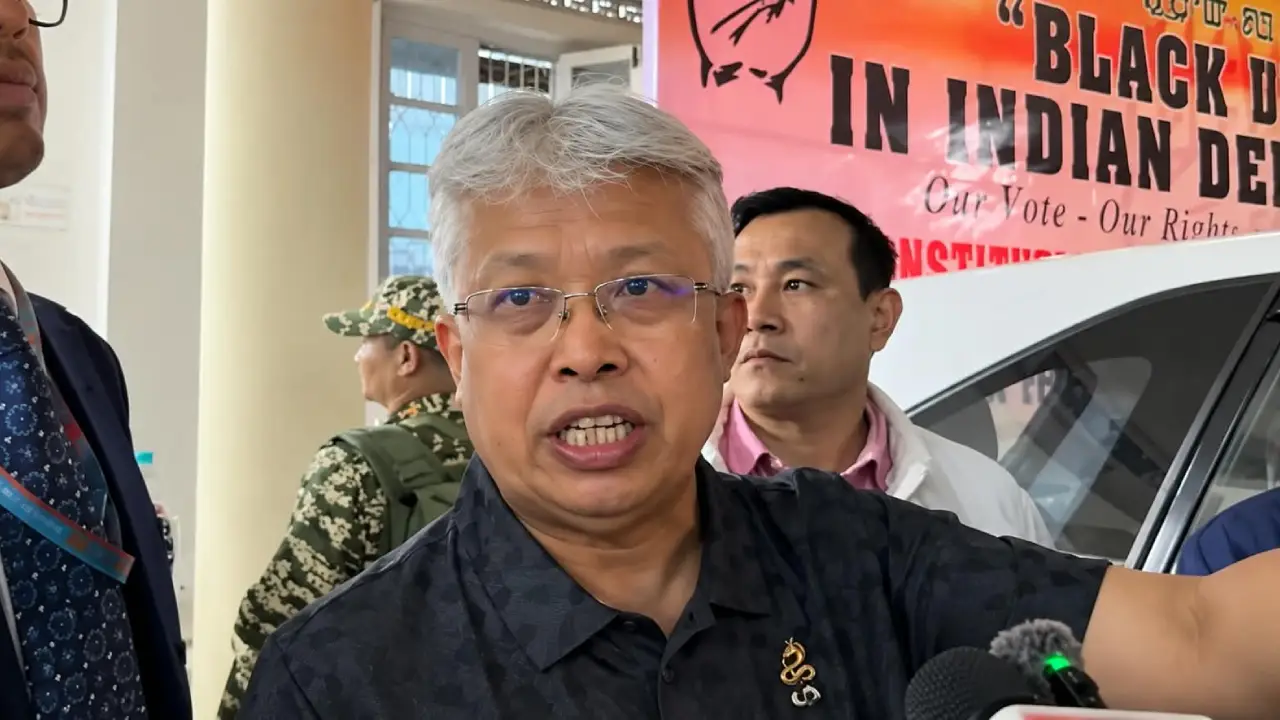
Imphal, Oct. 11: The Jawaharlal Nehru University Teachers' Association (JNUTA) and three student representatives on the university's Internal Committee have raised questions over the procedure followed in the dismissal of Professor and Congress MP Angomcha Bimol Akoijam, alleging violations of institutional rules and confidentiality requirements under the law governing sexual harassment complaints.
In separate statements, the teachers' association and the student representatives questioned the circulation of the dismissal order and the Internal Committee's findings, arguing that the university administration had failed to follow due process. They called for clarification from the university authorities over the handling of the case.
JNU dismissed Bimol Akoijam, the Lok Sabha member from Inner Manipur, on October 9 following an inquiry into allegations of sexual harassment. Earlier reports said 11 female students had accused him of sexual harassment.
Student representatives allege confidentiality breach
In a signed statement reported by The Pioneer, the three student representatives on JNU's Internal Committee — Paran, Shruti and Garvita — alleged that the university had disregarded the prescribed procedure in handling the case.
They said an unnumbered circular bearing the Vice-Chancellor's signature and referring to the committee's findings had circulated on WhatsApp and other online platforms. They also referred to a document containing the allegations and findings that had been shared on X.
The representatives maintained that the student representative serving on the inquiry had not been provided with a completed inquiry report.
They argued that the circulation of case-related allegations and findings before the prescribed process had been completed amounted to a breach of confidentiality under Section 16 of the Sexual Harassment of Women at Workplace (Prevention, Prohibition and Redressal) Act, 2013, commonly known as the PoSH Act, and the University Grants Commission's guidelines governing Internal Committees.
The representatives also cited Section 8, Point 3 of the UGC Internal Committee guidelines, which they said requires the findings and recommendations of a completed inquiry to be sent to the complainant, the respondent and the institution's appellate body.
According to their statement, this step had not been followed in Bimol Akoijam's case.
They further argued that the university's Executive Council should decide on the action to be taken following the inquiry before an office order is issued. They questioned how such a decision could have been made when, according to them, the report had not been finalised and the council had not completed the prescribed process.
The representatives warned that procedural lapses could provide grounds for the respondent to challenge the recommendations or disciplinary action in court.
Citing the 2024 case of Riko Akai v. Swaran Singh, they referred to an instance in which a respondent who had been terminated obtained a stay from a High Court over procedural lapses in the inquiry. They argued that similar problems could arise in the present case.
The student representatives said they had repeatedly insisted that the Internal Committee comply with the PoSH Act and UGC guidelines. They demanded an immediate clarification from the committee's presiding officer and the Vice-Chancellor regarding the alleged procedural lapses and repeated breaches of confidentiality.
JNUTA questions Vice-Chancellor's authority
Separately, JNUTA expressed concern over the circulation of an order dated October 9, 2026, which it said purported to dismiss Bimol Akoijam from active university service.
In its statement dated October 11, the association questioned the authority under which the Vice-Chancellor had issued the order, arguing that the power to dismiss a faculty member rested with the university's Executive Council under Statute 30 of the Jawaharlal Nehru University Act.
JNUTA President Syed Akhtar Husain and Secretary Avinash Kumar said the association understood that no Executive Council meeting had been convened and no documents had been shared with its members before the order was circulated.
The association therefore alleged that the Vice-Chancellor had acted unilaterally without the required approval of the Executive Council.
JNUTA also criticised the reported selective circulation of the Internal Committee's recommendations to the media, saying such disclosures undermined the confidentiality requirements applicable to sexual harassment inquiries.
It said the absence of an official denial from the university administration regarding the circulation of the information raised further questions about compliance with institutional rules and due process.
The association also pointed to differences between the former Gender Sensitisation Committee Against Sexual Harassment (GSCASH) framework and the rules governing the present Internal Committee, arguing that the latter did not contain similarly defined provisions for minor and major penalties.
JNUTA said procedural irregularities in sexual harassment cases could undermine the fairness and credibility of the inquiry process. It called on the university administration to be held accountable for what it described as repeated failures to follow institutional regulations.
The association strongly condemned the administration's handling of the matter and alleged that the circulation of the dismissal order had been used for narrow political purposes.
Questions over due process and confidentiality
Both statements have placed the procedure followed by JNU under scrutiny, particularly the sequence of the Internal Committee's findings, the role of the Executive Council and the circulation of confidential case materials.
The PoSH Act contains confidentiality provisions governing information relating to complaints, inquiries, recommendations and action taken. The UGC guidelines also prescribe procedures for communicating inquiry findings and recommendations to the parties concerned.
The allegations raised by JNUTA and the student representatives concern whether those requirements and the university's own statutory procedures were followed before the dismissal order was issued. Their statements do not, by themselves, establish that the order was legally invalid.
The university administration's response to the specific allegations raised in the two statements was not available at the time of filing this report.
Bimol Akoijam, who was elected to the Lok Sabha in 2024 from the Inner Manipur constituency, was dismissed following the Internal Committee inquiry. The dismissal order, signed by Vice-Chancellor Santishree D. Pandit, reportedly referred to the committee's recommendation for major punishment.
The controversy has raised questions about procedural compliance, confidentiality and the respective roles of the Internal Committee, the Vice-Chancellor and the Executive Council in disciplinary proceedings involving allegations of sexual harassment.