Manipur has begun a two-day consultation on its proposed 2026 Youth and Sports Policies, focusing on scientific training, athlete welfare, skills and youth empowerment.
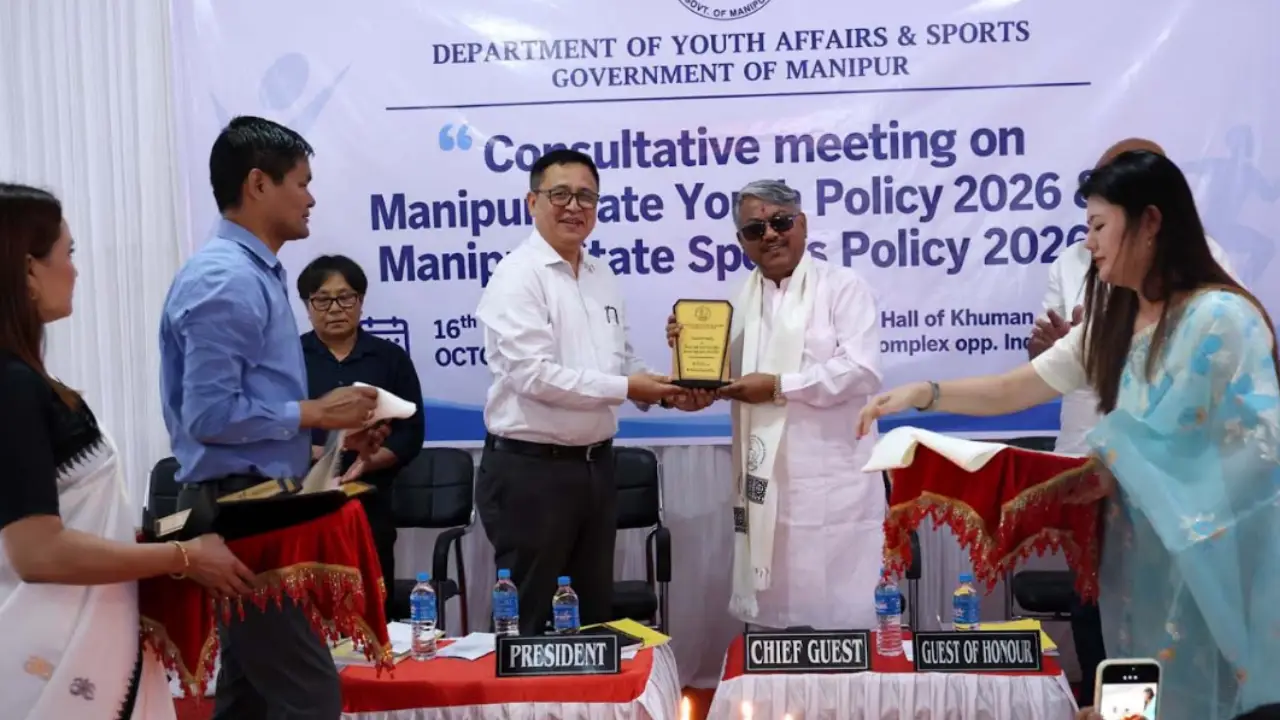
Imphal, Oct. 16: The Department of Youth Affairs and Sports, Government of Manipur, has begun a two-day consultative meeting on the proposed Manipur State Youth Policy, 2026, and Manipur State Sports Policy, 2026, to develop a framework for youth empowerment, scientific sports training and improved opportunities for young people across the state.
The consultation is being held at the Canteen Hall of Khuman Lampak Sports Complex, opposite the Indoor Stadium. It aims to gather stakeholder suggestions and identify measures to strengthen youth development, sports infrastructure, athlete welfare and institutional coordination.
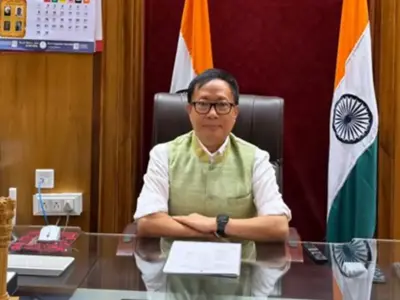
Addressing the opening ceremony on Friday, Youth Affairs and Sports Minister Govindas Konthoujam said Manipur’s rich sporting heritage and the natural abilities of its youth needed proper guidance, scientific training and institutional support. He said revising the policies was necessary to respond to changing requirements in sports and youth affairs.
Recalling the evolution of sports policy in the state, the minister said Manipur’s first sports policy was drafted in 1992 in line with the National Sports Policy of 1984. The policy was subsequently updated in 2003, alongside the Youth Policy.
He said developments in sports and changing aspirations among young people had made another revision necessary to address current needs and create better opportunities.
Highlighting the state’s achievements in sports, Konthoujam said Manipur had produced 19 Olympians, reflecting its sporting potential. However, he stressed that sustaining and improving these achievements would require more systematic talent identification, modern coaching methods and specialised support for athletes.
Referring to Khelo Bharat Niti, 2025, the minister said developments at the national level had reinforced the need to strengthen Manipur’s sports policy.
He emphasised the importance of sports science in identifying athletes’ physiological characteristics, physical capabilities and individual strengths to help determine suitable sporting disciplines and improve performance.
The minister also highlighted the need for sports medicine, scientific coaching and specialised training facilities. He cited the Netaji Subhas National Institute of Sports (NIS), Patiala, as an example of structured sports development.
The proposed Manipur State Sports Policy, 2026, aims to establish a modern, inclusive and athlete-centric sports ecosystem. Its key areas include scientific talent scouting, improved infrastructure, high-performance training, athlete welfare and transparent governance.
The policy also seeks to improve coordination among government departments, educational institutions, sports associations, local bodies and private stakeholders to support sports development.
The draft further emphasises gender equity, para sports, indigenous games and safe sporting environments. It seeks to preserve Manipur’s traditional sporting practices while encouraging modern technologies and international best practices to improve performance and expand participation.
Konthoujam said young people who did not achieve recognition in sports or other fields should also receive appropriate guidance, skill development opportunities and support to build sustainable careers.
Referring to youth engagement initiatives in Jammu and Kashmir and other parts of the country, he said Manipur needed to create more avenues for constructive participation by young people.
The proposed Manipur State Youth Policy, 2026, seeks to promote education, entrepreneurship, leadership, sports, health, culture, digital empowerment and social cohesion.
It envisions young people as active contributors to peace, progress, innovation and sustainable development. The policy also aims to help them become self-reliant and socially responsible while preserving the state’s cultural identity and preparing them for emerging challenges.
Acknowledging Manipur’s financial constraints, the minister expressed hope that the consultation would produce practical recommendations and help develop policies that could be implemented effectively. He stressed that collective participation would be necessary to ensure the proposed measures deliver tangible benefits.
Secretary of Youth Affairs and Sports N. Praveen Singh said the two policies needed to remain responsive to changing trends, emerging challenges and the aspirations of young people.
He said consultations with experienced individuals and stakeholders had been undertaken to ensure that the policies reflected the needs and realities of Manipur.
Highlighting the relationship between education and sports, the secretary said schools and sports institutions needed to work together so that young people could continue their education while developing their sporting abilities.
He observed that the separation of the two sectors often restricted opportunities for promising athletes.
Singh said the department had sought to incorporate grassroots-level needs and address youth-related requirements down to the last mile. He also emphasised scientific knowledge, skill development and stakeholder participation in identifying and nurturing talent.
He expressed hope that the consultation would help bridge existing gaps and establish a practical framework for youth development and sporting advancement.
Director of Youth Affairs and Sports Dr. Mayengbam Veto Singh said the consultation was being conducted in line with the broader national approach to youth development, including Khelo Bharat Niti, 2025, and the Sustainable Development Goals, particularly those concerning youth engagement.
He said sports development had traditionally focused largely on physical infrastructure and playgrounds, but a broader approach was now required.
According to the director, talent identification, scientific training, athlete welfare, policy planning and institutional support needed to be integrated into sports development to meet contemporary requirements.
He said the department was gathering views from sports personalities, coaches, administrators, sports journalists and other stakeholders to make the proposed policies practical and relevant. Public feedback would also be sought before the policy documents were finalised.
Dr. Veto Singh highlighted the potential role of corporate social responsibility initiatives, sports entrepreneurs, incubation centres and skill development institutions in supporting youth-oriented programmes.
He said collaboration with these stakeholders could help mobilise resources, expand opportunities and strengthen implementation despite the state’s financial limitations.
Both proposed policies emphasise inclusive participation, transparent systems, measurable outcomes and continuous monitoring to improve implementation.
The Sports Policy seeks to combine traditional sporting practices with modern training methods, while the Youth Policy aims to create an environment in which young people can develop their abilities through education, employment-oriented skills, entrepreneurship, sports and community participation.
The effectiveness of the proposed frameworks will depend on sustained institutional support and the participation of athletes, coaches, administrators, educational institutions, communities and young people.
The two-day consultation is expected to provide a platform for exchanging experiences, identifying gaps and incorporating stakeholder recommendations before the policies are finalised.
Among those present at the opening function were Dronacharya Award recipient L. Ibomcha Singh, Olympian N. Kunjarani Devi, departmental officers and other representatives of the sporting community.