The Press Council of India has adopted protest coverage guidelines on journalist identification, crowd safety, emergency planning, newsroom coordination and ethical reporting.
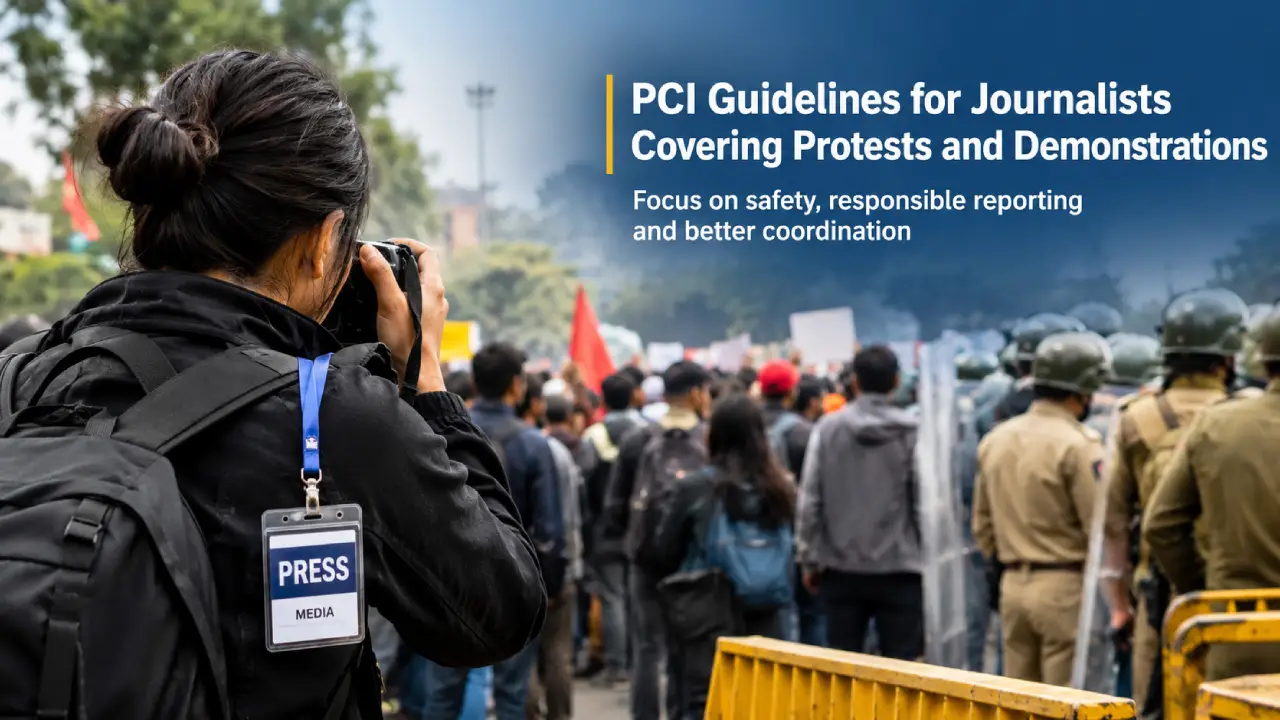
Imphal, Oct. 16: The Press Council of India has adopted guidelines for journalists covering protests and demonstrations, focusing on media personnel’s safety, professional conduct, responsible reporting and coordination with law enforcement authorities.
The guidelines were adopted at a Press Council meeting held on October 14, 2026, amid the need to facilitate orderly and effective media coverage of protests and demonstrations.
The advisory calls on journalists to carry and visibly display valid press identification, maintain neutrality, keep a safe distance from confrontations and remain alert to changing crowd conditions. It also outlines precautions for personal protection, emergency planning and communication with newsrooms.
The guidelines also advise journalists to plan for emergencies before reaching a protest site. Newsrooms are expected to monitor assignments and maintain contact with reporters, while freelancers should ensure that a trusted person knows their whereabouts and expected return time.
The advisory recommends that journalists continually assess their surroundings and identify possible escape routes as crowd conditions change. Those covering demonstrations should be prepared to leave areas affected by smoke or tear gas, using visible landmarks and safe routes to avoid moving further into the crowd.
The Press Council has also cautioned against handling tear-gas canisters, flash-bang devices and smoke grenades, warning that these may be hot, explosive or contaminated with hazardous residue. Protective equipment, including headgear and body armour, may be considered depending on the level of risk, but should not encourage journalists to take unnecessary chances.
Media organisations have been advised to establish clear communication arrangements for protest coverage. For planned demonstrations, coordination with police, public information officers or press liaisons may help clarify communication protocols and identify designated areas for the media.
The guidelines call for accurate, objective and impartial reporting, with a clear distinction between verified information, allegations, opinions and unconfirmed claims.
Journalists have been advised to verify information through multiple sources wherever possible and assess witnesses based on their proximity to events, visibility, reliability and potential biases. Statements made by protesters, organisers, police and government authorities should all be scrutinised, with claims attributed clearly and corroborated where possible.
The advisory further cautions against publishing or broadcasting real-time police positions, tactical movements or escape routes if the information could compromise safety or operational security.
It also calls for particular care when filming or identifying minors, vulnerable individuals, injured people and private citizens in distress. Journalists should consider whether publishing such material could expose individuals to retaliation, harassment or other harm, or violate their privacy.
The Press Council has stressed that journalists should describe observable actions rather than speculate about people's motives or emotions. It has also stated that the demands of live broadcasting, recording equipment and the pursuit of exclusive footage should not take priority over personal safety.