Congress MP Bimol Akoijam calls his JNU dismissal a witch hunt, alleges POSH Act violations and procedural lapses, and vows to challenge the decision legally and politically.
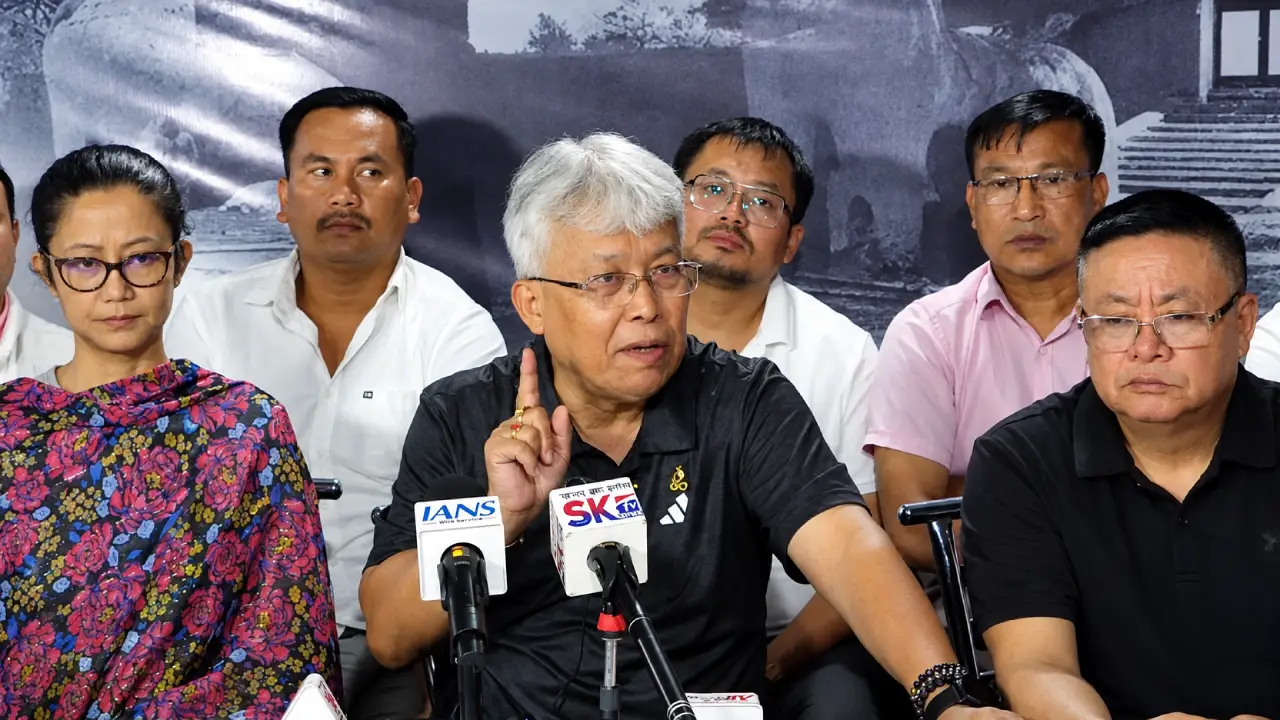
Imphal, Oct. 10: Congress MP from Inner Manipur Angomcha Bimol Akoijam has described his dismissal from Jawaharlal Nehru University (JNU) as a “witch hunt”, alleging that the university violated statutory confidentiality requirements and its own regulations while taking disciplinary action against him.
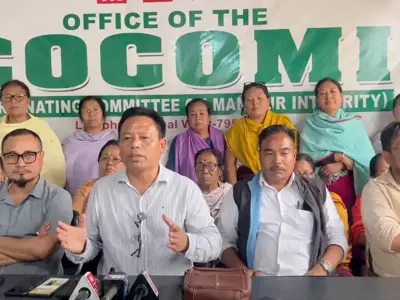
Bimol, who was a professor at JNU’s School of Social Sciences, said he would challenge the dismissal through legal and political means. Addressing the media at the Congress office in Imphal late Friday night, he questioned how the university could issue the dismissal order on October 9 without first providing him with the Internal Committee’s inquiry report and its findings and recommendations.
The dismissal followed an inquiry into sexual harassment allegations against him. JNU Vice-Chancellor Santishree D Pandit, in the dismissal order, cited the Internal Committee’s findings and recommendation for major punishment, stating that the university had followed due process.
Bimol disputed that account, arguing that the timing of the decision and the manner in which the inquiry findings became public raised serious questions about whether the prescribed procedures had been followed. He also accused the university’s leadership of breaching confidentiality provisions under the Sexual Harassment of Women at Workplace (Prevention, Prohibition and Redressal) Act, 2013, commonly known as the POSH Act.
The allegations of procedural violations and politically motivated action remain Bimol’s claims. Their validity would depend on the applicable regulations, the complete inquiry record and the circumstances surrounding the university’s decision.
Bimol questions dismissal procedure
At the centre of Bimol’s challenge is his claim that the university did not provide him with the Internal Committee’s report before deciding to dismiss him.
According to the information he cited, the committee’s findings and recommendations were submitted on October 9, the same day the university issued the dismissal order. Bimol questioned how the disciplinary action could be completed within such a short period without allowing the parties concerned to exercise the procedural rights available under the university’s rules.
Referring to Regulation 8 of JNU’s regulations, he said the provisions allow the parties concerned 30 days to appeal against the Internal Committee’s findings and recommendations. He also referred to Rule 8(6), which, according to his interpretation, provides for a show-cause notice and a 10-day period for responding in the circumstances covered by the provision.
Bimol maintained that he could not effectively challenge the committee’s findings without receiving the report and the material on which the decision was based.
He also questioned the university’s handling of the period between the completion of the inquiry and the dismissal. Bimol said he had given his deposition before the Internal Committee on July 16 and asked why the proceedings had taken so long before the university issued its decision.
In an interview with ThePrint, he said he received an email from the university at 11.35 pm on Friday, after he had already spoken to the media about not being given the findings.
He described the communication as a belated response to his public criticism and argued that the university should have shared the report with him before the dismissal was announced.
The central procedural question is whether the provisions cited by Bimol apply to the circumstances of his case in the manner he has described. The available account does not establish independently whether the university violated those provisions.
Alleges breach of POSH Act confidentiality
Bimol has also accused the JNU vice-chancellor of violating Section 16 of the POSH Act, which restricts the disclosure of information relating to sexual harassment proceedings, including the identities of the parties and details of the complaint and inquiry.
He argued that confidentiality safeguards should apply equally to everyone, regardless of their political position or personal background.
According to Bimol, information about the Internal Committee’s findings reached the media before the report was shared with him. He questioned how reports about the allegations and the inquiry could circulate publicly while he was still seeking access to the findings.
He further alleged that the vice-chancellor disclosed his identity by acknowledging that a case involving the Congress MP from Manipur was before the university. Bimol said the university leadership could have confirmed that an inquiry was underway without identifying the person involved.
He also told ThePrint that the Internal Committee had informed him of a breach of confidentiality and said it would look into the matter. This remains his account of the communication, and the available material does not independently establish the source of any disclosure or whether a statutory violation occurred.
Bimol criticised sections of the media for reporting details of the allegations before, in his view, the prescribed process had been completed. He described the coverage as a “trial by media” and disputed some of the claims circulating in news reports.
In particular, he said allegations involving sex-for-marks were not included in the complaint, according to his understanding of the documents. He questioned the source of such reports and accused some outlets of presenting claims that he said were not supported by the inquiry material.
The specific allegations against him and the findings of the Internal Committee have not been independently assessed in the material available for this report. The university’s dismissal order, as described in the source material, states that the action followed the committee’s findings and recommendation for major punishment.
Warns BJP and RSS leaders in Manipur
The Congress MP also linked the controversy to the political climate in Manipur, accusing the BJP and Rashtriya Swayamsevak Sangh (RSS) leaders of attempting to intimidate him.
Speaking in the presence of Congress workers, including Th Brinda and Popilal, at the party office in Imphal, Bimol warned political opponents to “back off”. He alleged that the controversy was being used to undermine him and questioned the conduct of political leaders in the state whom he accused of following directions from Delhi rather than defending Manipur’s interests.
Bimol described the dismissal as politically motivated and accused the BJP-led government of weakening constitutional institutions and the rule of law. He maintained that he would not retreat in the face of what he considered an injustice.
In his interview with ThePrint, he argued that the timing of the university’s action and the circulation of information about the inquiry had political implications, particularly with Manipur’s Assembly elections expected early next year.
Bimol claimed that the BJP was uncomfortable with the increased visibility of Manipur’s representatives in Parliament after the 2024 Lok Sabha elections. He said that he and fellow Congress MP Alfred Arthur, who represents Outer Manipur, had raised issues concerning the state in the 18th Lok Sabha.
He alleged that the controversy could be used to damage his public standing before the Assembly elections. These claims reflect Bimol’s political assessment of the case and have not been independently established.
The MP also referred to rumours about his personal life that he said circulated during the 2024 Lok Sabha election campaign. He alleged that the latest controversy was another attempt to damage his reputation and said he was prepared to face political attacks.
Bimol said he had received messages of support from former students across the country, from Kashmir to Kanyakumari. He maintained that the dispute was not only about his own position but also about the proper functioning of institutions responsible for addressing workplace sexual harassment.
Invoking his late parents and the traditional deity Ibudou Pakhangba, he denied the allegations against him and reiterated his determination to pursue the matter through lawful means.
“I will fight till I die for my land and my people,” he said.
Raises questions about institutional safeguards
The dismissal has brought two distinct issues into focus: JNU’s disciplinary action following an inquiry into sexual harassment allegations and Bimol’s challenge to the procedure adopted by the university.
The POSH Act establishes a framework for addressing complaints of sexual harassment in workplaces. Internal Committees are responsible for conducting inquiries under the law, while confidentiality provisions are intended to protect information concerning the proceedings and the identities of the parties involved.
Bimol’s challenge centres on whether the university followed the applicable procedural safeguards before issuing the dismissal order and whether information relating to the inquiry was disclosed in violation of the law.
His arguments also raise questions about access to inquiry findings, opportunities to appeal and the relationship between the university’s disciplinary procedures and the statutory framework governing workplace sexual harassment complaints.
However, the precise application of the provisions he cited cannot be determined solely from his statements. Establishing whether JNU complied with its regulations would require examination of the full inquiry record, the dismissal order and the rules applicable to the proceedings.
The university’s stated position, as reflected in the dismissal order, is that due process was followed and that the action was based on the Internal Committee’s findings and recommendation. Bimol has challenged that position and said he intends to seek legal remedies.
The controversy also comes amid questions about the rules governing the conduct of university faculty. JNU operates under its own statutory ordinances and regulatory framework, and its faculty members are not automatically subject to all Central Civil Services rules applicable to central government employees. The extent to which particular service rules apply depends on the governing legal and institutional provisions.
For now, the dispute remains centred on the legality of the dismissal, the handling of confidential inquiry material and the competing accounts of whether the prescribed procedure was followed. Bimol has said he will contest the decision both in court and politically, while the available information does not establish the final legal position on his allegations.
Youth Rally Behind Bimol on Social Media
The controversy has also triggered a wave of support for Bimol Akoijam on social media, particularly among young people in Manipur. While some BJP supporters have defended the action against the Congress MP, many other users have questioned the timing of his dismissal, the reported circulation of confidential inquiry details and the alleged denial of an opportunity to examine the findings and defend himself. The online response, as observed by supporters, has largely focused on procedural fairness and suspicion of political motives rather than accepting the allegations against him at face value.
For Bimol Akoijam’s supporters, the issue has extended beyond the individual case to questions of institutional accountability, the application of the POSH Act and the treatment of a political representative from Manipur. His dismissal has prompted debate over whether the university followed the prescribed safeguards before imposing a major penalty.