Assam's indigenous films explored tribal identity, insurgency, ecological knowledge and cultural heritage at Tribal Frames Manipur 2026, with two productions winning FCCI awards.
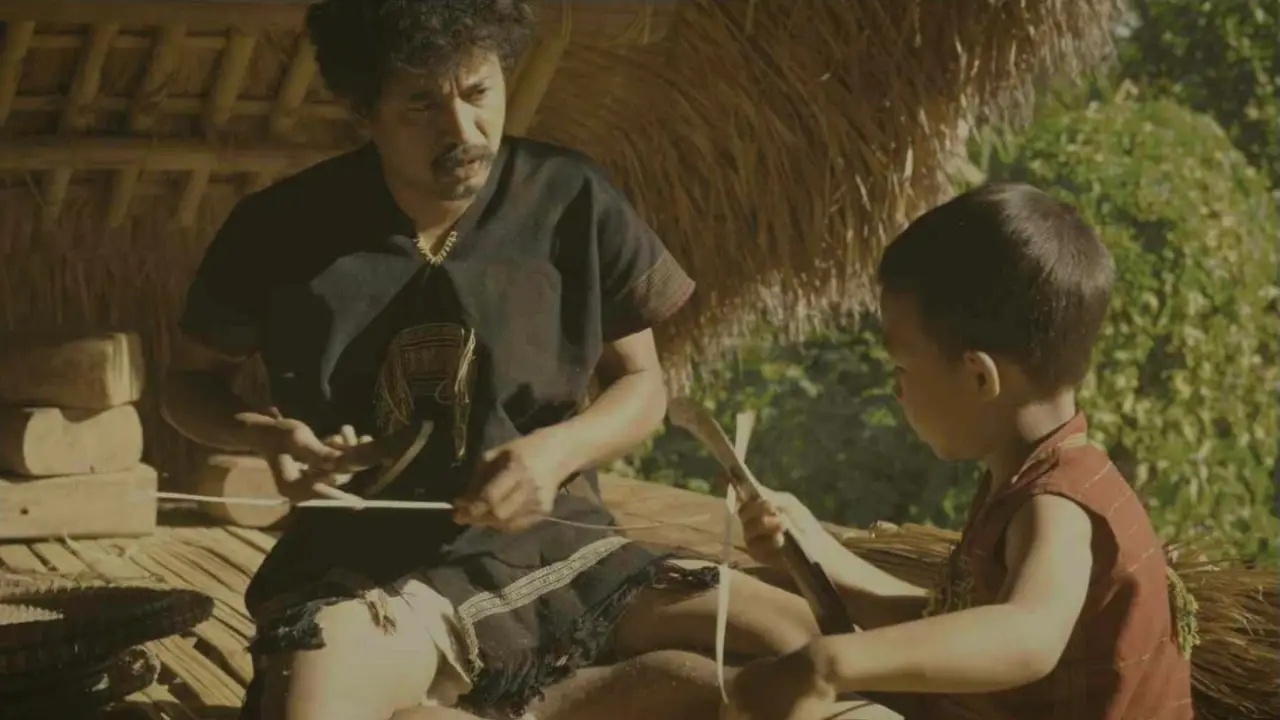
Imphal, Nov. 16: Films from Assam exploring indigenous identity, cultural preservation, rural education, political violence and environmental challenges drew attention at the four-day Tribal Frames Manipur 2026, held from November 12 to 15 at The Palace Auditorium of the Manipur State Film Development Society (MSFDS), Imphal.
The festival brought together filmmakers, researchers, ethnographers and delegates from different parts of India and abroad, providing a platform for indigenous filmmakers to present stories rooted in their communities, histories and lived experiences.
Among the films screened during the festival, five productions connected with Assam stood out for their engagement with contemporary tribal realities and the preservation of traditional knowledge. The films included three features, a short fiction film and a documentary, with two receiving awards from the Film Critics Circle of India (FCCI).
Their narratives covered a range of subjects, including the difficulties faced by rural educators, the consequences of insurgency, the importance of traditional ecological knowledge, the transmission of cultural practices across generations and the recovery of indigenous identity.
Sikaisal
SCREENED ON NOVEMBER 13
One of the films screened on November 13 was Sikaisal (If Only Trees Could Talk), a 104-minute Tiwa-language feature directed by Dr Bobby Sarma Baruah, a two-time National Film Award-winning filmmaker.
Set in a remote Tiwa settlement in West Karbi Anglong district of Assam, the film examines the challenges of providing formal education in isolated tribal communities.
The story follows Maheshwar Patar, an indigenous teacher who believes education can help his community achieve greater self-reliance and open up new opportunities for younger generations. Despite several practical difficulties, he manages to establish a school in the village.
However, the completion of the school building does not translate into classroom attendance. The school remains largely empty as the teacher encounters resistance, community indifference and the economic realities of village life, where children are often required to contribute to household and agricultural activities.
Rather than presenting education as a straightforward solution, the film explores the personal difficulties faced by someone attempting to bring change to a community while navigating established traditions and everyday economic pressures.
The surrounding forest and trees serve as recurring elements in the film, reflecting the community's experiences and the teacher's hopes and frustrations.
Dr Baruah holds a PhD in Communication and Journalism from Gauhati University and serves as a Senior Fellow of the Ministry of Culture, Government of India. She is also associated with the Network for the Promotion of Asian Cinema (NETPAC).
Her experience includes serving on juries at international film festivals such as Venice, Cannes, Jeonju, the International Film Festival of India (IFFI) and the Mumbai International Film Festival (MIFF).
Kangbo Aloti
FCCI BEST FEATURE FILM
The 105-minute Karbi-language feature Kangbo Aloti – The Lost Path, directed by Assam filmmaker Khanjan Kishore Nath, received the Film Critics Circle of India's Best Feature Film Award at Tribal Frames 2026.
The film addresses the human consequences of political militancy and armed insurgency through the story of a young militant recruit named Longsing.
The narrative follows Longsing after he is assigned to infiltrate a remote village and kill a schoolteacher who has openly opposed the armed group's activities.
However, his encounter with the teacher challenges his understanding of the mission. The teacher's commitment to non-violence and his moral convictions force Longsing to reconsider the ideology and actions that brought him into the underground organisation.
As he begins questioning his involvement, Longsing considers leaving the group and returning to an ordinary life. But withdrawing from an armed organisation proves difficult, as his past actions and the group's internal expectations leave him with limited choices.
The screenplay was selected for the Asia Pacific Script Lab in 2019.
Nath received the Rajat Kamal for Best Short Fiction at the 68th National Film Awards for his earlier Karbi short film Kachichinithu (The Boy with a Gun). He also directed the independent feature The Bicycle (Chor) and the theatrical release Ata Nirjon Duporiya.
A graduate of the Zee Institute of Media Arts, Mumbai, Nath also holds an M.Phil. in Mass Communication from Rajiv Gandhi University.
In Kangbo Aloti, the director focuses on the psychological and moral conflict of an individual caught in an armed movement, rather than relying on conventional action sequences.
Chíw Phrãn
SCREENED ON NOVEMBER 14
Another Tiwa-language feature screened on November 14 was Chíw Phrãn: Dawn of a New Era, a 115-minute film directed by independent filmmaker Sumir Dewri under his production banner, The Wild Lalungs.
The film explores the relationship between indigenous communities and their natural surroundings, focusing on traditional knowledge and the challenges posed by environmental disasters.
Its central character, a young boy named Chiw, grows up in an isolated settlement where his parents teach him about customary practices, forest life, seasonal changes, rituals and the importance of maintaining a balance with nature.
His life changes after a devastating landslide destroys the settlement and kills both his parents, leaving him alone in the wilderness.
Chiw must then depend on the knowledge passed down by his parents to survive. His understanding of the forest, traditional practices and ancestral teachings becomes essential to his survival.
The film follows his transition from a child who has lost his family to someone responsible for carrying forward the knowledge and cultural memory of his community.
Dewri graduated from the Dr Bhupen Hazarika Regional Government Film and Television Institute. In 2017, his film Choloma (The Birth) became the first Tiwa-language feature film to receive certification from the Central Board of Film Certification (CBFC).
Chíw Phrãn is his second major Tiwa-language feature, continuing his work on indigenous cinema through The Wild Lalungs. The production also uses indigenous actors and locations reflecting the community's natural surroundings.
Aaini Onnai
SCREENED ON NOVEMBER 14
Representing Assam's Bodo-language cinema, Aaini Onnai, a 20-minute-39-second short fiction film directed by Bishal Swargiary, was also screened on November 14.
Produced by Duphang Pictures, the film follows a young Bodo university student who visits a traditional village to conduct field research.
Initially, she approaches the village and its cultural practices from the perspective of an academic researcher. Her distance from traditional customs, weaving practices and ancestral oral histories reflects the growing disconnect experienced by some younger members of indigenous communities.
An encounter with an elderly village woman gradually changes her outlook. The woman's gestures, warmth and everyday cultural practices bring back memories of the student's late mother, prompting her to reconnect with her Bodo heritage.
The film explores how cultural identity can be rediscovered through personal relationships and everyday interactions, rather than only through formal research or academic study.
It also draws attention to the role of elderly community members in passing traditional knowledge, crafts and customs to younger generations.
Director Bishal Swargiary has developed his independent filmmaking work through Duphang Pictures, with an emphasis on community-based storytelling and non-professional actors.
His earlier short documentary, Gosain: The Colours of Spring, was screened at international and national film events, including the International Film Festival of Melbourne, the International Documentary and Short Film Festival of Kerala and the Signs Film Festival.
Mau: The Spirit Dreams of Cheraw
FCCI BEST DOCUMENTARY FILM
The other FCCI award-winning production associated with Assam was Mau: The Spirit Dreams of Cheraw, a nine-minute documentary directed by Assam-based filmmaker Shilpika Bordoloi. The film received the Best Documentary Film Award at Tribal Frames 2026.
Although the documentary focuses on Mizo culture and is presented in the Mizo language, its director represents Assam's creative filmmaking community.
The film examines the traditional Cheraw bamboo dance of Mizoram, looking beyond its contemporary presentation as a cultural performance to explore its earlier ritual and spiritual associations.
Drawing on oral histories, Bordoloi traces the dance to an ancestral mourning and reconciliation ritual associated with the spirit of a mother who died during childbirth.
Through its portrayal of dancers, the movement of bamboo poles and sound design, the documentary explores the relationship between the ritual, maternal loss and community memory.
The film is part of a four-chapter documentary series conceived by Bordoloi, focusing on the relationship between humans and the natural world.
Bordoloi is an interdisciplinary performing artist, curator and filmmaker from Assam whose work spans theatre, dance, cinema and environmental advocacy. In 2023, she received the National Film Award for Best Debut Film of a Director in the Non-Feature category.
Through the Brahmaputra Cultural Foundation, she has also been involved in performance residencies, archival projects and collaborative research initiatives across the Brahmaputra Valley and the wider Northeast.
Assam's films bring diverse indigenous narratives to Imphal
The five films presented at Tribal Frames Manipur 2026 approached indigenous experiences through different genres and storytelling methods.
While Sikaisal examined the difficulties of introducing formal education in remote tribal settlements, Kangbo Aloti explored the moral consequences of armed insurgency. Chíw Phrãn focused on traditional ecological knowledge and survival, while Aaini Onnai addressed the relationship between younger generations and ancestral culture.
Mau: The Spirit Dreams of Cheraw, meanwhile, documented the cultural and ritual history associated with a traditional Mizo dance.
The two FCCI awards for Kangbo Aloti and Mau: The Spirit Dreams of Cheraw also brought recognition to Assam's filmmakers at the festival.
The screenings provided audiences in Imphal with an opportunity to engage with indigenous stories from Assam and other parts of the Northeast. They also demonstrated the range of subjects being explored by filmmakers working in indigenous languages, from contemporary social concerns to traditional knowledge and cultural practices.
Through its four-day programme, Tribal Frames Manipur 2026 brought these different regional narratives together, providing a platform for filmmakers to present community histories and experiences through cinema.