Films from Nagaland, Arunachal Pradesh and Jharkhand explored indigenous folklore, Mithun traditions, red panda conservation and displacement at Tribal Frames 2026.
Imphal, Nov. 16: Indigenous films from Nagaland, Arunachal Pradesh and Jharkhand explored traditional knowledge, human-wildlife relationships, environmental conservation and cultural displacement at the second edition of Tribal Frames Manipur 2026, held from November 12 to 15 at The Palace Auditorium of the Manipur State Film Development Society (MSFDS), Imphal.
The four-day National Tribal Film Festival coincided with the observance of Janjatiya Gaurav Diwas, marking the 151st birth anniversary of tribal freedom fighter Bhagwan Birsa Munda. It was also held alongside the State-Level Tribal Cultural Festival, inaugurated by Chief Minister Yumnam Khemchand Singh at the City Convention Centre in Imphal.
The film selections from the three states presented different aspects of indigenous life through fiction and documentary storytelling. While the Nagaland entry explored the relevance of oral folklore and traditional agricultural knowledge, the two documentaries from Arunachal Pradesh examined the cultural significance of the Mithun and community-led wildlife conservation.
The Jharkhand entry, meanwhile, addressed displacement, memory and the loss of one's ancestral surroundings through a Santhali folktale.
Nagaland: Kashopapu
One of the films representing Nagaland was Kashopapu, a 20-minute fiction film directed by Vito Sumi. Presented on November 14, the film draws on the oral traditions of the Sumi Naga community to examine the relationship between ancestral knowledge, agricultural practices and community ethics.
The story follows Kasho, a young cultivator whose father advises him to wait for the call of a sacred bird before sowing his crops.
While other villagers begin preparing and planting their fields early, Kasho follows his father's advice and delays sowing. His decision initially sets him apart from the rest of the community, but changing seasonal conditions affect the early crops, while Kasho's fields eventually produce an abundant harvest.
The narrative moves forward several years to another challenge in Kasho's life. Some villagers illegally take possession of his ancestral land, creating a dispute over ownership.
In a subsequent turn of events, the sacred bird reappears, and its call and natural behaviour help reveal the truth and restore Kasho's rightful ownership of the land.
Through the two episodes, the film explores how traditional knowledge can influence agricultural decisions and community relationships. It also examines the importance of respecting ancestral wisdom and the natural environment.
Director Vito Sumi is the co-founder of R&N Studios and holds a Master's degree in Mass Communication. His work includes writing, directing, editing and producing, with a focus on cultural preservation and everyday community experiences.
His earlier documentary, Sound From The Hollow Bamboo (2022), funded by the Films Division, received the Best Director (Documentary) award at the North East Film Festival in Mumbai and a Special Jury Mention at the Samvaad Tribal Conclave.
With Kashopapu, Sumi uses fiction filmmaking to bring Sumi Naga oral traditions and their relevance to contemporary life to a wider audience.
Arunachal Pradesh: Films examine the relationship between communities and wildlife
Two documentaries from Arunachal Pradesh were screened on November 15, the closing day of the festival. Both explored the relationship between indigenous communities and their natural surroundings, with particular attention to traditional practices and wildlife conservation.
Asoh: Soul of the Hills
The 51-minute documentary Asoh: Soul of the Hills, directed by Linda Horam and Takar Pujen, examines the cultural, social and spiritual significance of the Mithun (Bos frontalis) in indigenous communities of Arunachal Pradesh.
Presented in English and Adi, the film follows a group of indigenous men as they travel through forested mountain areas to locate and retrieve a Mithun.
The documentary looks beyond the animal's role as livestock or economic property to examine its place in customary social relationships.
Among the Adi and neighbouring tribal communities, the Mithun traditionally forms part of marriage-related exchanges, including bride price. The practice carries significance beyond material value, representing kinship, family relationships, social alliances and mutual obligations.
Through footage of forest expeditions and traditional wedding ceremonies, the filmmakers document the continuing importance of the Mithun in community life.
Linda Horam, an emerging filmmaker from the Tangkhul Naga community of Ukhrul, Manipur, developed the project with Takar Pujen during their fellowship at Green Hub in Tezpur, Assam.
The two filmmakers have collaborated on three documentary productions. Their work on Asoh: Soul of the Hills focuses on the relationship between indigenous communities, customary practices and the natural environment.
The Red Panda and a Community Promise
Another documentary from Arunachal Pradesh, The Red Panda and a Community Promise, directed by Ramngachan Tungshangnao, examines community-led conservation efforts in Labukore, an isolated Himalayan border village.
The 30-minute film, presented in English and Hindi, focuses on the relationship between local residents and the surrounding forest habitat, which supports threatened wildlife, including the endangered red panda.
Rather than focusing on conservation initiatives led by external agencies, the documentary follows the efforts of villagers to protect their natural surroundings through collective participation.
It documents community-led wildlife patrols, habitat monitoring and the development of local ecotourism initiatives intended to support sustainable livelihoods while protecting biodiversity.
Tungshangnao, a GreenHub alumnus, developed his experience through fieldwork involving wildlife rehabilitation and red panda conservation in Monigong.
The documentary examines how local participation, traditional ecological knowledge and livelihood opportunities can contribute to the protection of wildlife habitats.
Through the experiences of Labukore residents, the film presents conservation as an effort closely connected to the lives and economic well-being of communities living alongside threatened species.
Jharkhand: Angen
The sole entry from Jharkhand at the festival was Angen (Invisible), a 12-minute Santhali-language short fiction film directed by Ravi Raj Murmu.
The film received the Best Short Fiction Film Award from the Film Critics Circle of India (FCCI) at Tribal Frames 2026. It had also received the National Film Award 2026 for Best Debut Film of a Director in the Non-Feature category, according to the source material.
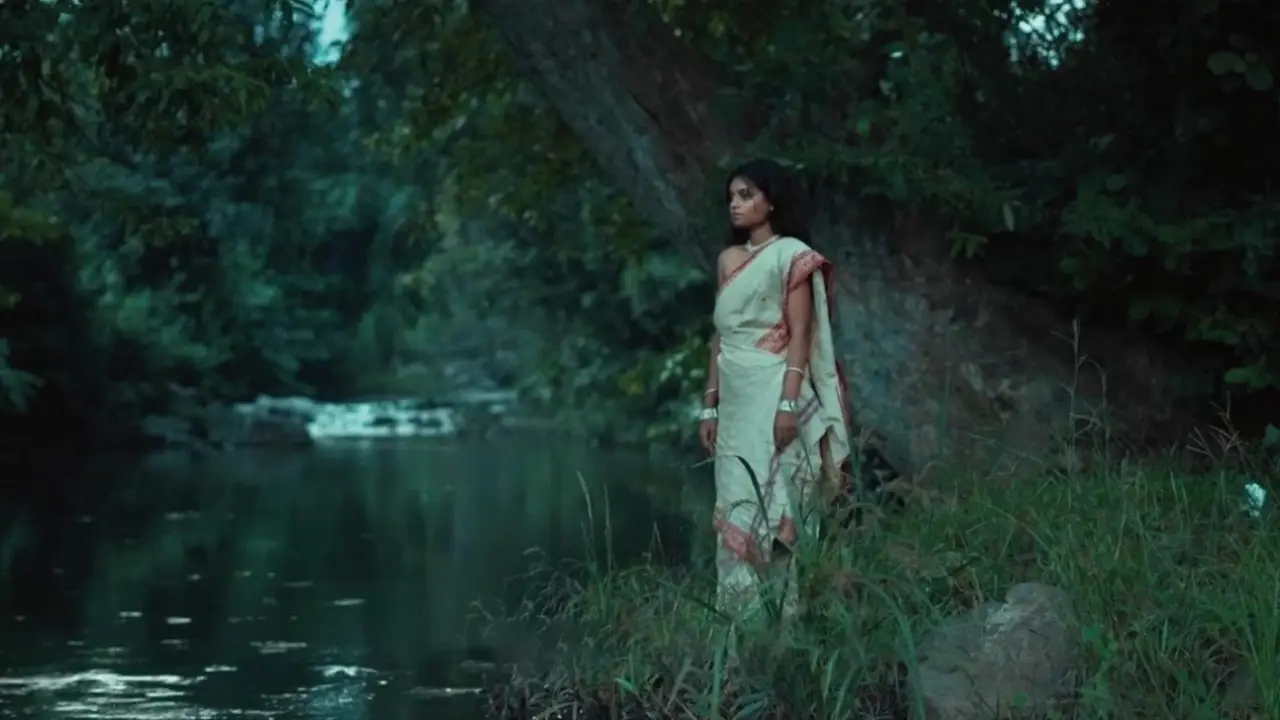
Drawing on Santhali oral folklore, Angen tells a story about memory, displacement and the loss of one's familiar surroundings.
The narrative follows a humble cowherd who attracts the attention of a divine goddess. She falls in love with him and takes him to her celestial realm, where he remains separated from the ordinary passage of earthly life.
After spending years in the divine world, the cowherd begins longing for his village, companions and cattle. Eventually granted permission to return, he finds that the world he remembers no longer exists.
His village has disappeared, familiar forest paths are gone and the people he once knew are no longer there. The return that he had long anticipated becomes an encounter with a completely changed landscape.
Caught between the celestial world he has left and an earthly home that survives only in his memories, the cowherd struggles to reconcile his past with the reality before him.
Through this folktale, Murmu examines the relationship between identity and the physical environment in which communities develop their languages, traditions and social relationships.
The film also explores the emotional consequences of displacement, particularly when the places and relationships that give meaning to an individual's identity are lost.
Murmu's achievement at the festival came alongside his recognition at the National Film Awards. As stated in the source material, he is the first filmmaker from the Santhali community to receive a National Film Award.
By adapting Santhali oral folklore into contemporary fiction, the director brings a traditional narrative to the screen while examining experiences of exile, nostalgia and cultural change.
Indigenous cinema connects folklore, conservation and cultural memory
The films from Nagaland, Arunachal Pradesh and Jharkhand presented at Tribal Frames Manipur 2026 approached indigenous experiences through different narratives, but shared an interest in the relationship between communities, their histories and their natural surroundings.
Kashopapu explored the continuing relevance of Sumi Naga oral traditions in agriculture, land ownership and community ethics. Asoh: Soul of the Hills examined the Mithun's place in customary social relationships, while The Red Panda and a Community Promise documented local efforts to protect wildlife and forest habitats.
Angen (Invisible) approached the subject from a different perspective, using Santhali folklore to examine the emotional consequences of losing one's ancestral home and familiar surroundings.
Swedish documentary filmmaker Mattias Löw also reflected during his interactions at the festival on cinema's ability to transform experiences of hardship, sadness and historical marginalisation into creative expression.
The screenings brought together stories from the Naga hills, the Himalayan regions of Arunachal Pradesh and the Santhali cultural landscape of Jharkhand at the MSFDS auditorium in Imphal.
Through these productions, Tribal Frames 2026 provided a platform for filmmakers to present indigenous knowledge, cultural practices and community experiences through cinema, connecting different regional narratives with wider questions of ecological responsibility, social relationships and cultural memory.