Scientists at CSIR-NEIST have found promising antidiabetic compounds in a bacterium isolated from Manipur's traditional fermented soybean food, Hawaijar, in a new study.
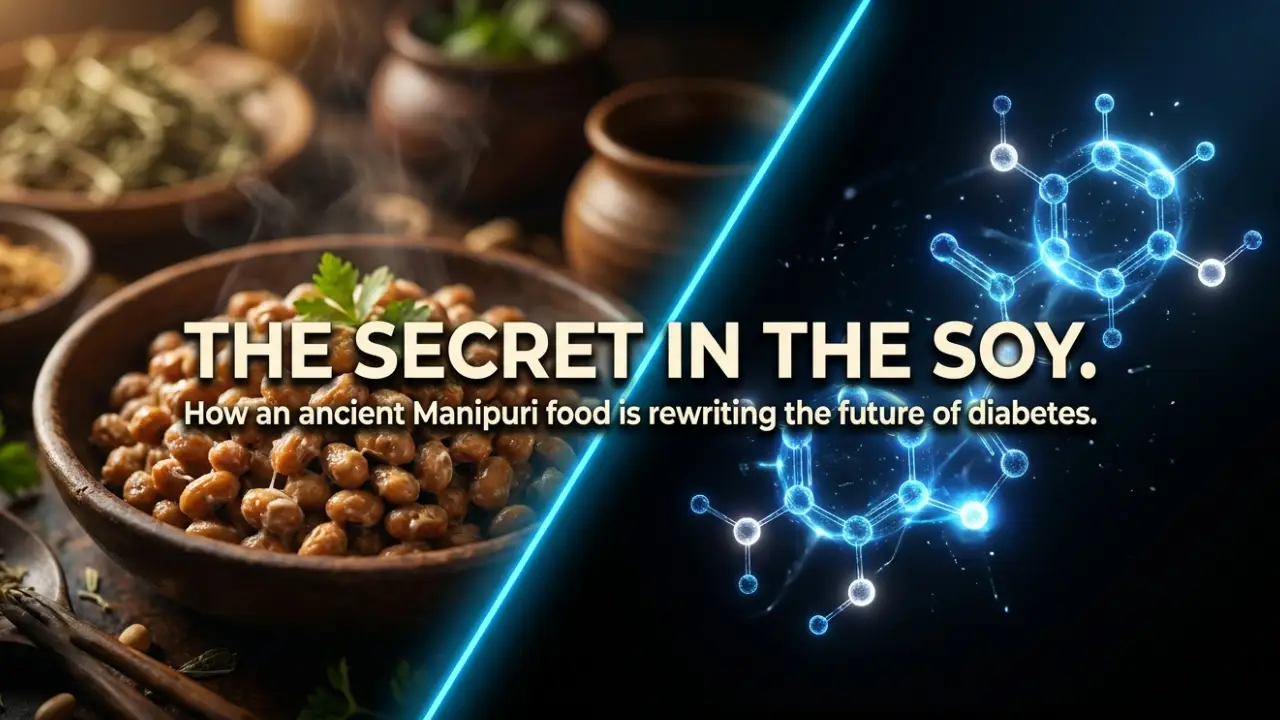
Imphal, Nov. 18: A bacterium isolated from Hawaijar, a traditional fermented soybean food popular in Manipur, has shown promising antidiabetic properties in laboratory experiments, according to a research study published by scientists from the CSIR-North East Institute of Science and Technology (CSIR-NEIST), Jorhat, Assam.
The study found that chemical compounds produced by the bacterium could help control blood sugar by blocking certain digestive enzymes and improving glucose uptake in muscle cells. Researchers also identified several compounds that showed promising interactions with proteins involved in diabetes regulation through computer-based analysis.
The findings were published in the research journal ChemFoodChem in 2026 under the title “Antidiabetic Potential of Ligands from NEIST_PMIB_06, Bacterium Associated With Hawaijar (Fermented Soy Food): Insight from in Vitro and in Silico Studies” (Volume 2, Article e00036).
The research was conducted by A. Ibeyaima, Hiranmoy Barman and Prasenjit Manna, with affiliations to CSIR-NEIST and the Academy of Scientific and Innovative Research (AcSIR).
The researchers isolated a bacterial strain designated NEIST_PMIB_06 from fermented soybean samples collected in Manipur. Laboratory tests showed that extracts from the bacterium performed better than the standard diabetes drug acarbose in some enzyme-inhibition experiments.
However, the findings are at an early research stage and do not establish that Hawaijar or the isolated bacterium can treat or prevent diabetes in humans.
Bacterium Isolated from 24 Samples
To investigate the potential of microorganisms found in traditional fermented foods, the research team collected fermented soybean samples from Manipur and isolated 24 bacterial strains.
Among them, NEIST_PMIB_06 showed particularly promising results in preliminary tests.
Using a molecular identification technique known as 16S rDNA sequencing, the researchers found that the strain was closely related to Empedobacter brevis, with 98.78 per cent genetic similarity. Its genetic sequence has been deposited in the international GenBank database under accession number PQ358927.
The researchers also observed that the strain occupied a distinct position in the genetic relationship analysis, suggesting that it may represent a previously uncharacterised bacterial lineage. However, further taxonomic studies will be required to establish whether it is a new species.
Laboratory Tests Show Strong Enzyme-Inhibiting Activity
One of the main ways to manage blood sugar levels after meals is to slow down the breakdown of carbohydrates into simple sugars that can be absorbed by the body.
Two digestive enzymes, alpha-glucosidase and alpha-amylase, play important roles in this process. Their activity can increase the rate at which glucose enters the bloodstream. Medicines such as acarbose work by blocking these enzymes and slowing carbohydrate digestion.
The CSIR-NEIST researchers tested different chemical extracts obtained from the bacterial strain to determine whether they could inhibit these enzymes.
In tests against alpha-glucosidase, the ethyl acetate extract produced the strongest result, with an IC50 value of 0.54 micrograms per millilitre. This was better than the crude extract (0.71 micrograms per millilitre), the hexane extract (0.65 micrograms per millilitre) and the standard drug acarbose (0.89 micrograms per millilitre).
IC50 refers to the concentration of a substance required to inhibit 50 per cent of a particular biological activity. A lower IC50 generally indicates stronger activity under the conditions of the experiment.
The researchers also tested the extracts against alpha-amylase. In this case, the hexane extract recorded an IC50 value of 1.188 micrograms per millilitre, compared with 2.09 micrograms per millilitre for acarbose.
These results suggest that certain compounds produced by the bacterium could be useful starting points for developing substances that help control the rise in blood sugar after meals.
Extracts Improve Glucose Use in Muscle Cells
The study went beyond digestive enzyme tests to examine whether the bacterial extracts could also influence how muscle cells use glucose.
In people with type 2 diabetes, insulin resistance can prevent muscle cells from responding properly to insulin. As a result, these cells become less effective at absorbing glucose from the bloodstream.
To investigate this problem, the researchers used C2C12 cells, a laboratory model of mouse skeletal muscle cells. They induced insulin resistance in the cells using palmitic acid, a fatty acid commonly used in laboratory studies to model metabolic dysfunction.
The cells were then treated with the bacterial hexane and ethyl acetate extracts at concentrations ranging from 1.5 to 2.5 micrograms per millilitre.
The researchers found that both extracts significantly improved glucose utilisation in the treated cells, with the effects increasing according to the concentration used.
This suggests that the extracts may contain substances capable of improving glucose handling in muscle cells under laboratory conditions.
The team also conducted Alamar Blue cell viability tests to check whether the extracts were harmful to the cells. The results showed no detectable toxic effects at the tested concentrations, while the cells maintained their normal morphology and metabolic activity.
These findings are important because a potential drug candidate must not only show biological activity but also demonstrate acceptable safety in preliminary testing.
Computer Analysis Identifies Seven Promising Compounds
To identify the chemical substances responsible for the observed activity, the researchers used gas chromatography-mass spectrometry (GC-MS).
This analytical technique helps identify chemical compounds in a sample by separating them and examining their molecular characteristics.
The analysis detected 24 distinct compounds in the bacterial extract. Their similarity scores against existing chemical library records ranged from 59 to 97 per cent.
The team subsequently used computer-based prediction tools to screen the compounds for possible biological activity, drug-like properties and potential safety concerns.
Seven compounds were selected for further investigation and designated C I to C VII:
1. C I: Pentadecanal
2. C II: Di-n-decylsulfone
3. C III: Tyrosol, acetate
4. C IV: Octadecanoic acid 3-oxo-methyl ester
5. C V: Fumaric acid, hexadecyl pentyl ester
6. C VI: 4-Heptanone, 2-methyl
7. C VII: Phenol, 2,4-bis(1,1-dimethylethyl)
The researchers particularly noted compound C V, identified as fumaric acid, hexadecyl pentyl ester. According to the study, this was the first reported identification of the compound from a living or bacterial source with antidiabetic potential.
The seven selected compounds were also evaluated using Lipinski's Rule of Five, a commonly used guideline for assessing whether a chemical substance has properties suitable for development as an orally administered drug.
All seven compounds met the criteria used in this screening. Additional computer-based assessments predicted favourable intestinal absorption and toxicity profiles.
These predictions, however, require confirmation through further laboratory and biological studies.
Computer Simulations Examine Interaction With Diabetes-Related Proteins
The researchers also used molecular docking, a computer-based technique that predicts how a chemical compound may fit and interact with a target protein.
The seven selected compounds were tested against five proteins associated with glucose regulation and diabetes: SGLT2, DPP4, GLUT4, alpha-glucosidase and alpha-amylase.
The researchers compared their predicted binding affinities with those of metformin, a widely used medicine for type 2 diabetes.
Several bacterial compounds recorded stronger predicted binding scores against particular protein targets than metformin in the docking analysis.
Among the findings:
- Compounds C V and C VII showed strong predicted binding with SGLT2, a protein involved in the reabsorption of glucose by the kidneys, with a binding score of -7.7 kcal/mol.
- Compound C VII showed a strong predicted interaction with alpha-glucosidase, recording -7.3 kcal/mol.
- Compound C IV recorded a binding score of -7.2 kcal/mol against DPP4, a protein involved in regulating hormones that influence blood sugar.
- Compound C III showed promising interactions with both SGLT2 (-7.1 kcal/mol) and DPP4 (-6.7 kcal/mol).
For comparison, metformin recorded docking scores ranging from -1.9 to -5.3 kcal/mol across the selected targets.
In molecular docking, more negative binding scores generally suggest stronger predicted interactions. However, these scores do not establish that a compound is more effective than an existing medicine in patients. Actual therapeutic performance must be established through biological experiments and clinical studies.
The team also carried out molecular dynamics simulations and normal mode analysis to examine the stability and movement of the predicted compound-protein complexes.
These computational methods help researchers understand whether a compound is likely to maintain a stable interaction with a target protein over time. The results supported further investigation of compounds C III, C IV and C VII as potential candidates for future drug development.
Further Research Needed Before Medical Application
Although the findings provide promising leads for antidiabetic drug discovery, the researchers have identified several areas requiring further investigation.
The next steps include purifying individual compounds from the bacterial extracts, confirming their chemical structures and testing their biological effects in greater detail.
The researchers also identified the need for in vivo studies, which involve testing the compounds in animal models to understand their effects in a living organism. Such studies would help establish their safety, absorption, metabolism and potential therapeutic benefits before any consideration of human trials.
Further taxonomic investigation of NEIST_PMIB_06 is also required to establish its precise classification.
The study was supported by the Department of Biotechnology (DBT), Government of India, through a DBT Research Associateship in Industry (DBT-RAII) fellowship awarded to A. Ibeyaima.
Published by Chemistry Europe and Wiley-VCH GmbH as an open-access research article, the findings add to scientific investigations into the potential of indigenous fermented foods and their associated microorganisms.
The research also brings attention to Hawaijar as a source of microorganisms that may contain useful compounds for pharmaceutical research. While the findings do not establish Hawaijar as a diabetes treatment, they offer a scientific basis for further exploring the microbial resources found in traditional fermented foods of Northeast India.
Publication Details
- Journal: ChemFoodChem
- Publisher: Chemistry Europe / Wiley-VCH GmbH
- Publication Reference: 2026; 2:e00036
- DOI: https://doi.org/10.1002/cfch.202500036
- Article Type: Research Article
- Authors: A. Ibeyaima, Hiranmoy Barman and Prasenjit Manna
- Research Institution: CSIR-North East Institute of Science and Technology, Jorhat, Assam, and Academy of Scientific and Innovative Research.
- Funding: Department of Biotechnology, Government of India.