The four-day Manipur State Cherry Blossom Festival concluded in Senapati with traditional games, sporting competitions, cultural performances and a live music concert, highlighting Mao heritage.
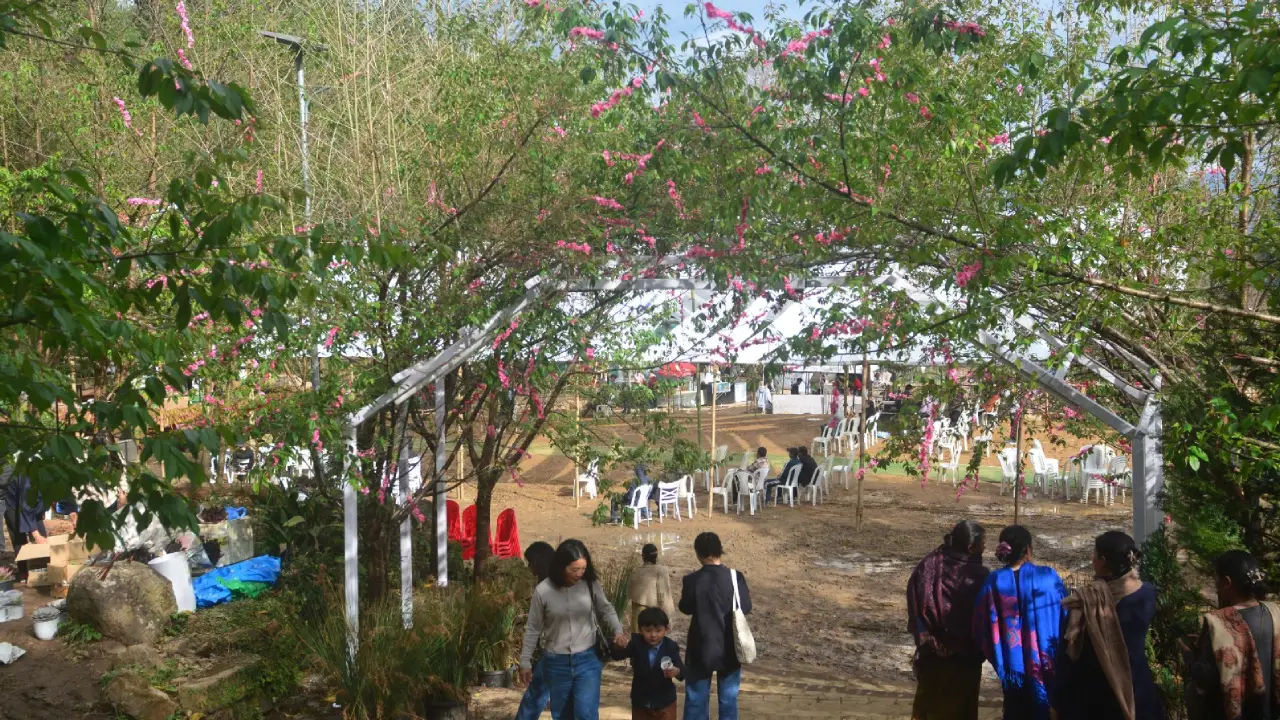
SENAPATI, Nov. 23: The four-day Manipur State Cherry Blossom Festival-cum-Flower Festival concluded successfully at Motu Tubvii, Gate, Senapati district, on Monday, with a series of sporting competitions, traditional games, culinary displays and cultural activities culminating in a colourful valedictory function and live music concert.
The concluding programme was attended by Deputy Commissioner of Senapati, Dharun Kumar S, IAS, as the Chief Guest, while N. Munish Singh, Zonal Director, Indian Council for Cultural Relations (ICCR), North East, attended as the Guest of Honour.
The final day of the festival witnessed enthusiastic participation in several sporting events, including Men's Open Arm Wrestling, Men's Tug of War and the concluding rounds of traditional games. The competitions provided participants with an opportunity to demonstrate their physical strength, teamwork, sporting spirit and appreciation of indigenous games and traditional practices.
Addressing the gathering, Deputy Commissioner Dharun Kumar S described the Cherry Blossom Festival as more than a seasonal celebration, stating that it represented Senapati's identity, culture, hospitality, unity and immense potential.
He emphasised that the true character and significance of the festival were reflected in its people and the collective spirit of the community. According to him, the festival's importance extended beyond the celebrations, as it created opportunities, strengthened unity and helped establish a lasting legacy for future generations.
The Deputy Commissioner expressed gratitude to the organisers, Festival Committee, community leaders, participating villagers, government departments, security personnel, volunteers, performers, entrepreneurs and all others who had contributed directly or indirectly to the successful conduct of the festival.
He also acknowledged visitors who had travelled from different places to participate in the celebrations, observing that their presence and involvement had contributed significantly to the festival's success.
Expressing his vision for the district, Dharun Kumar hoped that the friendships, unity and cultural pride fostered through the festival would continue beyond the celebrations. He envisioned a prosperous Senapati where every village would have opportunities for development, young people would have meaningful avenues to realise their potential, and the region's rich cultural heritage would receive wider recognition and appreciation.
He further highlighted the aspiration for Mao to develop a distinct identity and expressed the hope that the Cherry Blossom Festival would grow into a major annual event eagerly anticipated across the country. Congratulating everyone associated with the organisation of the festival, he wished the participants and visitors a safe journey back home.
ICCR reaffirms commitment to cultural exchange
Speaking as the Guest of Honour, ICCR Zonal Director N. Munish Singh highlighted the longstanding association and collaboration between ICCR and the local Cherry Blossom Festival Committee, which dates back to 2017.
He recalled that the festival had been conceptualised through discussions and brainstorming sessions with the local committee, reflecting a shared vision of promoting the region's rich cultural heritage through meaningful cultural exchanges.
Highlighting the festival's international cultural outreach, Munish Singh recalled that representatives associated with the festival had travelled to around ten locations in Japan in 2024 to showcase Mao culture, traditional dances and indigenous costumes.
He stated that the cultural presentations had received an encouraging response and were well appreciated by audiences, providing an opportunity to introduce the region's distinctive cultural identity to an international audience.
The ICCR Zonal Director also appreciated the enthusiasm and efforts of local youth in preserving, practising and showcasing their indigenous culture and traditions. He reaffirmed ICCR's commitment to promoting cultural exchanges and supporting initiatives that provide wider platforms for the region's cultural heritage.
Expressing his aspirations for the festival's future, he hoped that it would continue to expand as an important platform for cultural interaction. He also expressed the desire to bring foreign cultural performers to the festival in the coming year, noting that certain restrictions had prevented their participation in this year's edition.
Winners felicitated as festival concludes with music concert
As part of the valedictory programme, prizes were distributed to outstanding participants and winners of various competitions and activities, including arm wrestling, stall displays, treasure hunts and other events, in recognition of their performances and achievements.
The four-day celebration concluded on a vibrant note with a live music concert, providing a fitting musical finale to the festival and bringing together visitors, local communities and participants through music, culture and community spirit.
Among those present at the concluding programme were Adahrii Maheo, MCS, Additional Deputy Commissioner and Chief Executive Officer, Autonomous District Council (ADC), Senapati; Rang David Kung, MCS, Additional District Magistrate, Mao; and Ngaonii Panii, Junior MCS, Sub-Divisional Collector, Senapati.
Representatives of civil society organisations, community leaders and members of the public also attended the valedictory function.
The successful conclusion of the Manipur State Cherry Blossom Festival-cum-Flower Festival marked another celebration of the cultural identity, indigenous traditions and community participation of the Mao people and the wider Senapati region, while reinforcing the aspiration to establish the festival as a prominent annual cultural event with national and international recognition.