Manipur's indigenous filmmakers showcased films on cultural identity, endangered languages, conservation and social issues at Tribal Frames Manipur 2026.
Imphal, Nov. 16: Indigenous filmmakers from Manipur presented a diverse range of stories exploring cultural identity, endangered languages, environmental conservation, social responsibility and community relationships at the second edition of Tribal Frames Manipur 2026, held from November 12 to 15 at The Palace Auditorium of the Manipur State Film Development Society (MSFDS), Imphal.
The four-day National Tribal Film Festival brought together independent filmmakers, film critics, researchers, ethnographers and delegates from across India and abroad. The festival coincided with the observance of Janjatiya Gaurav Diwas, marking the 151st birth anniversary of tribal freedom fighter Bhagwan Birsa Munda.
The festival also took place alongside the State-Level Tribal Cultural Festival, inaugurated by Chief Minister Yumnam Khemchand Singh at the City Convention Centre in Imphal.
Manipur's film entries covered several indigenous languages and filmmaking styles. From Tangkhul and Uipo narratives to Anal and Paite productions, the films addressed both traditional cultural practices and contemporary concerns affecting communities across the state.
The selection included short fiction, documentaries, experimental silent cinema and films documenting endangered languages. Their subjects ranged from childhood friendship and cultural diversity to linguistic preservation, road safety, village-level conservation and civic responsibility.
Kazik
SCREENED ON NOVEMBER 13
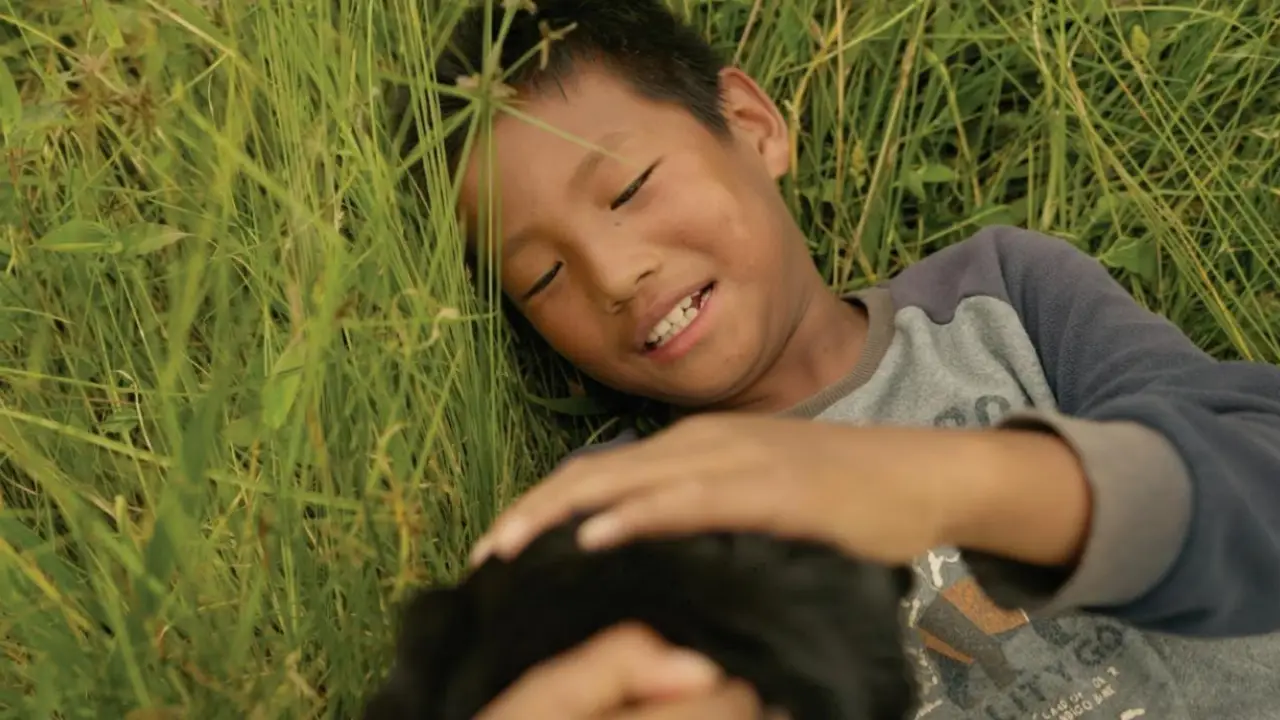
One of the films that attracted attention during the festival was Kazik, a 12-minute short fiction film directed by self-taught Tangkhul filmmaker Sorenzan Vashum. Screened on November 13, the film tells a story of childhood friendship and the bond between humans and animals.
Set in a Tangkhul village, the film follows a young boy named Ramhor and his close companion, a hunting dog called Kazik.
Their relationship changes when Ramhor's parents, facing financial difficulties, secretly sell the dog to traders. On returning home and discovering that Kazik is missing, the boy becomes determined to bring his companion back.
Ramhor sets out to find the traders and earn enough money to buy the dog. He takes up small jobs and other tasks despite the difficulties of travelling, hunger and exhaustion.
The story eventually leads to the reunion of the boy and his dog. Through this simple narrative, Vashum explores childhood loyalty, emotional attachment and the relationship between people and animals within a rural Tangkhul setting.
The film also offers glimpses of Tangkhul village life, domestic spaces and local surroundings.
Vashum, a native of Talui village in Ukhrul district, began his filmmaking journey in 2023 without formal training at a film school. He has since directed and produced two feature films and six short films.
He has also worked in cinematography, photography and editing. His work on AC Rinshing's Tangkhul feature Samkhok earned him the Best Editor award and a Special Jury Mention for Visual Effects at the Tangkhul Naga Film Awards 2023. He also contributed as a cinematographer to Mashunwo.
The growth of independent filmmaking in Ukhrul and Kamjong has provided a platform for local filmmakers to produce films in their own languages, despite challenges relating to funding, exhibition facilities and distribution.
Unity Is a Beautiful Sound
SCREENED ON NOVEMBER 14
Sorenzan Vashum also presented Unity Is a Beautiful Sound, a 2-minute-46-second English-language short documentary screened on November 14.
The film had earlier won First Prize in the Unity in Diversity category at the Directorate of Information and Public Relations (DIPR), Government of Manipur's Short Film Competition in 2025.
Unlike Kazik, which follows a linear narrative, the documentary uses visual portraits and musical arrangements to present the cultural diversity of Manipur.
It features models, cultural practitioners and musicians representing different indigenous communities of the state. Their traditional attire, handwoven textiles and ornaments form the central visual elements of the production.
The film presents cultural differences as an important part of Manipur's collective identity. It argues that unity does not require communities to abandon their distinct languages, traditions or cultural expressions.
Through its visual presentation and music, Vashum explores how different cultural identities can coexist while retaining their individual characteristics.
My Name Is Tedawnshim Khaling
SCREENED ON NOVEMBER 14
The issue of cultural identity and language preservation featured prominently in My Name Is Tedawnshim Khaling, a nine-minute autobiographical documentary directed by Tedawnshim Khaling.
Screened on November 14, the film uses Uipo (Khoibu) and English to explore the filmmaker's personal connection with her community and the gradual distance she experienced from her ancestral language and customs.
Khaling belongs to the Uipo community, a small indigenous group in Manipur. Born to a Uipo father and a Tangkhul mother, and later connected to a Meitei family through marriage, she describes an identity shaped by different cultural backgrounds.
The documentary follows her effort to reconnect with her father's community by visiting village elders and listening to their oral histories, traditional expressions and ancestral stories.
Through these conversations, the film examines the challenges faced by smaller indigenous communities in preserving their languages and cultural knowledge, particularly when younger generations become less familiar with their ancestral traditions.
It also explores the possibility of maintaining multiple cultural identities without treating them as mutually exclusive.
Khaling is the co-founder and chief executive officer of Unibrow Studio, an independent production house working on social-impact films, documentaries and visual storytelling. Her creative work is based between Manipur and Goa.
The Girl and the Lamp
SHORT FICTION FILM
Khaling's second film at the festival, The Girl and the Lamp, presented a different approach to storytelling through a 2-minute-50-second silent short fiction production.
Built around the premise of a woman, an apartment and a lamp, the film uses visual composition, sound and music instead of spoken dialogue.
It follows a young woman living alone in an urban apartment. As she spends time with a desk lamp, the ordinary household object gradually becomes the focus of her emotional attention.
The film uses the interaction between the woman and the lamp to explore isolation and the need for companionship. Its minimalist approach places emphasis on the character's surroundings, movements and emotional responses.
Through the short production, Khaling moves beyond conventional themes of folklore and rural life to explore contemporary urban experiences through visual storytelling.
Tarao: A Vanishing Tribe
Language preservation was another major subject at the festival, particularly through Tarao: A Vanishing Tribe, a six-minute documentary directed by academic and language activist Dr Thokchom Chandramani Singh.
Produced in English and Manipuri, the documentary focuses on the Tarao community of Manipur, whose population is stated in the film's source material to be fewer than 1,100.
The production documents the community's cultural knowledge through conversations with village elders, who share traditional songs, ritual practices, oral histories and beliefs.
Much of this knowledge has been transmitted orally across generations. The documentary draws attention to the risk of losing these traditions as the number of fluent speakers and custodians of traditional knowledge declines.
It also examines the wider implications of language loss, including the disappearance of indigenous perspectives, ecological knowledge and cultural practices that may not exist in written records.
Dr Singh is a Professor and Dean at Manipur International University and serves as Chief Resource Person at the Centre for Tribal and Endangered Languages (CTEL), Central Institute of Indian Languages (CIIL), under the Ministry of Education.
His academic and filmmaking work has focused on documenting and promoting endangered indigenous languages in Manipur.
The Silent Guardian
Environmental conservation featured in The Silent Guardian, a nine-minute Anal-language docu-drama directed by Sng Pearson.
The film documents the work of N.L. Changtha, a resident of Chandel district who has spent years restoring a degraded stretch of riverbank along the Chakpi River.
Through tree planting and the protection of native vegetation, Changtha transformed the area into a green space known as Bunny Island.
The location has developed into a habitat for birds, insects and small animals, while also serving as a quiet recreational space for local residents.
The documentary follows Changtha's daily conservation activities, including planting saplings, maintaining the soil and looking after the surrounding vegetation.
Rather than presenting conservation through large projects or institutional interventions, the film focuses on the sustained efforts of an individual working to protect the natural environment.
Director Sng Pearson is among the early filmmakers associated with Anal-language cinema in Chandel district. He directed his debut Anal-language feature, Alekaning, in 2004.
He later completed a Master's degree in Cinema from the Asian School of Media Studies. His other community-based productions include Peral Thingbol (Tree of Secrets) and Dangteri.
The Country Begins Here
Rahravi Gabriel, a filmmaker from Senapati district, presented The Country Begins Here, a 2-minute-7-second English-language short documentary examining patriotism and civic responsibility.
The film approaches nation-building from the perspective of everyday community life rather than political speeches or public displays of nationalism.
It documents how villagers contribute to their shared surroundings by maintaining public spaces, protecting water bodies, looking after forest paths, supporting schools and assisting vulnerable members of the community.
Through these examples, Gabriel presents the idea that responsibility towards the country begins with the care individuals and communities extend to their immediate surroundings.
Gabriel is an emerging photographer and documentary filmmaker whose work focuses on rural communities and everyday life in the hill districts of Manipur.
One Strap Away
Road safety was the focus of One Strap Away, a 2-minute-47-second Paite-language short fiction film directed by V. Muanlalsang.
The film centres on a basic but important motorcycle safety practice: fastening the helmet strap before riding.
Using a short narrative, the production illustrates the danger of wearing a helmet without securing it properly. An unfastened helmet can come off during an accident, leaving the rider exposed to serious head injuries.
The film uses this everyday safety issue to communicate a message about responsible riding, particularly among young people who regularly use two-wheelers for transportation across Manipur's hill districts and urban areas.
By presenting the message in Paite, the filmmaker also uses indigenous-language cinema as a medium for public awareness and community education.
Muanlalsang is an emerging student filmmaker who uses short fiction to address practical social concerns.
Manipur's indigenous cinema reflects changing social realities
The films presented by Manipur's filmmakers at Tribal Frames 2026 covered a wide range of subjects, demonstrating the diversity of storytelling emerging from the state's indigenous communities.
While Kazik explored childhood friendship and Unity Is a Beautiful Sound presented cultural diversity, My Name Is Tedawnshim Khaling and Tarao: A Vanishing Tribe addressed the preservation of indigenous identity and endangered languages.
Environmental protection and civic responsibility featured in The Silent Guardian and The Country Begins Here, while One Strap Away used short fiction to communicate a road safety message. The Girl and the Lamp, meanwhile, explored urban loneliness through silent cinema.
The festival also featured international filmmakers and documentary practitioners. During the proceedings, international documentarian Mattias Löw spoke about cinema as a medium through which marginalised communities can communicate their experiences and histories.
The festival's broader message also resonated with Chief Minister Yumnam Khemchand Singh's call for mutual respect, forgiveness and understanding among communities as essential elements for lasting peace and shared progress.
Through films made in Tangkhul, Uipo, Anal and Paite, among other languages, Manipur's filmmakers brought community-specific experiences to a wider audience. Their participation demonstrated how indigenous cinema can document cultural traditions while addressing contemporary social, environmental and civic concerns.