Assam's Red Carpet and Arunachal Pradesh's Urum feature in the Indian Panorama sections of 57th IFFI, exploring indigenous heritage, language, grief and identity.
Panaji, Nov. 22: Two films from Assam and Arunachal Pradesh, Red Carpet and Urum, have been selected for the Indian Panorama sections of the 57th International Film Festival of India (IFFI), bringing stories of indigenous heritage, cultural preservation, grief and identity to the national cinematic platform.
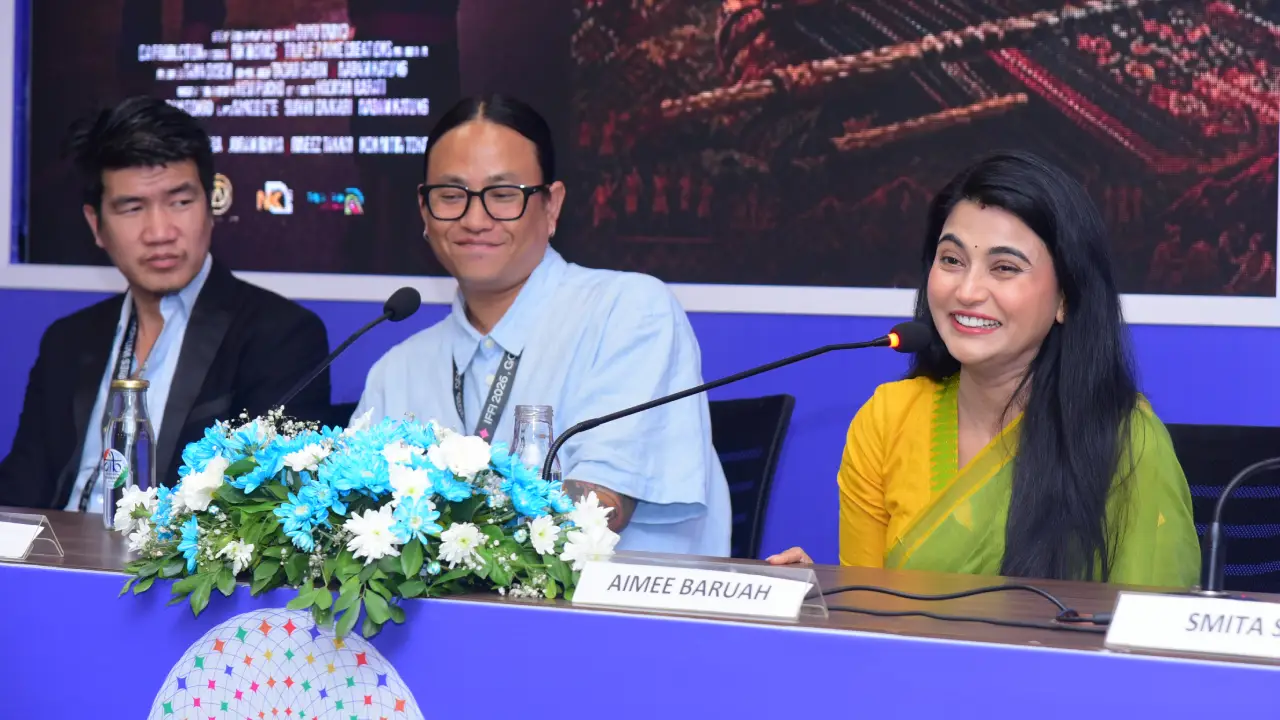
The films were featured at a press conference in Goa on November 22, where their directors, Aimee Baruah and Duyu Tabyo, discussed the themes, cultural significance and creative journeys behind their respective works.
Red Carpet, an Assamese documentary, has been included in the Indian Panorama Non-Feature Film section, while Urum has been selected for the Indian Panorama Feature Film category.
Directed by Aimee Baruah, Red Carpet explores the traditional handloom weaving heritage of the Karbi community in Assam's Karbi Anglong district. The documentary examines how a centuries-old weaving tradition is confronting the pressures of modernisation and changing lifestyles.
The film follows the journey of a traditional weaver from the village of Donkamokam to the red carpet of Cannes, tracing how a handmade fabric became a representation of cultural identity, community pride and hope.
Speaking at the press conference, Baruah, an award-winning Indian actress, producer and filmmaker pursuing her PhD, described the journey of taking a traditional handwoven fabric from a village in Assam to the internationally recognised Cannes red carpet.
She drew attention to the skills and craftsmanship of local weavers, emphasising that traditional textiles represent the cultural identity of indigenous communities. The international recognition received by the attire, she noted, helped bring greater visibility to Assam's indigenous heritage.
Baruah also stressed the importance of preserving traditional weaving practices and called upon younger generations to take pride in their languages, cultures and traditions. She urged them to carry these practices forward rather than allow them to disappear amid changing lifestyles.
The second film, Urum, directed by Arunachal Pradesh filmmaker Duyu Tabyo, takes a different approach by examining grief, memory, trauma and indigenous beliefs within a remote mountain community.
The feature film centres on a father struggling to cope with the tragic loss of his young daughter. Haunted by guilt and disturbing visions, he searches for closure while confronting buried truths, personal trauma and the unseen forces that influence the lives of his community.
At the press conference, Tabyo, an independent writer-director and cultural practitioner from Arunachal Pradesh, recalled a childhood experience in Ziro that eventually inspired the film.
He said he had witnessed an incident involving a father struggling with the loss of his daughter. The experience remained with him for years and later became the foundation for Urum.
Tabyo explained that his intention was to explore the psychological and emotional condition of a grieving father rather than communicate a specific moral message. The film, he said, focuses on the complexities of human grief and the ways individuals respond to personal tragedy.
He also described the film's selection for IFFI as an important recognition for Arunachal Pradesh's emerging film industry. Expressing gratitude to the festival, he said he hoped the recognition would encourage more young filmmakers from the state to bring their stories to the screen.
Language and cultural preservation form another important aspect of Urum. Tabyo said the decision to make the film in the indigenous Nishi language was deliberate, as he wanted to retain the authenticity of the story and provide greater visibility to the language.
He expressed concern that younger generations are increasingly losing touch with their indigenous languages. In this context, he described the film as an effort to preserve the linguistic heritage of the Nishi community and ensure that its cultural experiences receive wider recognition.
Discussing the broader potential of filmmaking in Northeast India, Tabyo observed that the region remains a largely unexplored cinematic landscape with considerable scope for storytelling.
He noted the growing interest of mainstream filmmakers and production houses in the region, while stressing that cinema can serve purposes beyond entertainment, including social awareness and change.
He also emphasised the importance of documenting indigenous stories, languages and traditional ways of life. Such efforts, he said, could help younger generations reconnect with their roots and understand the cultural richness of their communities.
The selection of Red Carpet and Urum in two different Indian Panorama categories brings contrasting but complementary narratives from Assam and Arunachal Pradesh to the 57th IFFI. While one documents the struggle to sustain a traditional craft and its cultural identity, the other explores the psychological experience of grief through an indigenous social and cultural setting.
Together, the films offer perspectives on the diverse communities, traditions and contemporary realities of Northeast India through regional-language cinema. The press conference was moderated by Smita Saikia.