RSS Parivaar Bharat has urged Assam CM Himanta Biswa Sarma not to comment on the Manipur crisis without understanding its history, issuing an open letter challenging his recent remarks.
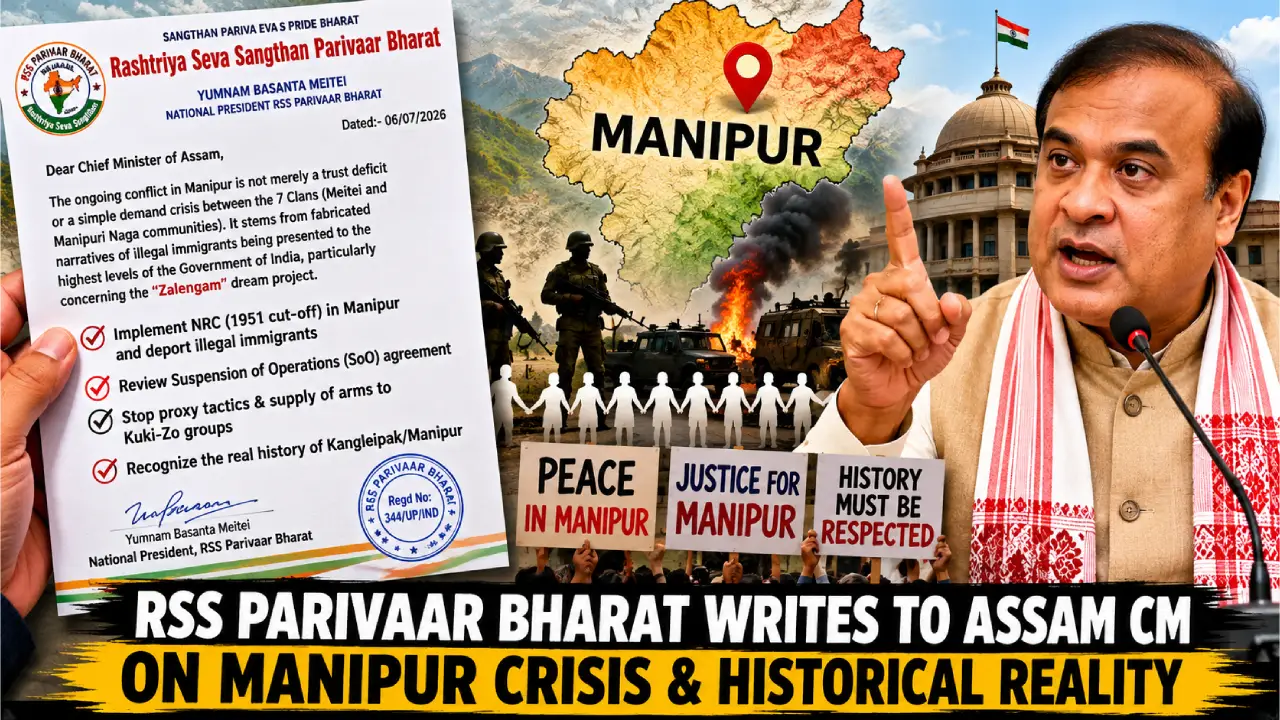
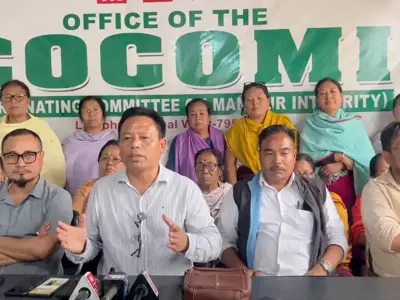
Imphal, July 6: Rashtriya Seva Sangthan (RSS) Parivaar Bharat has issued an open letter to Assam Chief Minister Himanta Biswa Sarma, urging him to refrain from making comments on the Manipur crisis without what it described as a proper understanding of the state's historical and political background.
The letter, signed by the organisation's National President Yumnam Basanta Meitei and dated July 6, came in response to recent remarks by Sarma, who had said that the ongoing conflict in Manipur stemmed from a "trust deficit" and demographic anxieties.
The organisation rejected that assessment, claiming that the conflict was "not merely a trust deficit or a simple demand crisis" but was rooted in what it described as "fabricated narratives" concerning illegal immigration and the proposed "Zalengam" project.
RELATED NEWS: Manipur Crisis Stems From Trust Deficit, Demographic Anxieties: Himanta Biswa Sarma
According to the letter, the organisation alleged that historical claims relating to the origin and identity of Kangleipak (Manipur) had been distorted and asserted that most Kuki-Zo communities were not indigenous to Manipur, while acknowledging certain communities such as the Khongjai or Vaiphei in its interpretation of historical records.
RSS Parivaar Bharat further claimed that the demand by the Meitei community for inclusion in the Scheduled Tribe (ST) list was based on constitutional provisions under Articles 342 and 366(25), and alleged that public narratives portraying the issue as opposition from Kuki-Zo groups had diverted attention from the demand for separate administration or Sixth Schedule status.
The organisation urged the Assam Chief Minister not to offer solutions to the Manipur conflict without first understanding the state's historical context.
In the letter, RSS Parivaar Bharat proposed several measures that it said were necessary to resolve the crisis in Manipur and the wider Northeast.
These included implementation of the National Register of Citizens (NRC) using the 1951 cut-off year in Manipur, deportation of illegal immigrants, and a review of the Suspension of Operations (SoO) agreements with Kuki militant groups.
The organisation also alleged that proxy support, including the supply of arms and ammunition to certain Kuki-Zo groups, had contributed to the conflict. It further claimed that Indian-made weapons had been used against civilians, though it did not provide evidence in the letter.
Additionally, the organisation said that people of Manipur and the Northeast should not be treated as "semi-Indians" and argued that a lack of justice and misinformation had deepened mistrust in the region.
The letter also criticised Sarma's handling of the NRC process in Assam during his earlier tenure in the state government, alleging that documentation had been facilitated for Bangladeshi immigrants instead of genuine migrants. No evidence was provided in the letter to substantiate the allegation.
The organisation concluded by stating that the "Seven Clans of Kangleipak" would not be subdued and reiterated its appeal for what it described as a historically informed approach to resolving the Manipur crisis.
The open letter follows Sarma's recent observation that the conflict in Manipur is driven by a trust deficit and demographic anxieties, remarks that have drawn mixed reactions from different organisations and stakeholders in the state.
Speaking during an exclusive interaction at The Indian Express Idea Exchange, Sarma said the conflict represents a "big trust deficit" among the Meitei, Kuki and Naga communities, adding that the absence of any formal political charter of demands distinguishes Manipur from many other conflicts in the Northeast. He said that the conflict lacks a formal charter of demands that could be settled through standard political negotiations, as it is rooted in deep-seated issues of identity, history, and mutual suspicion.
Sarma contended that while the 2023 Manipur High Court order regarding Scheduled Tribe status acted as a trigger, the underlying tensions were exacerbated by demographic anxieties linked to the ongoing instability in Myanmar. He noted that the resulting influx of people and concerns over land ownership significantly heightened communal fragility.
According to Sarma, state intervention—specifically the deployment of security forces—is limited in its ability to foster genuine peace. While such measures can maintain law and order, they cannot administratively repair the shattered relationships between communities. Drawing on historical examples, he suggested that past conflicts in the region required years of dialogue to reach lasting settlements, implying that current expectations for a quick political fix are unrealistic.
Sarma also addressed his decision to withdraw from direct mediation efforts, explaining that he sought to maintain a neutral stance to protect communal harmony within Assam. Ultimately, he emphasized that lasting reconciliation depends on the communities themselves and must be achieved through long-term, sustained engagement rather than external imposition.