14 CSOs welcome Manipur High Court’s Census deferment but warn parties against using NRC for votes, urging concrete legal and political action.
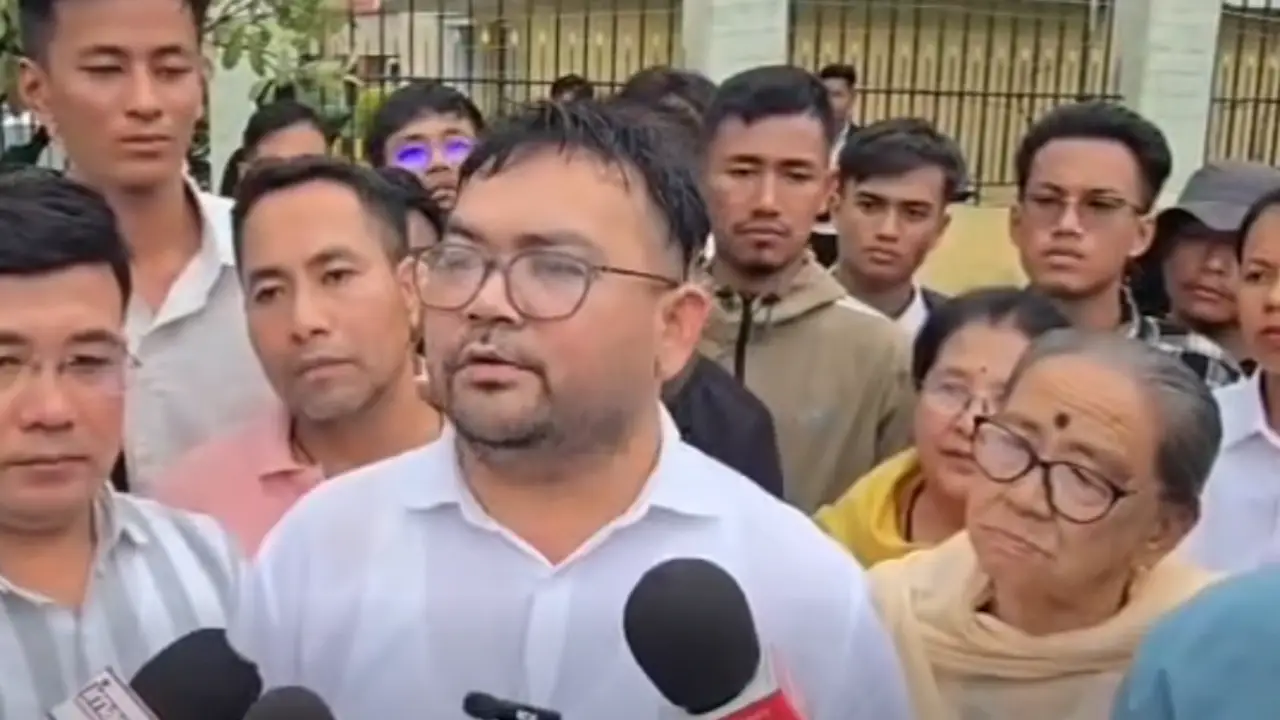
Imphal, August 31: The 14 Civil Society Organisations (CSOs) of Kangleipak have welcomed the Manipur High Court’s decision to postpone and withhold the house-listing process for Census 2027, which was scheduled to begin in the state on September 1.
The organisations, however, cautioned political parties and candidates seeking votes in the forthcoming elections against using the National Register of Citizens (NRC) as a tool to gain public approval without demonstrating what legal and political steps they have taken to advance the demand.
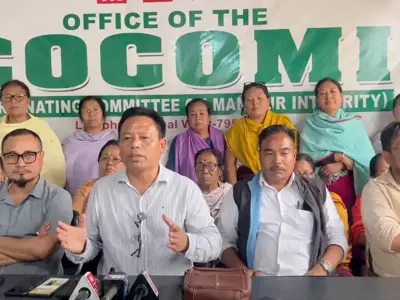
Addressing media persons outside the High Court of Manipur on Monday, Shanta Nahakpam, Convenor of the 14 CSOs, described the court’s decision as a victory for the people of Manipur. He was speaking after the court heard the petitions challenging the commencement of the house-listing exercise.
RELATED NEWS: HC Puts Census On Hold Over Illegal Immigration And IDPs In Manipur, Records Government Undertakings
According to Shanta, two petitions were taken up together during Monday’s hearing — a PIL filed by the Kangleipak Students’ Association (KSA) and a writ petition filed by him. He stated that the house-listing exercise scheduled to commence on September 1 had been postponed and withheld following submissions made by Senior Advocate Kh Tarunkumar and his counsel Pibarel.
He stated that the Census process would remain withheld through the court until further directions, while the detailed proceedings of the hearing were expected to be released subsequently.
CSOs say Census deferment is only an interim step
While welcoming the court’s decision, Shanta stressed that postponement of the Census should not be mistaken for achievement of the ultimate objective of the NRC movement.
“The deferment of the census does not achieve the goal of NRC,” he stated, maintaining that the broader objective was to ensure that delimitation is undertaken only after foreigners are identified.
He also recalled the long-standing involvement of IPSA, KSA and the associated 14 CSOs in raising issues related to the Census and demographic concerns.
RELATED NEWS: Centre Defers Census in Manipur After Amit Shah Chairs High-Level Review Meeting
Shanta stated that the organisations had been pursuing the issue since 2001 and that the recent legal interventions represented another avenue through which the public demand was being pursued.
He explained that the writ petition filed by him from a legal standpoint was aimed at reflecting the demand that the Census should not be conducted before internally displaced persons (IDPs) are able to return to their original homes.
Warning against using NRC as election issue
With elections approaching in Manipur, the 14 CSOs also issued a direct warning to political parties and prospective candidates against turning the NRC into an electoral slogan without taking substantive action.
Shanta stated that candidates who publicly declare on social media that the NRC is necessary should also make their political and legal actions clear to the public.
He argued that voters should be able to distinguish between leaders who merely make public statements and those who actually engage with political parties, party presidents, the Centre and other relevant authorities to advance the issue.
The Convenor urged the public to examine who is making claims about the NRC, what steps they have taken and how they propose to take the process forward.
He also stressed the need for communities to move forward through mutual understanding and agreement, saying that the NRC process itself would require clarity on its scope, components and implementation.
Calls for political, legal and public pressure
Shanta also questioned what he described as attempts to portray the Delhi visit by civil society and political representatives as a contest over leadership of the movement.
He maintained that the issue should not become a platform for competing claims of leadership, arguing instead for coordinated action through legal, political and public pressure.
He called for a tripartite dialogue involving relevant stakeholders as a possible way forward for addressing the broader political and socio-political challenges facing Manipur.
Using the analogy of a drying pond, Shanta cautioned against repeatedly mobilising ordinary citizens through calls for agitation without addressing the underlying issues through concrete political and legal measures.
He appealed for greater unity among civil society groups and other stakeholders following the High Court’s decision, saying that the deferment now created a need to discuss the next course of action.
Public urged to engage MLAs ahead of Assembly session
Shanta also referred to the forthcoming session of the Manipur Legislative Assembly, scheduled to begin on September 2, and urged the public to understand the procedures available within the House rather than simply demanding another resolution on the NRC.
He argued that merely asking the Assembly to pass a resolution would not be sufficient and that people should understand the procedural mechanisms through which the issue could be raised.
According to Shanta, a private member’s bill can be introduced only on Fridays. He noted that the coming Friday is a holiday, meaning that such a bill would not be introduced during that sitting.
He further stated that an adjournment motion could potentially be moved either by the Opposition or the ruling side to discuss the NRC or related matters.
However, he pointed out that an adjournment motion requires the Speaker’s consent and the support of at least 10 members. Since, according to him, the Opposition does not have 10 members, the position of the ruling side would become significant if such a motion were to be pursued.
14 CSOs urge people to approach MLAs
Against this backdrop, Shanta appealed to local clubs, organisations and members of the public to approach their respective MLAs directly and urge them to support a discussion in the Assembly on the NRC and related issues.
Rather than merely expressing support for the activities of the 14 CSOs, he called on citizens to engage directly with their elected representatives and seek concrete legislative action.
He said the immediate focus should now shift to determining what steps need to follow the deferment of the Census.
The High Court’s decision, according to the CSOs, provides an opportunity for further deliberation, but the larger demand concerning identification of foreigners and subsequent delimitation remains unresolved.
The organisations therefore called for unity and coordinated legal, political and public action to pursue the NRC demand, while cautioning against reducing the issue to electoral rhetoric ahead of the elections.